
Aga Khan Development Network
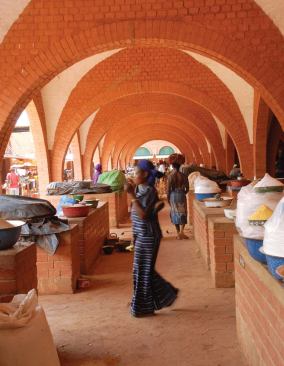
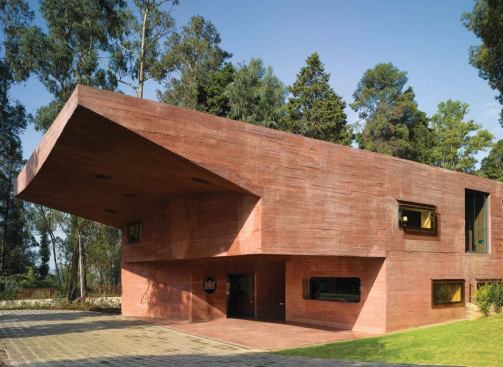
Burkina Faso Central Market, Koudougou, Burkina Faso, 2005 (S…
“How many divisions does the Pope have?” Joseph Stalin is said to have asked contemptuously during the buildup to World War II, five decades before Pope John Paul II played a key role in ending Soviet control of Eastern Europe. Would it be a mistake to similarly underestimate the power of the Aga Khan, spiritual leader of the world’s 15 million Shia Ismaili Muslims, in dealing with Islamic radicalism?
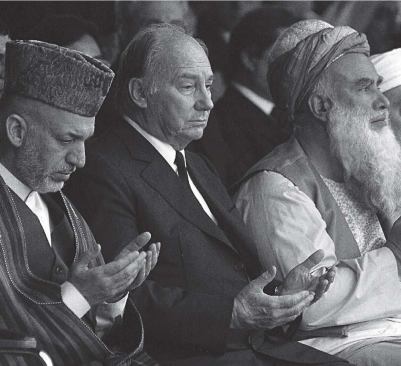
Living in a palace outside Paris with stables of thoroughbred racehorses, the Aga Khan is one of the world’s wealthiest men. Noel Coward memorialized the Aga Khan’s father, Prince Ali Kahn, in a version of Cole Porter’s “Let’s Do It, Let’s Fall in Love,” and Rita Hayworth was for a time his stepmother. A direct descendant of the Prophet Muhammad, this imam generally dresses in sober business suits rather than flowing robes. A British citizen who grew up in Kenya, studied at Harvard, and now maintains offices in Switzerland, the 71-year-old personifies a contemporary, liberal Islam. His followers—of various ethnicities and nationalities, mostly living in Central Asia and Africa—revere their hereditary leader, a consummate cosmopolitan if there ever was one, as a blend of royalty and pontiff.
The official website of the Ismaili Muslim Community refers to its “ethos of self-reliance, unity, and a common identity” and stresses the importance of philanthropic endeavors: “In a number of the countries where they live, the Ismailis have evolved a well-defined institutional framework through which they have, under the leadership and guidance of [the Aga Khan], established schools, hospitals, health centres, housing societies, and a variety of social and economic development institutions for the common good of all citizens regardless of their race or religion.” In this vein, the Aga Khan has sought over the past 30 years to elevate the quality of architecture in the Islamic world through one of the profession’s most prestigious prizes.
The Aga Khan Award for Architecture repeatedly demonstrates that Islam and modernity can coexist, while seeking to harness thoughtful design to the process of transformation in Islamic nations. This goal was a focus of the most recent award ceremony, held in September in Kuala Lumpur, the 10th since the triennial prize was established in 1977. There are typically seven to 12 winning projects per award cycle, chosen from hundreds of nominations by a panel of experts. Among the winners—Muslims and non-Muslims both—the jury apportions prize money totaling $500,000, which makes this, in cash terms, the biggest architecture prize in the world.
“The award has a simple objective—to enable people of all backgrounds, all faiths, to live a better life,” the Aga Khan told the prize recipients in the Malaysian commercial capital. Architecture, he insisted, has the power to transform the world, since happy physical environments create a sense of comfort and well-being, and unhappy ones produce the converse. “We need the courage to continue the process of critical thinking,” he said, adding that among many Muslims, “there are fears that critical thinking amounts to disloyalty. I do not believe this … The moment we stop asking questions, we’ll fall asleep.”
The prize is also aimed at avoiding what the Aga Khan calls the “exaggerated submission to the past” and the “irrational fear of modernism” to which he says the Islamic world is often vulnerable. As a counterpoint to this trend, the latest awards ceremony took place in the concert hall at the base of Cesar Pelli’s Petronas Towers, erected 10 years ago by Malaysia’s state-run oil monopoly. The shimmering twin towers, their floor plan generated by the traditional Islamic eight-point star, stand as a potent emblem for the Southeast Asian country and received an Aga Khan prize in 2004. Previous Aga Khan award ceremonies have been held in historically rich settings like the Topkapki Palace in Istanbul, the Alhambra in Granada, and the Aleppo Citadel in Syria. The Petronas Towers ceremony was the first at a contemporary site.
Ninety-two projects have received Aga Khan
awards in the program’s 30-year history. The latest recipients ranged
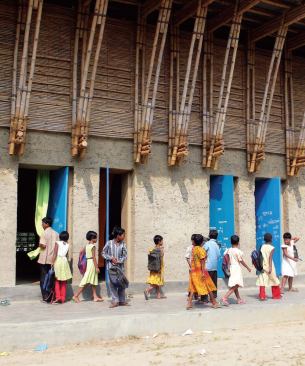
from a handmade school of mud and bamboo in Bangladesh, designed by a
pair of young architects from Austria and Germany, to a $175 million
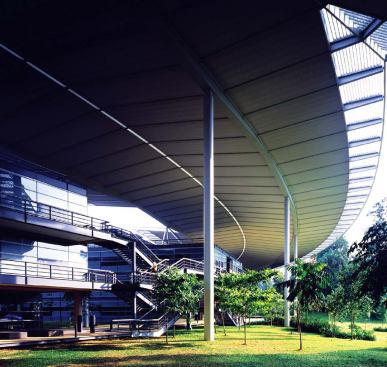
glass and steel university in the Malaysian jungle by Foster + Partners.
In each case, the social and economic impact of the project is
considered alongside its architectural merit; among other winners this
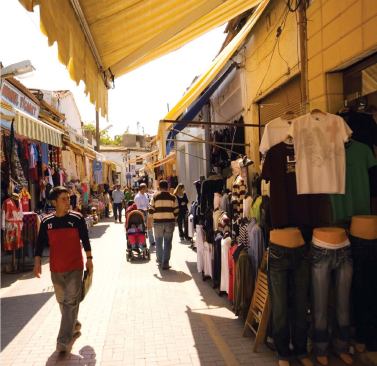
time was the rehabilitation of the walled city of Nicosia on Cyprus,
which acted as a catalyst for political change by bringing together the
Turkish and Cypriot communities of the divided island.
Taking
stock of what the program had accomplished in 2004, the Aga Khan said,
“In the most eminent Western schools, there is a much greater academic
offering and commitment to the field of Islamic architecture … and in
Muslim countries we have seen the birth of new schools and a new
generation of architectural teachers and scholars in the field.”
However, the award’s impact is, according to prize steering committee
member and Museum of Modern Art director Glenn Lowry, “diffuse and
subtle.”
Indeed, the most conspicuous example of architectural development in the Islamic world in recent years is the explosive growth of Dubai, precisely the kind of architecture the award aims to avert. (The 10th award cycle monograph published by the steering committee takes direct aim at Dubai as “a cornucopia of gaudy luxury.”) Although each cycle honors a mix of works from Western and locally based architects, Omar Akbar, the director of the Bauhaus in Dessau, Germany, worries that the program spotlights too many Western projects. In addition, “there’s not enough emphasis on education” in Islamic nations themselves, says Akbar, who also serves on the prize steering committee.
In Kuala Lumpur, the Aga Khan welcomed Malaysian architecture students to a symposium held in conjunction with the awards ceremony. Architectural education is another of his objectives: the Aga Khan funds major architecture programs at Harvard and MIT. (The Aga Khan University he founded in Karachi, Pakistan, with satellite programs in countries including Afghanistan and Kenya, focuses on health sciences and education—and does not offer instruction in architecture.) At the symposium, Malaysian architect Jimmy Lim asked, “Why does interesting architecture have to be introduced by people from afar?” and bemoaned the influence of mainstream Western design trends. “After this conference,” Lim predicted, “the Malaysian students in this room will go back to their universities and design buildings with a high-tech look.”
Yet encouraging culturally appropriate design is very much on the jurors’ minds. Okwui Enwezor, dean of the San Francisco Art Institute and director of the Documenta 11 art show, said the latest jury endeavored to examine “how to elevate Islamic modernity so as not to be folkloric.” The prize also seeks to put an end to the “too many unsuccessful renditions of vernacular quick fixes—collage domes and arches on cultural centers and mosques,” according to juror Homa Farjadi, who teaches architecture at the University of Pennsylvania. An egregious example of what Farjadi meant looms just outside of Kuala Lumpur: the newly minted city of Putrajaya, which serves as Malaysia’s administrative capital and where the buildings look more like an Arabian Nights amusement park.
Although plenty of these quick fixes continue to proliferate around the globe, juror Brigitte Shim, an architect who teaches at the University of Toronto, hailed the latest prize winners as alternatives to the “placelessnesss” that characterizes architectural projects that adopt a foreign language without carefully considering the communities they serve. By contrast, the Bangladeshi school designed by Anna Heringer and Eike Roswag “emerged from a fundamental understanding of the local community as opposed to being placed there from outside.”
Heringer worked for a year as a volunteer with a German aid organization in the village of Rudrapur before she trained as an architect. Whereas traditional mud construction in Bangladesh has often resulted in dark structures, Heringer and Roswag achieved airy, light-filled spaces by inserting playfully arranged windows in the thick straw-reinforced mud walls at the base and using an economical, ecologically sensitive bamboo-frame construction on the upper floor. The design is intended to bolster the self-confidence of Bangladeshis, Heringer says, and therefore has important political potential: “To strengthen one’s own identity is the best medicine against terrorism.”
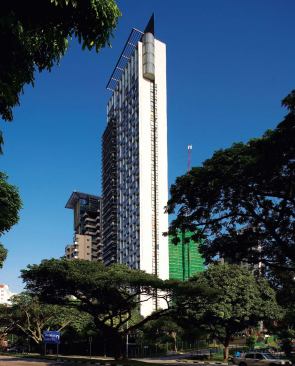
Such an understanding of local culture and building traditions can simultaneously address the complexities of the modern world, Shim said, citing a Singapore tower—the 28-story Moulmein Rise, designed by WOHA Architects of Singapore—given an award for adapting the monsoon window and other traditional elements as a creative response to the tropical climate.
The Aga Khan awards spotlight projects serving communities where Muslims have a “significant presence”—but “ ‘significant’ is open to interpretation,” according to Sam Pickens, spokesman for the Aga Khan Development Network, which administers the prize. (The Aga Khan rarely speaks to the press and declined to be interviewed for this article.) To be considered, architects are by no means required to be Muslim: The latest cycle included two Dutch architects who won for designing the Royal Netherlands Embassy in Addis Ababa, Ethiopia. The Institut du Monde Arabe designed by Jean Nouvel in Paris won an award in 1989, and that same year, the Bangladeshi parliament building by the Jewish American architect Louis Kahn was given a prize. About half the winners have been non-Muslim since the prize was established. Juries for all cycles of the prize have included non-Muslims, among them Peter Eisenman, Frank Gehry, and Arata Isozaki.
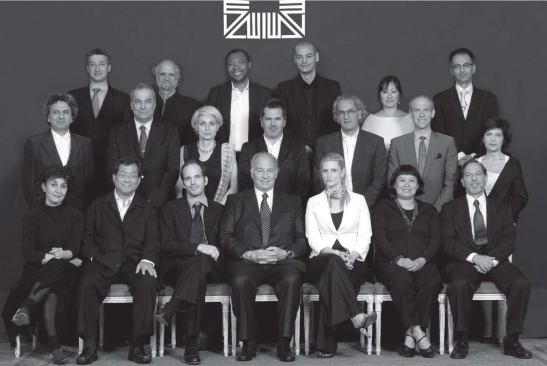
The awards differ from most other architectural prizes in that the projects must have been completed and in use for at least one full year before they can be considered, and are subjected to extensive review and inspection. Some 343 projects around the world were selected for review this cycle. At the 27 short-listed sites, a dozen architectural professionals interviewed the end users and reported back to the nine-member jury. The rigorous selection process lasts three years, and it is up to the jurors themselves to decide the number of winners among whom the half million dollars in prize money is divided. Unlike the Pritzker Prize, the award goes not just to the designer but to clients and builders as well.
The award is not explicitly political but is part of a larger effort by the Aga Khan Development Network that more clearly is. The Aga Khan abjures militancy in favor of diplomacy and sees investments that promote economic self-reliance in impoverished nations as a means of combating extremism. In Africa, the network has been funding schools for young children that offer a modern approach to the teaching of Islam that departs from techniques used in traditional madrassas where the Koran is recited by rote.
The Ismailis have been periodically persecuted and marginalized by other Muslims, and in 2005 an alliance of Sunni religious groups in Pakistan sought to have followers of the Aga Khan declared infidels. In recent years, according to news reports, employees of the Aga Khan Foundation in Pakistan were attacked and killed by Sunni militants. But the Aga Khan’s opponents have matters other than architecture on their minds, says Mounir Bouchenaki, an Algerian archaeologist who formerly served as UNESCO’s assistant director general for culture. “In the community of architects, there is great appreciation … I don’t think [political activists are] interested. Architecture is not really the subject.”
At a panel discussion for the latest architecture prizes, several jurors invoked the Arabic word ummah, denoting the community of Muslim believers across the world, while stressing they had in mind not the ummah of the caliphate, in which Islamic Sharia law reigned supreme, but what they called a “dialogical” ummah. “Warlords like to beat the drum of the clash of civilizations,” said Harvard literary theorist Homi Bhabha, one of four non-architects on the panel. “There is no such clash of civilizations, certainly not on the side of enlightened Islam.”
Yet despite the Aga Khan’s remarkable efforts, a fundamentalist concept of ummah remains entrenched in many of the countries he seeks to modernize. The dangers were made clear this January, when Taliban suicide bombers attacked the five-star Hotel Serena built by the Aga Khan himself in Kabul, Afghanistan, killing eight people. The Aga Khan had spoken at the hotel’s opening in 2005, hailing its design by architect Ramesh Khosla as a sign of progress after the extremist Islamic Taliban were ousted from power. Khosla had won an Aga Khan Architecture Award in 1980 for designing the Mughal Sheraton Hotel in Agra, India.
A former foreign correspondent, Michael Z. Wise is the author of Capital Dilemma: Germany’s Search for a New Architecture of Democracy. His writing has appeared in publications including the Atlantic, Foreign Policy, and The New York Times.