Launch Slideshow

Corbu, Construed

Given the degree to which Le Corbusier's Vers une architecture has inspired and, one might say, haunted the theory and practice of architecture worldwide over the past 85 years, it is fitting for this to be ostensibly the last of the 18 canonical architec

Corbu, Construed

Given the degree to which Le Corbusier's Vers une architecture has inspired and, one might say, haunted the theory and practice of architecture worldwide over the past 85 years, it is fitting for this to be ostensibly the last of the 18 canonical architec

  • http://www.architectmagazine.com/Images/tmp2DDD%2Etmp_tcm20-129717.jpg

    600

    Charlie Brown

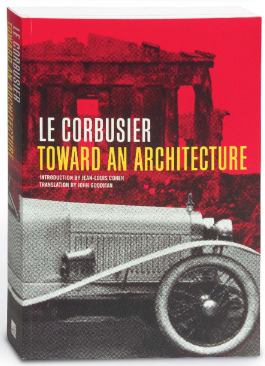
    Toward an Architecture By Le Corbusier Introduction by Jean-Louis Cohen Translation by John Goodman Getty Research Institute 360 pages; 249 b/w illustrations Hardcover: $50 Paper: $24.95

  • http://www.architectmagazine.com/Images/tmp2DDE%2Etmp_tcm20-129724.jpg

    600

    Getty Images

  • http://www.architectmagazine.com/Images/tmp2DDF%2Etmp_tcm20-129731.jpg

    600

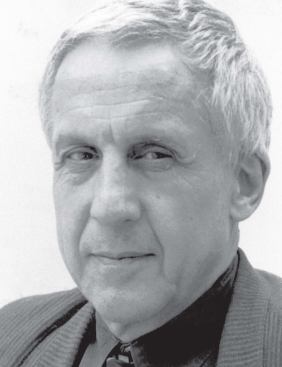
    About the critic: Kenneth Frampton is the Ware Professor of Architecture at the Graduate School of Architecture, Planning, and Preservation, Columbia University. He is the author of numerous books, including Le Corbusier (2001) and Modern Architecture: A Critical History, which was just released in its fourth edition.

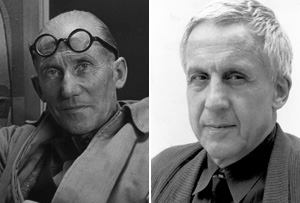
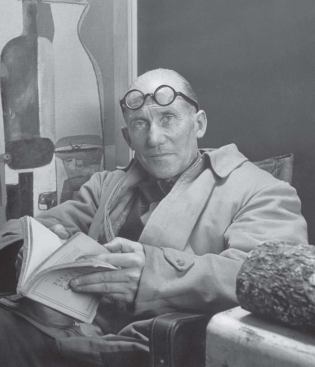
Le Corbusier (left) in an undated photo. Our critic, Kenneth Frampton (right), is the Ware Professor of Architecture at the Graduate School of Architecture, Planning, and Preservation, Columbia University. He is the author of numerous books, including Le Corbusier (2001) and Modern Architecture: A Critical History, which was just released in its fourth edition.

Le Corbusier (left) in an undated photo. Our critic, Kenneth Frampton (right), is the Ware Professor of Architecture at the Graduate School of Architecture, Planning, and Preservation, Columbia University. He is the author of numerous books, including Le Corbusier (2001) and Modern Architecture: A Critical History, which was just released in its fourth edition.

Credit: Getty Images

Given the degree to which Le Corbusier's Vers une architecture has inspired and, one might say, haunted the theory and practice of architecture worldwide over the past 85 years, it is fitting for this to be ostensibly the last of the 18 canonical architectural texts translated into English for the Getty Research Institute's Text and Document series. Originally published in Paris in 1923, Vers une architecture is now precisely rendered into English for the first time by John Goodman under the title Toward an Architecture. In other volumes in this series, the scholarly introduction is virtually of equal import as the text itself, and Toward an Architecture is no exception in this regard, with an illuminating introduction by the architectural historian Jean-Louis Cohen. Before entering into the refinements of Goodman's all-too-meticulous translation, we should turn to the circumstances attending the genesis of Le Corbusier's original work, as they are revealed to the reader by Cohen.

Vers une architecture was a by-product of the mondaine Parisian avant-garde during the first quarter of the 20th century, even if it also had antecedents that dated back to the utopian socialism of the first quarter of the 19th century. The text first saw the light of day as a series of articles that appeared in the magazine L'Esprit Nouveau, which was edited, at least initially, by Le Corbusier (born Charles-Édouard Jeanneret in 1887, he debuted his pseudonym in the magazine's pages), the purist painter Amédée Ozenfant, and the Dadaist poet Paul Dermée.

The editors of L'Esprit Nouveau adopted a conventionally typographic yet rhetorically radical layout, wherein the sober discourse of the text comes to be broken up by capitalized titles in sans-serif boldface—a mode more than a little reminiscent of the techniques of 19th century advertising. And it is precisely this arresting typographic disjunction which the publisher John Rodker failed to maintain in the first English translation of 1927, an unacceptable convention that Le Corbusier would find himself struggling against in subsequent translations.

Rodker's recalcitrance may go some way toward explaining why his translator, the architect Frederick Etchells, elected to introduce the qualifying adjective “new” into the title—in order, one assumes, to distance the audacity of Le Corbusier's thesis from the still largely Edwardian tenor of British taste in the late Twenties (despite the fact that Etchells himself had participated as a painter in the London Vorticist exhibition of 1915). An equally unconscious anxiety may well account for Etchells' decision to replace Le Corbusier's short preface with a somewhat longer apologia of his own. As he put it in 1927:

Towards a New Architecturewas written, of course, originally for French readers, and there are points in it which obviously have not the same force applied to conditions in England or America; but the book is the most valuable thing that has yet appeared, if only because it forces us, architects and laymen alike, to take stock, to try to discover in what direction we are going, and to realize in some dim way the strange paths we are likely to be forced to travel whether we will or no.

The discourse of Vers une architecture not only alternates thematically between engineering and architecture throughout, but is also syncopated according to a precise rhythm: the first of its seven sections is dualistic, juxtaposing the aesthetic of the engineer with architecture; the second, like the fourth and fifth, is divided into three parts; and the third and the sixth sections feature single interposing themes (namely, “Regulating Lines” and “Mass Production Houses”). The whole is concluded by a dualistic coda implying that violent revolution may be avoided through the provision of a rational, purified, style-less architecture for society as a whole.

Apart from the heroic tradition of French construction as represented by Gustave Eiffel in steel and Auguste Perret in concrete, much of the substance of Vers une architecture was inspired by the evolution of the Deutsche Werkbund, a state-sponsored association of German designers founded in 1907. Signal texts of this movement took a stand against the “style-mongering” of late 19th century historicism and advocated a new mode of beholding with regard to the technological forms of the emerging modern world. Le Corbusier was influenced specifically by the Deutche Werkbund Jahrbuchen (yearbooks), above all by the volumes dedicated to “Art in Industry & Trade” (1913) and “Transport” (1914), the first of which featured North American grain silos within Walter Gropius' essay on modern industrial building; the second accorded cultural value to various elegantly engineered means of modern locomotion— automobiles, aircraft, transatlantic liners—the very substance, that is, of Le Corbusier's book section entitled (in Goodman's version) “Eyes That Do Not See … .”

In the sections “Three Reminders to Architects” and “Architecture,” there are marked differences between the translations of Etchells and Goodman, differences that mostly favor the greater refinement and precision of the Goodman version. One may argue that Etchells' use of the plural “plans” is more faithful to Le Corbusier's L'Illusions des Plans than Goodman's insistence on “The Illusion of the Plan”; or that Etchells' “Mass Production Houses” is a more literally correct rendering of Maisons en série than Goodman's “Mass Production Housing.” In the main, however, Goodman is astute in repairing such egregious mistranslations as Etchells' rendering of the word “volume” as “mass,” and Etchells' omission of a whole passage from the Maisons en série section.

From a scholarly standpoint, it is surely beneficial to have a more precise translation than the one we English speakers have lived with all these years. However, when it comes to rhetorical prose bordering on the poetic, a literal translation is not invariably desirable, particularly given the fact that no text can be translated literally all the time without losing the rhetorical rhythm of the original. Hence, in my view, it is not always clear which version is preferable.

By way of example, a certain doubt arises with Goodman's rendering of a famous passage, which in Etchells' translation reads:

But suddenly you touch my heart, you do me good, I am happy and I say “This is beautiful.” That is architecture. Art enters in […]

Goodman does little to emend this, except, inexplicably, to omit the “and” that is present in both the French and in Etchells' translation and to render “c'est beau” in the flat form of “it is beautiful,” and finally to translate strictly Le Corbusier's “L'art est ici” as “Art is present.” In my view, Etchells' “Art enters in” captures more successfully the lyricism of the original French. What Etchells instinctively understood, and what Goodman seems all too perversely to resist, is the inherent elision of the French language, which must be acknowledged analogically to some extent in any translation of a poetic text: So Etchells' coinage of the expression “Engineers' Aesthetic” is surely preferably to the literal translation, “The Aesthetic of the Engineer.” Thus the rigor of this retranslation results, here and there, in a regrettable flattening of the evocative language to be found in the original.

As in all translations, there is no final answer to such aporia, except that one should be as sensitive as possible to the overall cultural context in which the work appears. Here, one has to say—notwithstanding his inexcusable liberties—Etchells may not have always been so wide of the mark. For in the end, as Reyner Banham observed in his perceptive and grandiloquent Theory and Design in the First Machine Age:

Vers une architecture has no argument in the normal sense of the word. It has instead a series of rhetorical or rhapsodical essays on a limited number of themes, assembled side by side in such a way as to give the impression that these themes have some necessary connection …

While Banham could not critically dispose of the compelling metaphorical links between Le Corbusier's various segments, he was correct in stressing the persuasively poetic character of the writing. It is this, plus the brilliant, often disjunctive combination of modern mechanical paradigms with ancient classical references, that would in the end carry the day. So much so that it would serve, paradoxically, both to undermine the credibility of the European academic legacy and to determine the vocation of young architects all over the world for the best part of the 20th century.