Launch Slideshow

Old Age, New Models

With 76 million baby boomers contemplating life after retirement, the traditional nursing home model is in sore need of an upgrade.

Old Age, New Models

With 76 million baby boomers contemplating life after retirement, the traditional nursing home model is in sore need of an upgrade.

  • http://www.architectmagazine.com/Images/tmp3A94%2Etmp_tcm20-136404.jpg

    600

    Getty Images

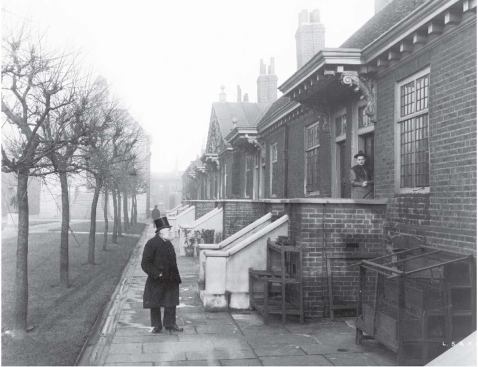
    Under the Poor Laws in England and Wales, the infirm elderly are classed as "the impotent poor," and some are housed in almshouses or poorhouses.

  • http://www.architectmagazine.com/Images/tmp3A95%2Etmp_tcm20-136411.jpg

    600

    Getty Images

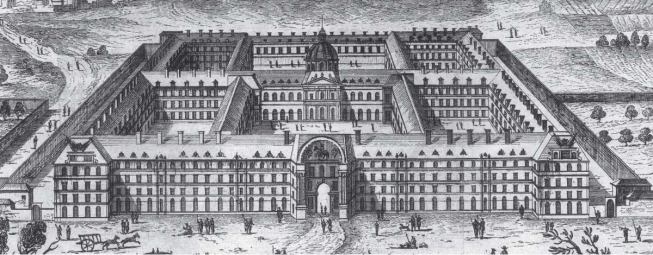
    Les Invalides in Paris and the Christopher Wren-designed Royal Hospital Chelsea (1681) in London are established to care for old and injured soldiers.

  • http://www.architectmagazine.com/Images/tmp3A96%2Etmp_tcm20-136418.jpg

    600

    Ankrom Moisan Associated Architects

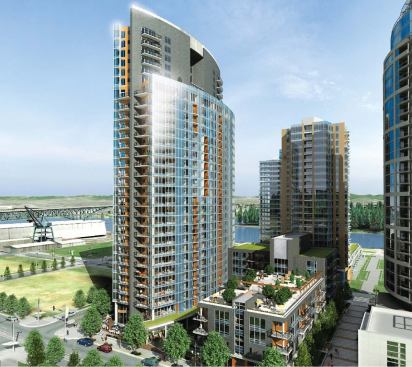
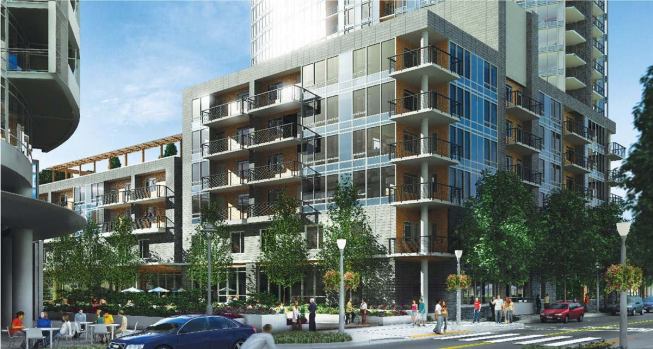
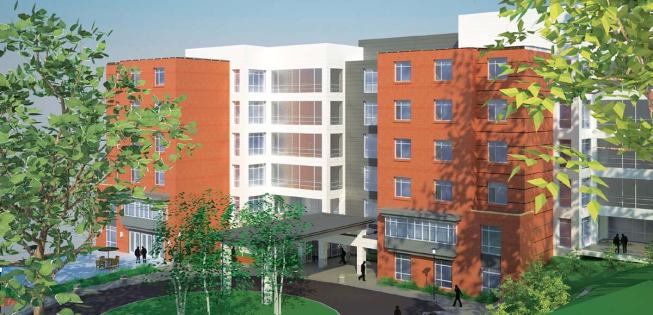
    The Mirabella, Portland, Ore. (Ankrom Moisan Associated Architects; client: Pacific Retirement Services; under construction) This 30-story CCRC tower will have only eight units per floor and will feature, around its base, a full spa/fitness center, a café, a library, and a computer center.

  • http://www.architectmagazine.com/Images/tmp3A97%2Etmp_tcm20-136425.jpg

    600

    Ankrom Moisan Associated Architects

    It is expected to achieve LEED Platinum. Living here won't come cheap though: Entry fees approach $700,000.

  • http://www.architectmagazine.com/Images/tmp3A98%2Etmp_tcm20-136432.jpg

    600

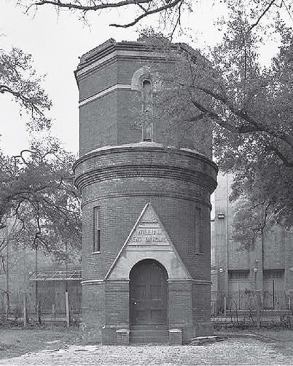
    Institutionalization of elderly care has become the norm. The William Enston Home in Charleston, S.C., is an early model for a planned retirement community.

  • http://www.architectmagazine.com/Images/tmp3A99%2Etmp_tcm20-136439.jpg

    600

    CSD

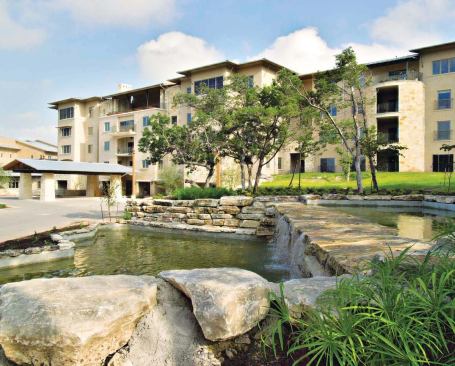
    Querencia at Barton Creek, Austin, Texas (CSD; client: Senior Quality Lifestyles Corp.; completed June 2007)

  • http://www.architectmagazine.com/Images/tmp3A9A%2Etmp_tcm20-136446.jpg

    600

    CSD

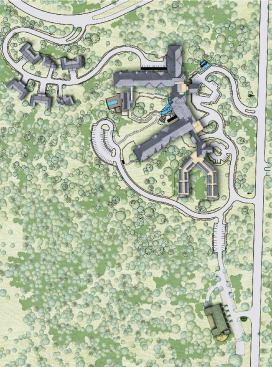
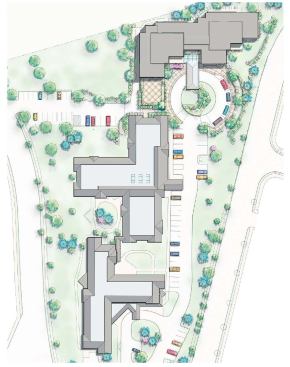
    The master-planned 38-acre Querencia campus, just outside Austin's city limits, includes 10 cottage duplexes, 150 independent living units, 40 assisted living units, 40 units for skilled nursing, and 20 for memory support.

  • http://www.architectmagazine.com/Images/tmp3A9B%2Etmp_tcm20-136453.jpg

    600

    CSD

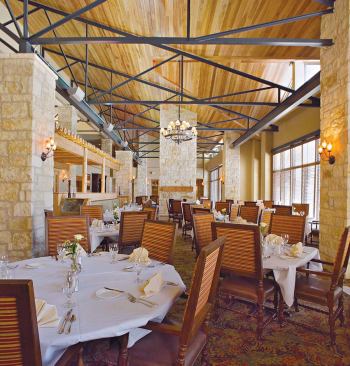
    It has a spa and several dining options, among them the restaurant shown at left.

  • http://www.architectmagazine.com/Images/tmp3A8C%2Etmp_tcm20-136348.jpg

    600

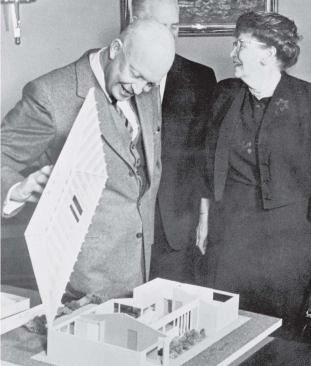
    At the first-ever White House Conference on Aging, the AARP unveils Freedom House.

  • http://www.architectmagazine.com/Images/tmp3A8D%2Etmp_tcm20-136355.jpg

    600

    RIEN VAN RIJTHOVEN

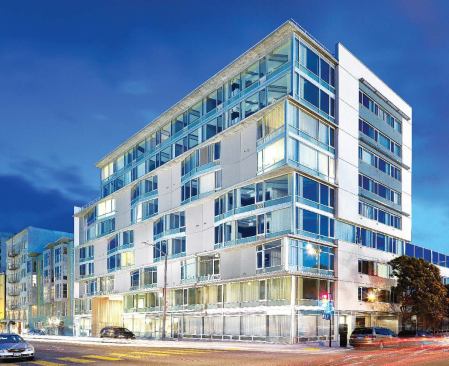
    Parkview Terrace, San Francisco (Kwan Henmi Architecture/Planning and Fougeron Architecture; client: AF Evans/Chinatown Community Development Center; completed March 2008)

  • http://www.architectmagazine.com/Images/tmp3A8E%2Etmp_tcm20-136362.jpg

    600

    Rien Van Rijothen

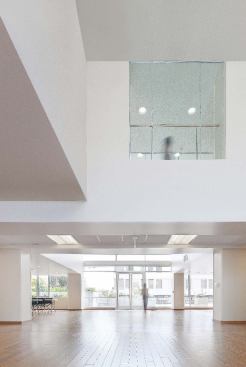
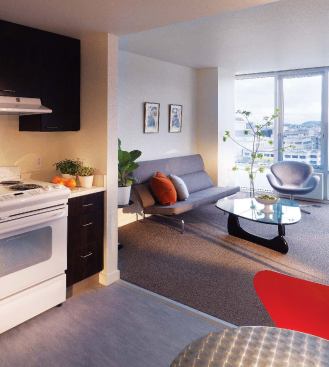
    This 98,000-squarefoot project brings 101 affordable apartments for seniors to San Francisco, a few blocks away from the city's Civic Center. Natural light bathes the lobby and the small living units, 40 percent of which are handicapped accessible and all of which can be adapted as residents' needs change.

  • http://www.architectmagazine.com/Images/tmp3A8F%2Etmp_tcm20-136369.jpg

    600

    Rien Van Rijothen

    A large courtyard offers sheltered outdoor space.

  • http://www.architectmagazine.com/Images/tmp3A90%2Etmp_tcm20-136376.jpg

    600

    Corbis

    CCRCs gain in popularity-jumping from 800 at the beginning of the decade to around 2,000 today.

  • http://www.architectmagazine.com/Images/tmp3A91%2Etmp_tcm20-136383.jpg

    600

    The Green House® Project

    The first Green House opens in Tupelo, Miss.

  • http://www.architectmagazine.com/Images/tmp3A92%2Etmp_tcm20-136390.jpg

    600

    Dimella Shaffer

    Leonard Florence Center for Living, Chelsea, Mass. (DiMella Shaffer; client: Chelsea Jewish Nursing Home; on the boards) Slated to break ground this month, Leonard Florence will be the nation's first urban Green House community, based on the model devised by physician William Thomas. The basic model, which is flexible and can be produced on any scale, stipulates a homelike environment with six to 10 private rooms situated around an open kitchen and dining area.

  • http://www.architectmagazine.com/Images/tmp3A93%2Etmp_tcm20-136397.jpg

    600

    DIMELLA SHAFFER

    One hundred seniors will reside at Leonard Florence, in "houses" of 10 residents each. Two of the houses will be set aside for ALS (Lou Gehrig's Disease) patients.

There's a wonderful photo of Ethel Percy Andrus, founder of AARP, with President Dwight D. Eisenhower. It's 1961 and Andrus is standing in the White House during the first-ever Conference on Aging. Ike has just lifted the roof off a model of Freedom House, a home designed and built by AARP in honor of the event, and is peering inside, smiling. The result of exhaustive research into the needs of the elderly, Freedom House included special features such as 3-foot-wide door openings and strategically placed master light switches. This approach would later become known as universal design; it aimed to allow people to age in place with dignity.

The country went in another direction, building nursing homes and continued care retirement communities (CCRCs), those sprawling behemoths with tiered levels of care ranging from independent living to assisted living and skilled nursing. Today there are some 16,000 nursing homes and nearly 2,000 CCRCs around the country, according to the American Association of Homes and Services for the Aging.

"Forty-seven years after Freedom House, and we're still working on this," Elinor Ginzler says today. Ginzler directs AARP's Livable Communities initiative, which aims, she says, to "change the way consumers and the industry approach how houses are built so that people can age with independence, choice, and control."

AARP's latest research finds a majority of people over 50 concerned about their housing options as they age. Many say they'd prefer to stay where they are, but recognize their current home is ill equipped for future needs. The alternative—the conventional nursing home—is less than appealing.

The stark reality is that America is aging, and fast. There are 76 million baby boomers, and one of them turns 50 every seven seconds. By 2026, the population of Americans over 65 will have doubled to 71.5 million. In addition to the sheer crush of housing and healthcare demand, the market desires of this aging demographic will be quite different from generations past. "This is a population for whom design does count," Ginzler says. "They pay attention to it."

Architects specializing in the field agree that design for aging needs a dramatic culture change. "In our industry, we think about museums and schools as the 'hot' thing, but people have an old image about our work relating to the communities that we create for our elders. We need to break that image," says Leslie Moldow, a principal at Perkins Eastman. Moldow also chairs the AIA's Design for Aging Advisory Group. "We can't think of it as 'one size fits all' anymore and we can't think of it as designing for our grandparents," she adds. "We need to realize that what we're doing today is what we will inherit. We should be designing for us."

The Evolution of the CCRC

Most CCRCs follow a similar model: a campus of mid-rise buildings with double-loaded corridors, massive centralized nursing stations, and wide hallways designed for ease of medical delivery and food service. Form definitely follows function, with institutional efficiency trumping individual autonomy, especially as more CCRCs move from nonprofit to for-profit entities (about 20 percent are for-profit, according to AAHSA, with private corporations like Hyatt and Marriott entering the game in the 1990s). "When you drive by one on these on the highway, you know exactly what it is," Moldow says, echoing a common complaint.

David Dillard, president of the Baltimore firm CSD, has been designing senior living for 30 years out of CSD's Dallas office, but it wasn't until 2003 that he got a true taste of life inside a CCRC. He and an associate spent the night in a facility in Iowa before embarking on a renovation. Dillard simulated the symptoms of a stroke patient with limited mobility. He was not allowed to go outside and read without the oversight of a caregiver; he couldn't adjust the light in his room once he was in bed. Sleep was difficult due to the beeping and chattering from a centralized nursing station he called "Grand Central." "We've got to make a place look and feel like home, not a hospital," Dillard says today.

For Querencia at Barton Creek, a CCRC located just outside the city limits of Austin, Texas, Dillard and his team enhanced the 38-acre campus with a destination spa-inspired by a nearby celebrity retreat-that includes an infinity pool looking out over the desert. Ten large villas, two independent living towers, a healthcare building with memory support (services for those with dementia and Alzheimer's), skilled nursing, and assisted living sit on just 28 percent of the land, leaving the remaining acreage open to nature. There are a variety of dining options, including an outdoor, rooftop bistro with a fireplace. It looks less like a CCRC and more like a five-star hotel.

The spa concept is not unique to Querencia. Moldow says Perkins Eastman is increasingly designing CCRCs like health resorts. "We've been looking at how to take models that are not senior-oriented, like Canyon Ranch, and bring the health spa into [retirement] communities," she says. "Residents have the ability to direct what they want their lives to be, and there's the support and infrastructure in place to help them achieve it."

Being social creatures, what most humans want is interaction. Because isolation is a major problem for senior well-being, some developers are looking to expand the traditional CCRC into a more vibrant, mixed-use, mixed-age community. For the Newbridge on the Charles development in Dedham, Mass., Perkins Eastman is collaborating with Cambridge, Mass.-based Chan Krieger Sieniewicz to design an intergenerational campus on 152 acres along the Charles River. There will be a mix of housing options for seniors as well as a 100-pupil day care center, a Jewish K-8 day school, a summer camp, and a Jewish community center. A handful of mixed-use projects like this one are in the planning stages around the country, and architects are finding themselves in the role of master planner. "It's very complex, but that's the way this is going, so buckle up," Dillard says.

Urbanization: Going Vertical

Developing a mixed-use, multigenerational campus like Newbridge requires a very expensive commodity: land. Which is why, more and more, architects are designing senior housing into the existing fabric of urban centers where support services already exist. "There is an undeniable trend of urbanization of senior communities," says Dillard. "We have several on our boards right now." These include a contemporary tower near the Louis Kahn-designed Kimbell Art Museum in Fort Worth, Texas.

As senior housing moves into the city, it's going vertical. Ankrom Moisan Associated Architects recently broke ground for the Mirabella, a 30-story, 224-unit tower in Portland, Ore., which is on track to become the nation's first LEED Platinum CCRC. The sleek high-rise is in the city's developing South Waterfront District and will be fully integrated into the transit-oriented, mixed-use neighborhood.

Going vertical has distinct advantages. At the Mirabella, with just eight units per floor, residents are within a short walk of elevators and have easy access to amenities like retail, health services, and classroom space; a fifth-floor garden; a 24th-floor dining lounge; and a 25th-floor observation deck. There's also a health spa with a lap pool. Half a million dollars of fiber optics assures that current and future technological needs can easily be met.

The slim tower was designed to maintain sight lines to the nearby Willamette River, while exterior landscaping connects the building to the neighborhood. An outdoor courtyard extends into a public park across the street. Wide sidewalks will encourage pedestrian activity, and a café on the ground floor will invite the public inside (residents who are too frail to go downstairs can still get outdoors by riding the elevator to the fifth-floor garden). The LEED Platinum Oregon Health & Science University Center for Health & Healing, which includes a research center on elder care, is nearby. Because of its proximity to public transit, Mirabella has limited parking; there are, however, 61 bicycle spaces and 20 spots for kayaks.

"This is all about quality of life," says Jeff Los, a principal at Ankrom Moisan. "Every decision is focused on how to maintain the optimum experience for the individual, on how to keep people connected to the city."

The South Waterfront development the Mirabella belongs to requires that every building in the district achieve at least LEED Silver; when it is complete, it will be the largest green community in the country. Los found that going platinum was financially beneficial for his client, Pacific Retirement Services. "I teamed up with the accountant at Pacific, and we realized that we saved $3 million at the outset," Los says about the energy savings. "It turned out that LEED was an economic benefit." (Changing to variable-speed motors on the HVAC system, for example, cost $58,000, but the switch will save about $42,000 a year in energy costs.)

The future residents of Mirabella are, according to Los, movers and shakers. "The big change that I've seen over my 30-year career is that older people control a very high percentage of the financial resources in the country, so they have a lot more money to spend than my parents did," he says. "Most of the people moving into Mirabella are former bank presidents and community leaders. I doubt there are any architects, because we can't afford it."

Which raises an important question: What if you can't afford this new luxury? As in all areas of U.S. housing, affordability for seniors is a major issue. AARP says entry fees to CCRCs range from $20,000 to $400,000, with monthly payments as high as $2,500 per person. At the Mirabella in Portland, entry fees can be as high as $700,000, with monthly fees for services ranging from $2,500 to $4,500 a month, according to Los.

In San Francisco, several new projects aim to give seniors affordable options. The demolition of the city's Central Highway in the mid-1990s freed up space in a neighborhood previously bifurcated by the road. The city issued an RFP for an affordable senior housing development with 101 units and a percentage of apartments set aside for the homeless.

Kwan Henmi Architecture/Planning and consulting firm Fougeron Architecture teamed up to create Parkview Terrace, which opened this summer. Principal Anne Fougeron says the designers wanted the infill building to be in context, but also hoped to update the classic building typology in San Francisco, which often includes a bay window. The answer is a faceted exterior of concrete and large glass windows that flood the modest-sized units with light (all those floor-to-ceiling windows incorporate special hardware for ease of opening by seniors). Forty percent of the units are handicapped accessible, and the rest are adaptable as residents age. An interior courtyard is situated southwest to maximize sunshine and minimize exposure to San Francisco's famously cold fog. A community center on the street level opens to the street through a wall of glass.

"We really wanted to encourage people to be able to see in and out," Fougeron says. "It's the idea of being a part of the community, and not like you've been put away for life."

The CCRC Alternatives: Small Centers, Green Houses, and Beyond

While strides have been made, Joyce Polhamus, a vice president of SmithGroup in San Francisco and a member of the AIA Design for Aging Advisory Group, believes much more needs to be done. Polhamus advocates alternatives to the large CCRC and nursing home models, such as smaller, diversified housing options. "Senior housing design is stale as an architecture type," she says.

Polhamus designed an award-winning assisted living center for the Motion Picture Association of America that opened in Woodland Hills, Calif., in 2004. The building resembles a classic California courtyard house, with single-loaded corridors and expanses of glass opening onto plenty of outdoor space. "Pretty soon there is going to be the next generation that's going to want more," Polhamus says of the coming market demand. "They're going to want variety architecturally and more connection to the outdoors."

Polhamus points to the Green House concept as a good example of the coming culture change. The Green House is the brainchild of William Thomas, a Harvard-trained physician specializing in geriatric care. Thomas had an epiphany early in his career, after taking a part-time job in a nursing home. He realized that the key variable in his patients' health wasn't their medical treatment—it was their surroundings. His model is designed to house six to ten elders, each in a private room with bath. Every home must contain a few key elements—a communal kitchen where elders and caretakers share meals, a hearth area with an open living room, vibrant outdoor space, and lots of windows—but from there, the design is adaptable by architects to any setting. It is, Thomas says, the anti-nursing home.

"Nursing homes were designed as if relationships don't matter, and Green Houses are designed as if relationships are the key to the quality of life," he says. "Good design is driven by a mental map that [answers], 'What is this place?' We've designed and built 16,000 nursing homes where the medical map says, 'This is a place for sick, frail, disabled old people to be tended to until they die.' "

The first Green House opened in Tupelo, Miss., in 2003, and post-occupancy studies show favorable results for residents and caretakers alike. There are currently 25 projects in operation or in development in more than 20 states, and architecture firms are playing an important role in designing these spaces.

When it opens next year, the Leonard Florence Center for Living, designed by Boston's DiMella Shaffer, will become the country's first Green House community in an urban setting. Ten "houses" with a total of 100 residents will compose a six-story building in Chelsea, Mass. "Baby boomers are aging, and there's a pervasive interest in wellness and fitness," says Diane Dooley, principal architect and practice leader for senior living projects. "We are seeing more interest in senior living communities in urban environments, and in environments that provide skilled nursing-level care in houses?not just homelike, but environments that are houses."

NCB Capital Impact has partnered with the AIA's Design for Aging Knowledge Community on a charrette for new designs of Green Houses. As of the registration deadline in July, 75 entrants had responded.

Thomas has his own challenge for practicing architects. "No more nursing homes. Stop it. Do not design another one."

"The conventional response would be: What are we supposed to do?" he acknowledges. "Either you have a client who wants another damn nursing home, or you have your own concerns about costs, regulations, all these sorts of things. I would argue that now, today, design in long-term care is the most exciting part of healthcare design. This is where the action is."

And a brief history ...

1500s
Under the Poor Laws in England and Wales, the infirm elderly are classed as "the impotent poor," and some are housed in almshouses or poorhouses.

1600s
Les Invalides in Paris and the Christopher Wren-designed Royal Hospital Chelsea (1681) in London are established to care for old and injured soldiers.

1700s-1800s
Many elderly people are housed in workhouses or poorhouses, often together with criminals, orphans, and the mentally ill.

1828
As conditions in the poorhouses come under scrutiny, New York City erects separate facilities to house criminals, the ill, and the elderly.

1889
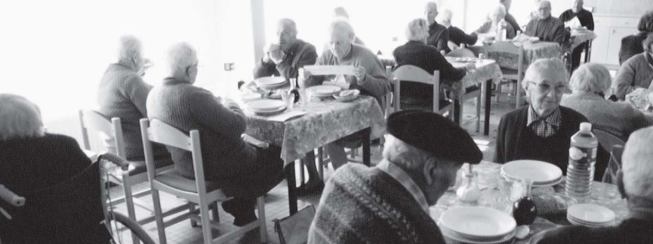
Institutionalization of elderly care has become the norm. The William Enston Home in Charleston, S.C., is an early model for a planned retirement community.

1935
The Social Security Act establishes cash payments for the elderly, helping give rise to the for-profit nursing home.

1946
The Hill-Burton Act institutes national guidelines for healthcare, ushering in the era of the nursing home as hospital.

1950
FHA and other government-backed loans spur a surge in private nursing home development. Despite basic licensing of facilities, oversight can be spotty, and conditions inside many homes are poor.

1961
At the first-ever White House Conference on Aging, the AARP unveils Freedom House.

1990
CCRCs gain in popularity-jumping from 800 at the beginning of the decade to around 2,000 today.

2003
The first Green House opens in Tupelo, Miss.

2008
AARP develops Andrus House, a contemporary model of universal design, in Washington, D.C.