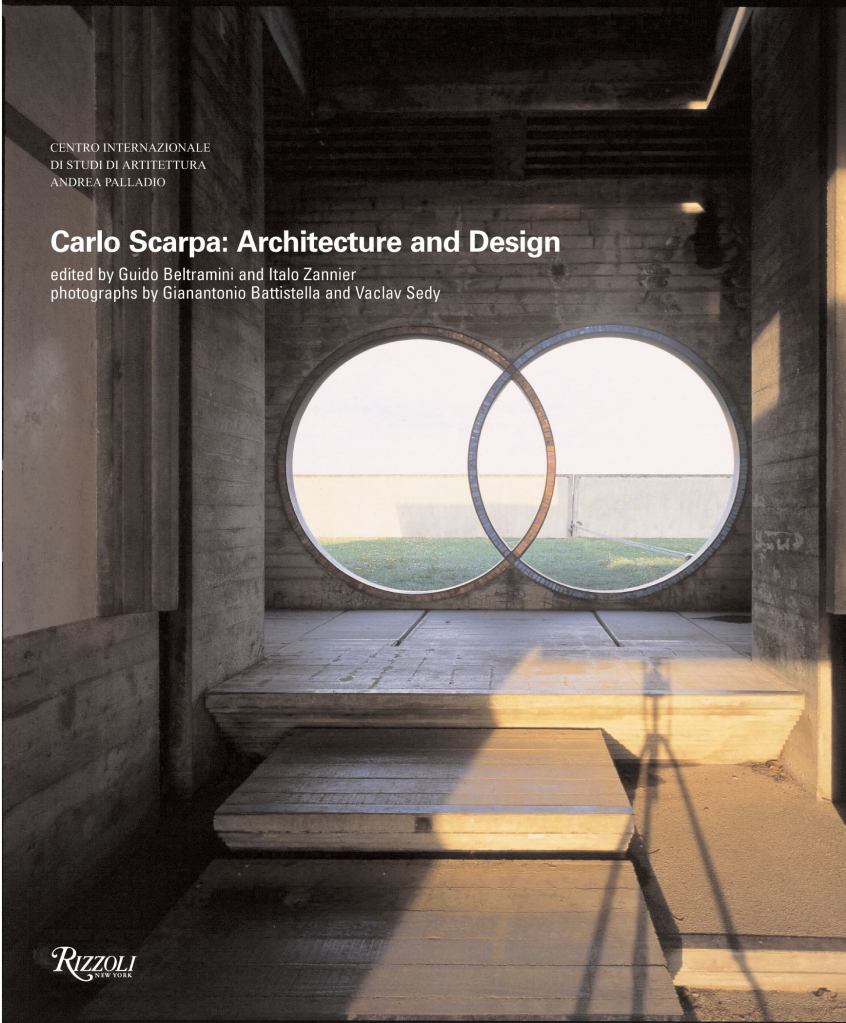
<p align="left" xmlns="http://www.w3.org/1999/xhtml"><font face="TheSerif-HP7Bld" size="1">Carlo Scarpa: Architecture</font></p><p align="left" xmlns="http://www.w3.org/1999/xhtml">and Design</p><p align="left" xmlns="http://www.w3.org/1999/xhtml"><em><font face="TheSerif-HP5PlainIT" size="1">By Guido Beltramini</font></em></p><p align="left" xmlns="http://www.w3.org/1999/xhtml">Edited by Italo Zannier</p><p align="left" xmlns="http://www.w3.org/1999/xhtml">Photographs by Gianantonio</p><p align="left" xmlns="http://www.w3.org/1999/xhtml">Battistella and Vaclav Sedy</p><p align="left" xmlns="http://www.w3.org/1999/xhtml"><font face="TheSerif-HP5Plain" size="1">The 20th century Italian master</font></p><p align="left" xmlns="http://www.w3.org/1999/xhtml">Carlo Scarpa (1906–1978) emerged</p><p align="left" xmlns="http://www.w3.org/1999/xhtml">from a Venetian tradition that</p><p align="left" xmlns="http://www.w3.org/1999/xhtml">merged art, craft, intellect, and,</p><p align="left" xmlns="http://www.w3.org/1999/xhtml">especially in his case, architecture.</p><p align="left" xmlns="http://www.w3.org/1999/xhtml">Over his varied career, which is</p><p align="left" xmlns="http://www.w3.org/1999/xhtml">the subject of this book on the</p><p align="left" xmlns="http://www.w3.org/1999/xhtml">centenary of his birth, Scarpa</p><p align="left" xmlns="http://www.w3.org/1999/xhtml">designed 58 structures, furniture,</p><p align="left" xmlns="http://www.w3.org/1999/xhtml">and Murano glass for the elite</p><p align="left" xmlns="http://www.w3.org/1999/xhtml">house of Venini. Scarpa’s respect</p><p align="left" xmlns="http://www.w3.org/1999/xhtml">for craft, materials, and decoration,</p><p align="left" xmlns="http://www.w3.org/1999/xhtml">which played out in iron, marble,</p><p align="left" xmlns="http://www.w3.org/1999/xhtml">wood, and copper, may inspire</p><p align="left" xmlns="http://www.w3.org/1999/xhtml">architects seeking to do the same</p><p align="left" xmlns="http://www.w3.org/1999/xhtml">today. A preoccupation with light and detail found lyrical expression in concrete.</p><p align="left" xmlns="http://www.w3.org/1999/xhtml">Scarpa’s fascination with the organic architecture of Frank Lloyd Wright is well known.</p><p align="left" xmlns="http://www.w3.org/1999/xhtml">Ultimately, the Italian expressed his own instincts in such iconoclastic buildings as</p><p align="left" xmlns="http://www.w3.org/1999/xhtml">the 1973 Banca Populare di Verona, with a concrete façade punctuated with portholes.</p><p align="left" xmlns="http://www.w3.org/1999/xhtml">Among the works detailed in exceptional and unusual photographs is the Castelvecchio</p><p align="left" xmlns="http://www.w3.org/1999/xhtml">Museum in Verona, which Scarpa worked on intermittently from 1958 to 1975. Of his</p><p align="left" xmlns="http://www.w3.org/1999/xhtml">iconic Brion-Vega Cemetery tomb, a monument to post-modern eclecticism, Scarpa</p><p align="left" xmlns="http://www.w3.org/1999/xhtml">wrote that the austere work “will get better over time,” providing a garden for the</p><p align="left" xmlns="http://www.w3.org/1999/xhtml">deceased, rather than “shoe boxes.” Scarpa, who died in 1978 after a fall along a</p><p align="left" xmlns="http://www.w3.org/1999/xhtml">stairway in a Japanese temple, is buried in the cemetery. Photos in the book make clear</p><p xmlns="http://www.w3.org/1999/xhtml">that Scarpa’s works may need reviving, lest they too pass away. Rizzoli; $65</p>

Carlo Scarpa: Architecture

and Design

By Guido Beltramini

Edited by Italo Zannier

Photographs by Gianantonio

Battistella and Vaclav Sedy

The 20th century Italian master

Carlo Scarpa (1906–1978) emerged

from a Venetian tradition that

merged art, craft, intellect, and,

especially in his case, architecture.

Over his varied career, which is

the subject of this book on the

centenary of his birth, Scarpa

designed 58 structures, furniture,

and Murano glass for the elite

house of Venini. Scarpa’s respect

for craft, materials, and decoration,

which played out in iron, marble,

wood, and copper, may inspire

architects seeking to do the same

today. A preoccupation with light and detail found lyrical expression in concrete.

Scarpa’s fascination with the organic architecture of Frank Lloyd Wright is well known.

Ultimately, the Italian expressed his own instincts in such iconoclastic buildings as

the 1973 Banca Populare di Verona, with a concrete façade punctuated with portholes.

Among the works detailed in exceptional and unusual photographs is the Castelvecchio

Museum in Verona, which Scarpa worked on intermittently from 1958 to 1975. Of his

iconic Brion-Vega Cemetery tomb, a monument to post-modern eclecticism, Scarpa

wrote that the austere work “will get better over time,” providing a garden for the

deceased, rather than “shoe boxes.” Scarpa, who died in 1978 after a fall along a

stairway in a Japanese temple, is buried in the cemetery. Photos in the book make clear

that Scarpa’s works may need reviving, lest they too pass away. Rizzoli; $65


<p align="left" xmlns="http://www.w3.org/1999/xhtml"><font face="TheSerif-HP7Bld" size="1">Gordon Matta-Clark:</font></p><p align="left" xmlns="http://www.w3.org/1999/xhtml">You Are the Measure</p><p align="left" xmlns="http://www.w3.org/1999/xhtml"><em><font face="TheSerif-HP5PlainIT" size="1">Edited by Elisabeth Sussman</font></em></p><p align="left" xmlns="http://www.w3.org/1999/xhtml">Essays by Briony Fer, Tina Kukielski,</p><p align="left" xmlns="http://www.w3.org/1999/xhtml">Gwendolyn Owens, Spyros</p><p align="left" xmlns="http://www.w3.org/1999/xhtml">Papapetros, Christian Scheidemann,</p><p align="left" xmlns="http://www.w3.org/1999/xhtml">Joan Simon, and Elisabeth Sussman</p><p align="left" xmlns="http://www.w3.org/1999/xhtml"><font face="TheSerif-HP5Plain" size="1">The artist Gordon Matta-Clark</font></p><p align="left" xmlns="http://www.w3.org/1999/xhtml">(1943–1978) trained as an architect,</p><p align="left" xmlns="http://www.w3.org/1999/xhtml">which may be why he was so</p><p align="left" xmlns="http://www.w3.org/1999/xhtml">skillful at turning crumbling urban</p><p align="left" xmlns="http://www.w3.org/1999/xhtml">landscapes into political and social</p><p align="left" xmlns="http://www.w3.org/1999/xhtml">indictments. The book, which</p><p align="left" xmlns="http://www.w3.org/1999/xhtml">accompanies a retrospective at the</p><p align="left" xmlns="http://www.w3.org/1999/xhtml">Whitney Museum of American Art</p><p align="left" xmlns="http://www.w3.org/1999/xhtml">in New York, traces his too-brief</p><p align="left" xmlns="http://www.w3.org/1999/xhtml">career as a radical “anarchitect.” The</p><p align="left" xmlns="http://www.w3.org/1999/xhtml">son of Chilean Surrealist painter</p><p align="left" xmlns="http://www.w3.org/1999/xhtml">Roberto Matta and godson of Marcel</p><p align="left" xmlns="http://www.w3.org/1999/xhtml">Duchamp, Matta-Clark created</p><p align="left" xmlns="http://www.w3.org/1999/xhtml">pointed commentaries on the</p><p align="left" xmlns="http://www.w3.org/1999/xhtml">unsatisfying drift of the American</p><p align="left" xmlns="http://www.w3.org/1999/xhtml">dream. A 1970s series of black-and-white photos of the devastated Bronx mocked the</p><p align="left" xmlns="http://www.w3.org/1999/xhtml">emerging neocons of design, who were heading deep into classicism. Matta-Clark</p><p align="left" xmlns="http://www.w3.org/1999/xhtml">bought and photographed forlorn plots of land for a commentary called “Fake Estates.”</p><p align="left" xmlns="http://www.w3.org/1999/xhtml">Temporary projects were created with a power saw and then demolished. The artist’s</p><p align="left" xmlns="http://www.w3.org/1999/xhtml">life was also short: He died from cancer at the age of 35. His work remains a call to</p><p xmlns="http://www.w3.org/1999/xhtml">conscience. Yale University Press; $50</p>

Gordon Matta-Clark:

You Are the Measure

Edited by Elisabeth Sussman

Essays by Briony Fer, Tina Kukielski,

Gwendolyn Owens, Spyros

Papapetros, Christian Scheidemann,

Joan Simon, and Elisabeth Sussman

The artist Gordon Matta-Clark

(1943–1978) trained as an architect,

which may be why he was so

skillful at turning crumbling urban

landscapes into political and social

indictments. The book, which

accompanies a retrospective at the

Whitney Museum of American Art

in New York, traces his too-brief

career as a radical “anarchitect.” The

son of Chilean Surrealist painter

Roberto Matta and godson of Marcel

Duchamp, Matta-Clark created

pointed commentaries on the

unsatisfying drift of the American

dream. A 1970s series of black-and-white photos of the devastated Bronx mocked the

emerging neocons of design, who were heading deep into classicism. Matta-Clark

bought and photographed forlorn plots of land for a commentary called “Fake Estates.”

Temporary projects were created with a power saw and then demolished. The artist’s

life was also short: He died from cancer at the age of 35. His work remains a call to

conscience. Yale University Press; $50