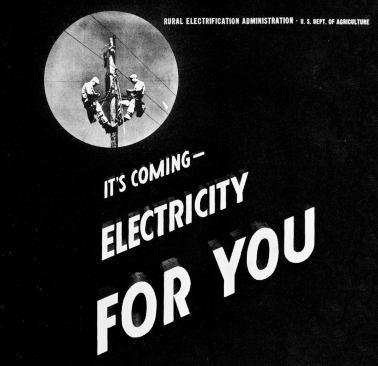
It wasn't just the dust that chased families off their farms during the Depression. The bright lights of the city beckoned, symbolizing all that electricity made possible.

http://www.architectmagazine.com/Images/053_AR0001_tcm20-210578.jpg
600
Images reprinted with permission. Copryright NRECA.

http://www.architectmagazine.com/Images/053_AR0002_tcm20-210587.jpg
600
Images reprinted with permission. Copryright NRECA.
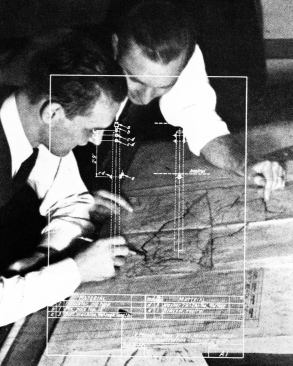
Power companies had no incentive for stringing lines—at a cost of $1,500 to $2,000 a mile—to remote rural sites. But REA engineers (shown above) devised a way for communities to string their own lines at a cost of $538 per average mile. Using straight poles rather than cruciform ones, new high-strength conductors, and assemblyline construction reduced costs. “It was a business platform that provided safe, reliable power at the lowest possible rate,” says Patrick Lavigne, director of public relations at the National Rural Electric Cooperative Association (NRECA), which today represents more than 900 co-ops that grew out of the REA program.

http://www.architectmagazine.com/Images/054_AR0001_tcm20-210596.jpg
600
Images reprinted with permission. Copryright NRECA.
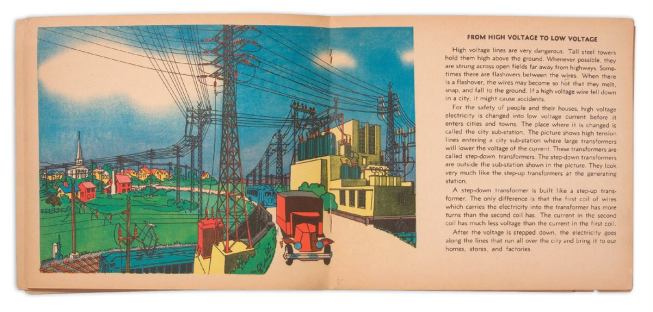
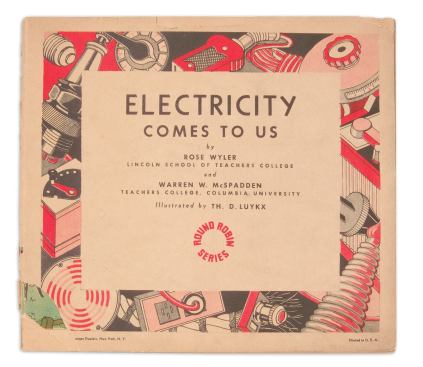
A 1937 educational book for children explains how electricity is generated by coal or water power and brought to towns and homes.

http://www.architectmagazine.com/Images/054_AR0002_tcm20-210606.jpg
600
Images reprinted with permission. Copryright NRECA.
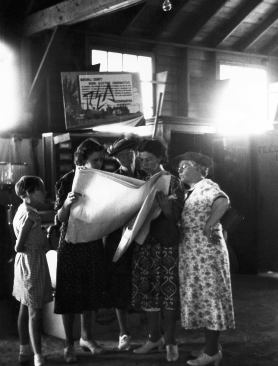
For rural women who were used to hauling wood and water to cook, clean, and launder without electricity, the REA program promised liberation.

http://www.architectmagazine.com/Images/054_AR0003_tcm20-210615.jpg
600
Images reprinted with permission. Copryright NRECA.
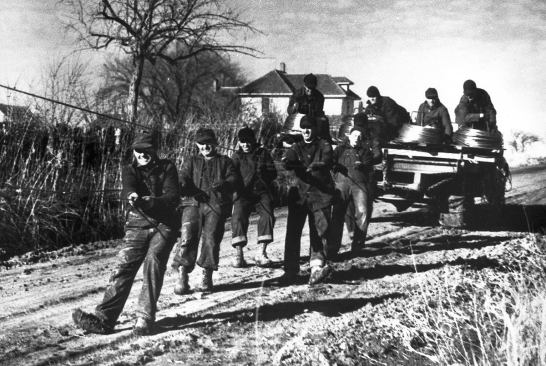
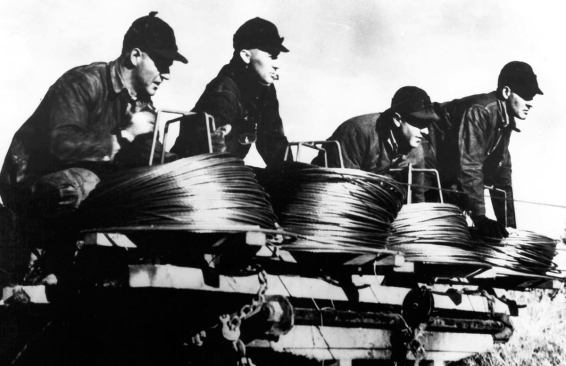
It cost $5 to hook into a local co-op. Trading their labor for the $5 fee are the farmers shown in the photos, pulling the last miles of wire in Horton, Kan., in 1938.

http://www.architectmagazine.com/Images/054_AR0004_tcm20-210625.jpg
600
Images reprinted with permission. Copryright NRECA.
It cost $5 to hook into a local co-op. Trading their labor for the $5 fee are the farmers shown in the photos, pulling the last miles of wire in Horton, Kan., in 1938.

http://www.architectmagazine.com/Images/054_AR0005_tcm20-210634.jpg
600
Images reprinted with permission. Copryright NRECA.
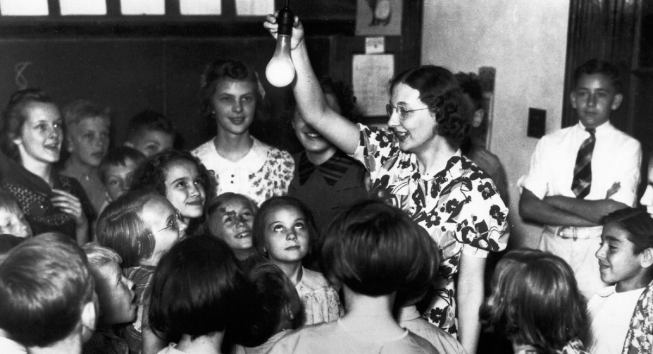
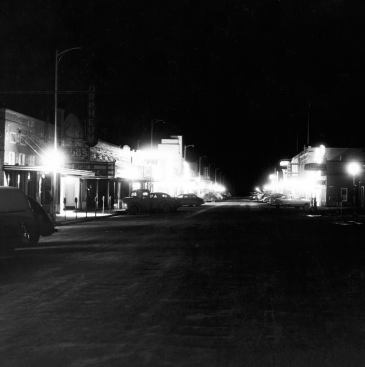
The lights come on for the first time in an unidentified schoolroom and the downtown of Shelby, Mont. Now children could study at night and were relieved of many manual chores—both of which helped kids stay in school, according to teachers from the time. Electricity also brought people together at schools, stores, and churches after working hours. Lights redefined “downtown” in small communities.

http://www.architectmagazine.com/Images/054_AR0006_tcm20-210643.jpg
600
The lights come on for the first time in an unidentified schoolroom and the downtown of Shelby, Mont. Now children could study at night and were relieved of many manual chores—both of which helped kids stay in school, according to teachers from the time. Electricity also brought people together at schools, stores, and churches after working hours. Lights redefined “downtown” in small communities.

http://www.architectmagazine.com/Images/054_AR0007_tcm20-210652.jpg
600
Images reprinted with permission. Copryright NRECA.
A 1937 educational book for children explains how electricity is generated by coal or water power and brought to towns and homes.

http://www.architectmagazine.com/Images/056_AR0001_tcm20-210662.jpg
600
Images reprinted with permission. Copryright NRECA.
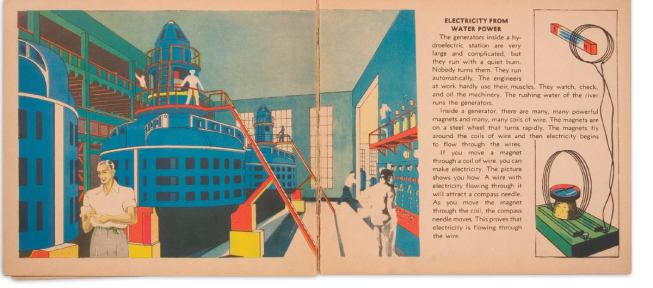
With awe, Electricity Comes to Us explains, “The generators inside a hydroelectric station are very large and complicated, but they run with a quiet hum. ... The engineers at work hardly use their muscles.” Options
beyond hydropower and coal exist for rural co-ops today. Approximately 11 percent of co-ops are powered by
renewable resources, such as wind power and biomass fuel, “and the number continues to grow,” according to
Patrick Lavigne of the NRECA. The association keeps rural co-ops informed of incentives and strategies to go green—whether in choice of power or architectural design of their headquarters.

http://www.architectmagazine.com/Images/056_AR0002_tcm20-210671.jpg
600
URE Headquarters courtesy CDS Associates
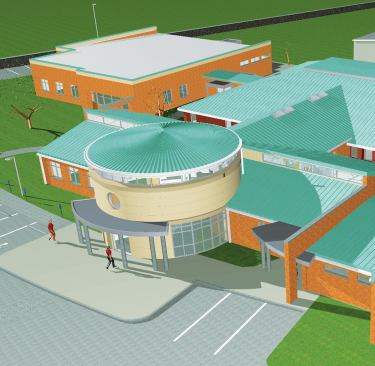
In pursuit of a LEED Gold rating is the Union Rural Electric (URE) cooperative in Marysville, Ohio, whose headquarters renovation is designed by CDS Associates in Cincinnati. “Cooperatives have an obligation to educate our members. We need to do more than just what’s right. We need to help our members learn how to do the same,” says Eileen Tuttle of URE.