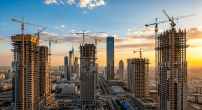
Between 2000 and 2006, Arizona's Maricopa county gained nearly 700,000 new residents, making it the fastest-growing county in the united states. Its fastest-growing town, once a faded highway pit stop, is now a 25,000-person phoenix exurb—that could swell to 400,000 over the next 25 years. Welcome to buckeye, Ariz., where ambitious planners are trying to keep the bedroom-community doldrums at bay. Please build carefully.
UNTIL RECENTLY, people in Buckeye, Ariz., thought the town's heyday was behind them. Buckeye sprang up in the late 1880s as a farming community alongside the new Buckeye Canal in what was then the Territory of Arizona. For decades, travelers crossing the Sonoran Desert saw Buckeye from Monroe Avenue, its main street, which doubled as the old U.S. Highway 80. Commissioned in 1926, 80 was the first road from coast to coast that was open all year, and it brought traffic moving right through downtown Buckeye between Phoenix, 35 miles to the east, and Southern California. But in the 1970s, Highway 80 was outmoded by Interstate 10 a few miles north, and strangers with money to spend mostly stopped coming.
Today, however, they are back in droves. Whereas Interstate 10 once threatened to suck the life out of Buckeye, it has recently proved to be one of the keys to the town's incredible reawakening—as a beeline toward more affordable housing beyond Phoenix's outer ring. Earlier this decade, developers began laying claim to huge pieces of land around Buckeye for new subdivisions and shopping centers. Across much of the Phoenix area, this influx has already brought miles of neighborhoods where houses sit rather far from shops, services, or anything fun, so it's hard to walk from here to there.
Buckeye—given the fast pace of its development—might be the last place you would expect to find anything smarter. But the town's planners and politicians are trying to get ahead of the vacuum that a developer's nature abhors, and design, of all things, a sustainable suburb. Over the past few years, they have been seriously overworked.
The town hasn't a moment to lose. Last year, Forbes magazine listed Buckeye as the second-fastest-growing suburb in the nation (after Lincoln, Calif., outside Sacramento). Between 2000 and 2005, Buckeye's population increased by nearly 200 percent, to 25,406. Three other towns nearby—Surprise, Goodyear, and Avondale—also were among the 10 fastest-growing suburbs on the Forbes list. The latter three towns, which have an air of polished newness along their palm-lined shopping strips and are filled with people speaking in Midwestern accents, butt up against the White Tank Mountains—the edge of the Valley of the Sun and long that of the Phoenix metropolitan area. But Phoenix's population pressure has begun to break around the mountains on vast tracts of desert, studded with tall saguaro cactus and brushy palo verde trees and undulating westward down to the Hassayampa River.
Over the past several years, the town of Buckeye has annexed 370 square miles of this land into its corporate limits, and its total planning area, which it intends to annex eventually, measures 598 square miles, which is larger than Phoenix. From its northernmost corporate limit to its southernmost, Buckeye runs about 45 miles long. From east to west, it is 24 miles wide.
Right now, across much of this terrain, it doesn't look as if much is going on, particularly along the Sun Valley Parkway, a four-lane divided road that stretches north from Interstate 10 into the desert before turning east back to Surprise. It has been called the Road to Nowhere. Off the interstate, a sign on the parkway cautions that there are no services for the next 35 miles.
“You're still driving through the heart of Buckeye,” said Phil Marcotte, the chief building official for the town, who was doing the actual driving. Marcotte, who started work for the town in 1994, when it had about 5,600 people, offered to show me around the vast tracts of Buckeye where developers are laying seed for 22 approved master planned communities that are expected, by 2030, to hold more than 400,000 people.
It all seems unlikely. But as you cruise a few miles up the parkway from the interstate into the scrubland, an oasis of sprinkler-fed green lawns appears on the left. It is Tartesso West, a 5,500-acre master planned community where home builders such as Hacienda, Atreus, Pulte, and Canterra are erecting the first dozens of 21,790 planned housing units around a series of neighborhood parks. They are mostly attractive, single-family stuccoish houses with multiple gables and xeriscaped front yards, sunning under high-voltage lines drawn from the Palo Verde Nuclear Generating Station off to the southwest. A sign near the entrance advertised houses starting from $199,999.
“They're giving them away!” observed Richard Rohrback, Buckeye's senior building inspector, who had joined us for the drive.
“Yeah, but we're still buildin' em,” Marcotte said.
The bursting of the housing bubble has slowed down home sales and also slowed the pace of housing-permit approvals and inspections around Buckeye. But “slow” is relative. In 2000, the town issued 76 building permits, or about 6 per month. In 2005, it issued 4,549, or about 379 per month—at one point, on Rohrback's count, his staff was performing 300 inspections a day. Last year, the number of permits issued dropped to 2,888, about 241 per month.
We left Tartesso West—where we saw exactly one human being out walking the streets on a hot afternoon —and drove along the empty parkway and turned left into Festival Ranch, Buckeye's northernmost master planned community. The 10,000-acre property is being developed by Pulte Homes' subsidiary Del Webb to include 24,000 housing units around a 23-acre village center. So far, there are two completed housing developments, including the new Sun City Festival for retirees. Sun City Festival residents can shop at a new Safeway, fuel up at a new Shell station, and go chipping at the Copper Canyon Golf Club. Near the entrance, there are plans for a 155,000-square-foot retail center anchored by a Fry's Marketplace grocery store.
On the way to Festival Ranch and back, we passed by Douglas Ranch, by far the largest of Buckeye's approved master planned communities. The former cattle ranch encompasses 32,250 acres and will have 83,266 new dwelling units when fully built. For the moment, it is as empty as it ever was, and some of the roughest land you've ever seen.
“WE DON'T WANT to become a bedroom community,” said Bob Bushfield, a planner who is the director of community development for Buckeye. He looks askance at what has happened to so much of the Phoenix metro area, a suburban monoculture of tract homes built exclusively around the automobile. “That's not our goal.”
When Bushfield came to Buckeye several years ago, he was the planning department. In 2005, he hired Suparna Dasgupta as his assistant director, and she is in charge of planning and zoning, with oversight of community master plans. “It's just exploded since about 2003, when things really took off,” Bushfield said. The department now has a staff of seven people, if you count Marcotte, who has another 10 inspectors out in the field.
To avoid the bedroom-community syndrome, Bushfield, Dasgupta, and their staff must fit together many kinetic pieces of an urban puzzle at once to try to ensure that people who live in Buckeye generations from now don't find themselves trapped in neighborhoods without stores or places to work—or in a town that can't sustain its own infrastructure, education system, or, most importantly in the desert, water.
In January, the Buckeye Town Council approved a major update to the town's general plan, which, in keeping with Arizona state law, guides all development in town. In May, the town's residents were to vote whether or not to ratify the plan. Dasgupta, who managed the writing of the new plan, believed that voter ratification would be quite likely, because the plan had been developed over two years with copious feedback from stakeholders, such as longtime residents, new arrivals, farmers, developers, the chamber of commerce, and officials with Maricopa County and the regional planning agency, the Maricopa Association of Governments. By the time the process was finishing, people stood up at town council meetings only to praise the plan, Dasgupta said.
“It was unbelievable,” she added. “We had a minimum of 100 people at every public hearing. You never see that kind of participation. I would be lucky in my other job if I got 10 people to come.” (Dasgupta previously worked as a planner in Cincinnati.)
The plan follows the mandates of Arizona's Growing Smarter legislation, passed in 1998 and beefed up in 2000, which requires local governments to enact development strategies with citizen input. The plans have to address the preservation of open space, the shaping of growth areas, environmental planning, the funding of development costs, property rights, and water supply. (Buckeye can pump groundwater for the next 100 years from the Hassayampa River aquifer.)
Growing Smarter has given the town's planners an excellent excuse for policies that will not destroy the region's natural ecology but that will also support population growth, if indeed the cake can be both had and eaten. Buckeye's new general plan is written to work hand in glove with a massive transportation study by the Maricopa Association of Governments covering the Hassayampa Valley, which includes all of Buckeye.
The Hassayampa study contemplates more than a dozen new major parkways and freeways in addition to arterial routes and projects possibilities for pedestrians, bicyclists, bus riders, and light rail users. The Hassayampa study has also helped Buckeye determine where it will situate areas for new urban growth—mainly in an area south of Interstate 10. The planning staff is working to concentrate major office centers in a medium-density expansion of downtown. On planning maps, the location for this city center would sit next to four proposed freeways, the prospects for which would seem, most other places, simply starry in their scope. In Buckeye, nobody seems to doubt that they will come true.
IF THE TOWN'S PLANNERS could have their way, Buckeye's neighborhoods would look a lot like Verrado, one of its first major master planned developments, several miles northeast of the old downtown. Verrado drapes over 8,800 acres on an eastern slope of the White Tank Mountains, land that was formerly a proving ground for Caterpillar tractors. The development has attracted attention across the Phoenix area for its creation of an actual new town, with a main street business district (on Main Street) and better-than-decent production architecture in its houses and buildings.
It didn't get that way by accident. Mass home builders generally design subdivisions as easily and cheaply as possible, which is why you see suburbs with oceans of nearly identical houses sequestered well away from the clots upon clots of retail plazas and pad-site restaurants on the blacktop heat islands that line the major roads. Driving through the outskirts of Charlotte or Sacramento these days is like watching the Flintstones, with all the same scenery rolling by in the background.
Verrado shows the influence of New Urbanism, a kind of “planned organic”—a seemingly spontaneous mixture of houses, condos, and apartments for all kinds of households that will, when done, salt in several hubs of stores and services among them. Although most of the home builders putting up houses in Verrado are production builders, they're having to behave differently here to get a piece of the place.
The developer, DMB Inc., is giving the builders multiple smaller sites on which to work. JT Elbracht, an architect (and Taliesin West alumnus) who is Verrado's director of community design, pointed out the arrangement on a large-scale model in Verrado's homey welcome center. “Instead of letting [builders] put 200 houses over there all in one spot, we said, ‘Put 30 over there, 40 over there, and 20 over there,' so it disperses. This way, you get big houses next to medium houses next to small houses, like small towns have.”
The Main Street configurations were practically alien to the retail tenants in the town center. CVS wanted to build a pad-site store. “We talked to them and talked to them and said, ‘Guys, we're not going to let you do that,' ” Elbracht recalled. And DMB didn't; the new CVS resides in a nicely detailed arcade storefront faced in stucco.
Across the street, the local grocer, Bashas', initially objected to DMB's requirement that it have entrances on three sides to make it more engaging to folks walking by. Citing the risk of theft, Bashas' officers said, “ No, no, only two. Absolutely only two,” Elbracht said. “And we said, ‘OK, do this, guys: Put the doors in, and, if it doesn't work, you can lock the doors.' ”
Robert Kubicek, a Phoenix architect responsible for about two dozen retail projects within Buckeye, designed that Bashas' store, which measures 16,000 square feet in a Main Street building with apartments overhead. The biggest problems, he said, came in trying to keep the store from bothering upstairs tenants with noise and exhaust. His clients at Bashas' balked at the three-doors idea because “like everybody else, they want a little bit of control,” he said. But the doors seem to work fine. “It's been very successful,” he said, and has compelled Bashas' to look anew at putting stores in densely built sites.
Elbracht reserves special bragging rights for the new Verrado High School, just outside the town center. The school's design (shown opposite, top right corner)—an industrial turn on Frank Lloyd Wright—is conceptually head and shoulders above the typical suburban school building. Massaging the school project along the lines of Verrado's vision took some doing because the school is a public entity. “The school district gets its money from the state,” Elbracht said. “They only have so much, and we did a collaborative process with them to get a great-looking school that didn't cost them or the taxpayers any more money.”
A LEED silver certification is pending for the school, based on its energy efficiency and recycled and locally bought materials, among other features. The firm that designed it, Orcutt|Winslow in Phoenix, also designed Verrado Middle School nearby and is working on a new elementary school for the community. David Schmidt, the project architect, said he had his doubts about fulfilling DMB's wishes for a showcase high school.
“At first, I thought, I can't afford to follow [DMB]” because of the costs that could entail, Schmidt said, adding that the developer's dictates initially seemed like interference, though DMB was donating the land and chipping in $2.25 million of the school's $40 million budget. “We finally started to look at it their way to try to come up with a design.” Looking back, he said, “I'm glad DMB pushed us the way they did—it gives the school a different character.”
Buckeye officials are also impressed by Verrado, which has had a considerable influence on them. “I've never seen how much planning thought goes into it—the effort that they've put into planning,” Dasgupta said. In particular, she cited the new fire station being designed for Verrado by Perlman Architects, an arcaded, hipped-roof building that will look as if it's been there since the 19th century. “The fire station the town is going to get out of that effort is just a gorgeous building,” she said.
THE REAL ESTATE frenzy has slowed down somewhat lately in Buckeye. A new Target and Home Depot near Verrado are on hold. But a big retail hub, called Sundance Towne Center, has opened next to the new Sundance community along I-10 between Watson and Yuma roads. A 75-acre tract that Google's map shows as a graded site has a Wal-Mart, a Lowe's, a Linens 'n Things (the company filed for bankruptcy in April), two banks, an OfficeMax, a Peter Piper Pizza, a Brakes Plus, and an AutoZone.
People in Buckeye need this sort of stuff. (They also need police and fire protection in far-flung sections, which they are getting in a system of sturdy, temporary stations dotting the area.) The town wants them to have it but also wants to temper the way these businesses typically look, which is ugly. So the planners are putting their prerogatives in writing.
Last year, Buckeye's town council adopted a set of design rules for newly built commercial and industrial buildings. They're currently being refined to fit into the new development code. At heart, the rules are critical of common suburban shopping development. They tell developers to be nicer to the roadside, with more texture and articulation in their buildings than they usually offer, and to consider surrounding landscapes more carefully. There's a palette of approved materials—brick, stone, stucco, and wood, among others. The rules proscribe massive asphalt parking lots. They suggest that developers throw in some benches, kiosks, and trees and make their buildings look like something besides cash cows. The set of rules is “one of the things the town needed for a long time,” according to Dasgupta.
The city of Scottsdale has a similar sheaf of design guidelines in effect, so they won't be wholly new to most developers who have worked in the area. But developers would just as soon not deal with them. Robert Kubicek, the retail architect, noted that the city has been trying to persuade developers to “buy in as quickly as possible” to the new design rules even thought they don't yet have the force of an ordinance.
“Of course, our developers are saying, ‘When they're there, we'll do it. Until then, we're working with the old' ” rules, Kubicek said. “Because the new rules are, you know, tougher.”