
Ennead Architects and CannonDesign have announced they will officially join forces, uniting their collective global teams and portfolio in pursuit of greater impact.
Both firms share a belief that thoughtfully designed cities, civic spaces and public environments have the power to strengthen communities and shape how people experience life collectively, and by coming together, they are deepening their commitment to that mission.
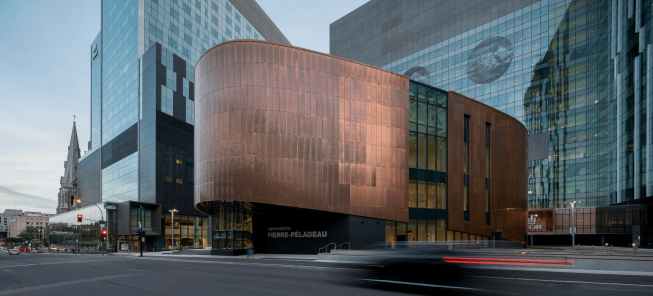
The schematic designs for the CHUM Amphitheater were done by following the schematic design concept developed by CannonDesign + NEUF architect(e)s.
Ennead’s 160-person practice will soon serve as a distinct studio within the larger global company, practicing as Ennead, a CannonDesign company. They will continue to work as an integrated design collective with studios in NYC, LA and Shanghai, strengthened by CannonDesign’s global network of 1,600 designers, consultants, experience strategists and technologists.
“The work across our global portfolios speaks to shared goals for design excellence, but what really drew our firms together is how we think and create,” said David Polzin, AIA, CannonDesign’s Executive Director of Design in the press release. “Our mutual respect and shared sense of destiny have made this feel less like a business decision and more like a natural coming together.”
The exact financial terms of the deal remain private. As an employee-owned company, Ennead partners and other staff are stepping into CannonDesign ownership roles with clear ownership pathways for emerging leaders as the practice grows.
To learn more about the driving forces behind this acquisition and its potential, our team caught up with key leaders from both firms, including:
- CannonDesign CEO Brad Lukanic, AIA
- CannonDesign Executive Director of Design David Polzin, AIA
- Ennead Architects Design Partner Richard Olcott, FAIA
- Ennead Architects Managing Partner Molly McGowan
Here is a summary of that conversation.
How did this merger originate? How long have your firms been connected?
Brad: “I along with many others at CannonDesign have long admired Ennead. Few firms have left a mark on the profession the way they have, with a body of work that includes some of the most recognized projects in the world. Some of my most vivid memories with my family are from visiting the American Museum of Natural History’s Rose Center for Earth and Space in New York City.
About five years ago, I met their leadership through the AIA Large Firm Roundtable (LFRT) and realized we hold shared vision and values. All that led to about a year ago when conversations about joining forces emerged. We were on parallel paths, pursuing the same goals and it became clear we could move faster and go further together.”
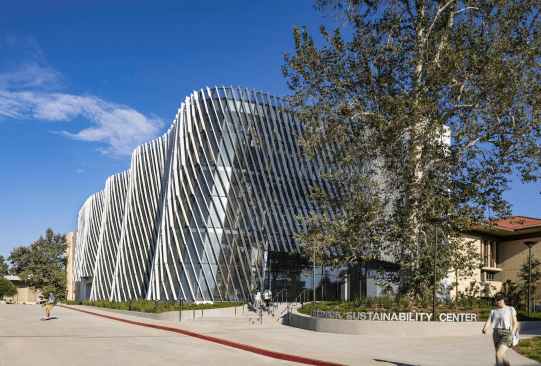
Yazdani Studio of CannonDesign designed the California Institute of Technology's Resnick Sustainability Center.
Molly: “Even before we started talking seriously, our team at Ennead has been inspired by CannonDesign’s culture of innovation. They move fast, think creatively, make smart investments, and get things done. For a firm their size, that is rare.
Now, you layer that with our own deep investments in innovative design technologies and building systems. The combination unlocks something neither of us could reach alone.”
Can you expand on what motivates each of your firms to make this business move?
Richard: “Since our founding, Ennead has always been willing to evolve and reinvent itself as a practice. The sustainable business model CannonDesign has created with design-adjacent services, software development and other technological investments, all in the pursuit of better solutions, is inspiring.
We really believe this is how we best position our firm for radical growth and impact moving forward.”
David: “What draws our firms together is a shared belief that design can improve our world. What we do as architects and designers is a means to positive change for people, and the greatest value we can offer is not only the rigor of our capabilities, but our critical judgment, intelligence and sense of purpose.
We’ve recognized those mutual values throughout this process, and we’ve realized just how aligned we are.”
Your announcement indicates Ennead will operate as a distinct studio within CannonDesign. Can you elaborate on what that means?
Brad: “Our intent is to preserve that which makes Ennead special and empower them to continue the work as an integrated design collective.
With Ennead, its unique identity, design culture and leadership will continue to lead and be strengthened by CannonDesign’s broad capabilities and subject matter expertise.
Molly: “The CannonDesign team has been clear from day one of our conversations that they have the utmost respect for Ennead’s culture.
We see this move as a force multiplier. It will preserve our strengths and culture while bolstering our capabilities.”
Still, anytime design firms unite, it can be hard to integrate design cultures. Have you thought about that beyond preserving Ennead’s culture?
David: “There will be great opportunity for creative reciprocity between our people and we know that we can learn from each other. Our cultures are already so aligned; we both want to design solutions that have significant positive outcomes for society.
We both want to work with the most ambitious clients to take on high-stakes challenges of all types. CannonDesign is a champion for our Living-Centered Design ethos and Ennead fits remarkably well into that framework.”
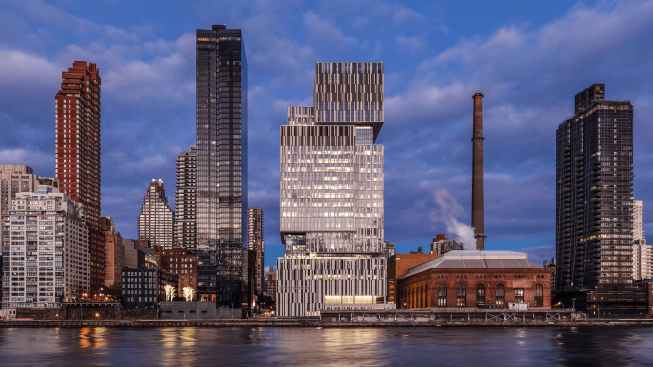
The David H. Koch Center for Cancer Care at Memorial Sloan Kettering in New York City, designed by Ennead Architects in collaboration with Perkins Eastman and ICRAVE.
Richard: “It is also worth noting that our portfolios are synergistic too. We have each delivered significant work in healthcare and education, as well as in the community and commercial sectors. We’ve both collaborated with storied clients like Memorial Sloan Kettering Cancer Center and NYU, among other institutions.
And where our portfolios are complementary – for example, Ennead does a great deal of Embassy work – that creates exciting opportunities for new collaboration and greater impact.”
For CannonDesign, this is one of several acquisitions as of late. Can you talk about the larger strategy?
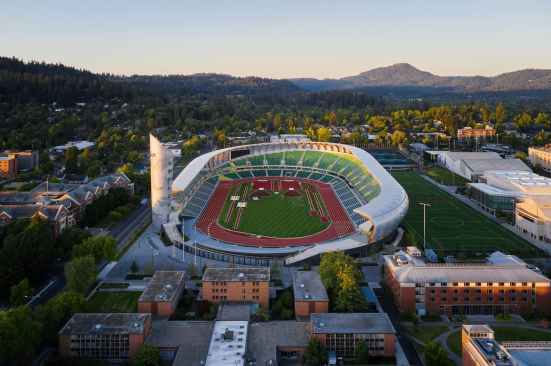
The University of Oregon Hayward Field designed by CannonDesign.
Brad: “It was just alluded to that we do not believe design firms can stand still. Our clients face multi-dimensional challenges today, and we seek to create design solutions that address those challenges. That’s why we have been building capabilities around front-end consulting, smart buildings, transition and activation planning, digital products, the list goes on.
We are a design solutions firm that can help organizations with any and every need they have, sometimes they need a building, sometimes they need a strategic plan and sometimes they need future-of visioning.
Leading our practice down this trajectory to be a new kind of design firm has been core to our work since I became CannonDesign’s CEO a decade ago.”
Molly: “That vision of being a new kind of design firm really motivated us as we approached joining CannonDesign. We can now truly shape the full arc of how places are imagined, built, activated, and experienced, all while carrying design into contexts far beyond buildings.
That’s what is made possible by joining CannonDesign.