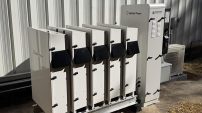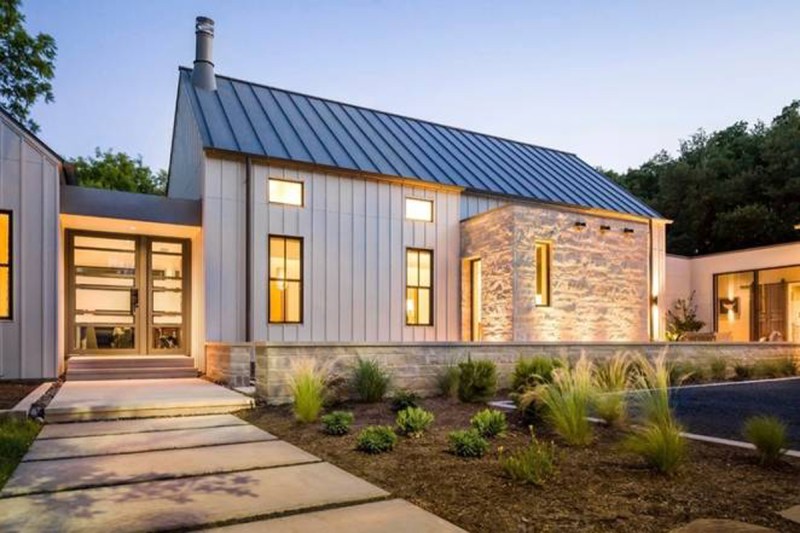
Palo Alto, Calif.–based startup Forward Labs says its solar roofing product could cost up to 33 percent less than Tesla’s, while producing the same level of electricity. The standing-seam-style solar roofing uses monocrystalline solar cells, which, according to the company, have a higher energy density than other solar roofing products and generate up to 19W per square foot, compared to competitors’ 11W per square foot. The product is more than a solar tile or panel, and instead is a layered system combining a tempered glass surface and solar cells and a concealed racking system. The roofing, available in eight colors, is designed to blend in and at first glance and look like a normal metal roof. The company credits its cost-savings to using more affordable materials and employing a standard manufacturing process with installation that takes half the time of other companies. “Our goal in bringing our solar roof to market was threefold.” says Zach Taylor, CEO and product architect of Forward Labs. “We aimed to develop an integrated solar roof system that looks great, optimizes energy output, and accelerates the return on investment.” Forward Labs is now taking reservations for pre-orders of its first production run next year. [Tree Hugger]
Over at Fast Company, Adele Peters writes that a new report from the federal Energy Information Administration (EIA), a division of the U.S. Department of Energy, says what we all want to hear: The future of autonomous cars is upon us—or at least will be sooner than we previously thought. Numerous studies have suggested that it would take decades for our roads to be chock full of self-driving cars, but the EIA study came to the conclusion we could instead see the same in little more than a decade. First, we need regulations that will support and enable autonomous vehicles on commercial streets, which the reports says could be as early as 2021. Then, the economics have to be so persuasive that autonomous vehicles edge out drivers, a process which could potentially be sped up with electric vehicles. Cheap electric cars (at least in comparison to gas-guzzlers) would be energy efficient, wouldn’t need humans to gas them up, and would last longer. All of which would bring down the cost of using autonomous electric vehicles to the point where gas cars couldn’t compete and the driverless future arrives earlier than expected. [Fast Company]
Researchers at the University of California, San Diego have created a prototype for lightweight gloves that use sensors in order to create the feeling of touch within a virtual environment. Virtual reality (VR) becomes more life-like by using inflatable latex tubes that create resistance at the fingertips, while Leap Motion sensors track the user’s movement in real life. Thus, when a computer detects a movement that would lead to a user interacting with an object in virtual reality, the glove is activated to simulate that feeling. [New Atlas]
Los Angeles–based FutureFarms‘ Spacepot is designed based on a simplified hydroponic system to grow plants using the Kratky method—without pumps, tubes, or electricity—and is ideal for growing fresh herbs at home. “You won’t have had much success in trying to grow your own plants at home and that’s why hydroponics is somewhat of a godsend for us,” writes Leo Davie in Coolector. According to the company’s website, the hydroponic system was popularized by NASA and does not use soil, but instead a combination of water and a hydroponic nutrient solution. “Plants grow bigger and faster because they do not have to work as hard to obtain nutrients,” according to company’s website. “The nutrient solution provides the plant exactly what it needs, when it needs it.” [The Coolector]
Solar panels are a sustainable way to provide energy, but they can be troubling for first responders. In case of a fire, firefighters usually cut ventilation holes in the roof and turn off the electricity, and roofs covered with solar panels can create serious issues with this process. Fixed, electrified solar panels barely leave any space for cutting a hole in the roof. On the other hand, “the illumination trucks that firefighters bring to nighttime emergencies, for example, can give off enough light to electrify a photovoltaic system,” write Wired’s Eleanor Cummins and Nicole Wetsman after speaking to Bob Backstrom, a fire hazard research engineer. To overcome these issues, the National Fire Protection Association and the International Code Council have started to review and update fire codes to include language about photovoltaic panel installation, but not every state is following the new set of codes. “The National Fire Protection Association is working on protocols for dealing with charged solar batteries—and how to deal with new, trendy solar panels that are so sleek first responders might not see them,” says the article. [Wired]
Courtesy The Graphene Company
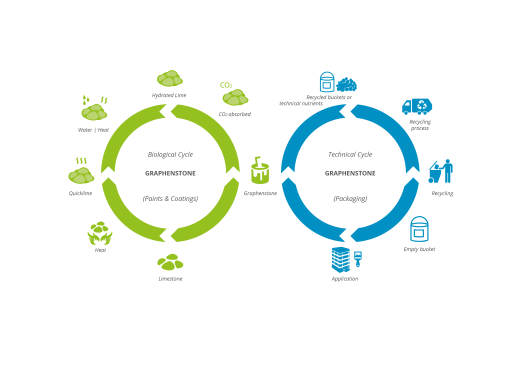
The first commercially available graphene-infused paint is now being distributed across the U.K. by the Graphene Company, the exclusive distributor of the Graphenstone range of paints and materials. Graphenstone paint is derived from raw natural mineral limestone, and the porous nature of its lime- and graphene-infused coatings allows walls to breathe, which improves air quality, reduces room humidity by acting against moisture collection, and contributes to a healthier environment. Microbial growth of bacteria and fungi is deterred and biological and chemical pollutants and allergens are diffused due to the high-alkaline pH of the paint. It is certified by independent German laboratory eco-INSTITUT as free from substances that degrade the environment, and, according to the company, is the only paint in the world to meet the Cradle to Cradle Gold Standard. Graphene is the strongest material known to science and is sourced from pure carbon. The highly inert, innocuous, nontoxic material is infused in paints, coatings, and other materials to boost hardness, durability, strength, and elasticity. Additionally, it reduces the weight of materials and reduces the amount of materials used, maintenance, manpower, and costs. The highly sustainable and ecologically friendly coats are available for indoor and outdoor use. [The Graphene Company]