There’s something surprisingly compelling about the new Slate Truck. In addition to being advertised as the most affordable truck in America, the vehicle may also be the most configurable. Customers can purchase the “Blank Slate,” a two-seater basic truck, or two five-seat SUV models. More remarkably, owners can continue transforming the vehicle over time through hundreds of accessories, modular components, and vinyl wraps that replace traditional paint.
In this way, the electric pickup is designed to be owner-customized versus manufacturer-dictated. In an era increasingly defined by sealed products containing proprietary technologies that discourage modification or repair, the Slate Truck is refreshingly different.
The truck may represent something larger than an innovative electric vehicle. It signals the emergence of what might be called agency-centered design—an approach that gives users not simply choices, but authorship.
A Vehicle Designed to Be Finished by Its Owner
Although a single vehicle does not indicate a design movement, Slate’s popularity mirrors that of a growing collection of products that invite consumer participation instead of mere consumption. A familiar design example is modular furniture systems that invite continuous reconfiguration.

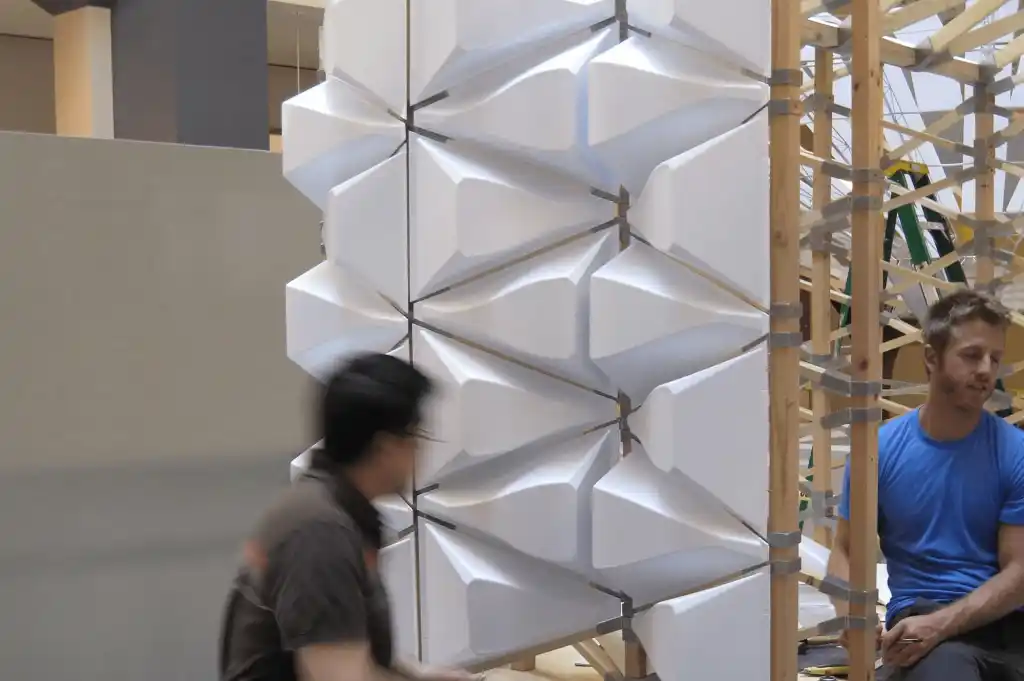
Specialized DIY products, such as Kvadrat’s Clouds textile panels, enable users to transform interior environments at will. Researchers at TU Delft and the Politecnico di Milano are advancing scholarship on DIY materials, shifting fabrication from an industrial process to a collaborative approach.

DIY Materials from the Politecnico di Milano.
Meanwhile, right-to-repair legislation continues to gain global momentum, reinforcing a growing public desire to maintain and upgrade products rather than replace them. Collectively, these examples aim to manifest what one might call agency-centered design, shifting creative authority from producers to users.
From User-Centered Design to Agency-Centered Design
User-centered design (UCD) is not new. A term coined in the 1970s, UCD is an iterative process for developing projects that address the entire user experience. In contrast, agency-centered design (ACD) looks beyond users’ acceptance of a finished product, posing a different question.
Instead of asking how designers can eliminate challenges for users, ACD asks how designers can give users a creative role in the product’s ongoing life. In this way, the objective is not customization but authorship.
Architecture has been fertile ground for ACD development.
Stewart Brand Was Right—Almost
Cedric Price’s visionary Fun Palace, proposed in 1964, imagined an architecture of continuous transformation rather than fixed form.
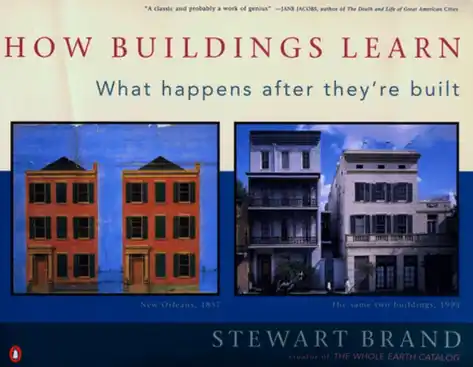
How Buildings Learn by Stewart Brand.
In his 1995 book How Buildings Learn: What Happens After They’re Built (Penguin), Stewart Brand revealed the Fun Palace approach to be more real than imagined, arguing that successful buildings embrace change rather than resist it. Expanding upon Winston Churchill’s frequently cited observation that “We shape our buildings; thereafter they shape us,” Brand extended the cycle: “We shape our buildings, they shape us, we reshape them, they reshape us.”
In his book, Brand famously championed this reciprocal evolution found in everyday buildings over the architectural masterpieces they often outlasted. He called these simple, unpretentious, and adaptable structures “Low Road” buildings, in contrast to the more ambitious “High Road” buildings, whose specialized designs often resist change.
Although I appreciate Brand’s point, I was never comfortable with his implied condemnation of the design architect. Thankfully, agency-centered design offers a third option that combines the two paths.
Architecture as an Open Platform
Advances in computatinal design, digital fabrication, design computation, automated construction, and mass customization highlight the possibilities for buildings that combine the transformability of the Low Road and the experiential richness of the High. Increasingly, architects show that buildings can be beautiful and unfinished; not incomplete, but designed for future change.
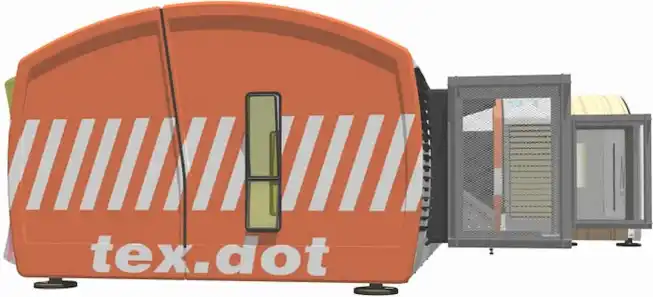
Klip House.
In practice, my first exposure to this possibility was Interloop Architecture’s Klip House, an adaptable, kit-of-parts platform for residential construction. This “physical and operational infrastructure” enabled owners to reconfigure and expand their houses over time using prefabricated components, in response to the same evolving needs discussed in Brand’s book.
In a similar but more accessible fashion, Alejandro Aravena’s housing projects intentionally transfer agency to occupants, empowering residents to expand their homes as needs change and more resources become available.
Estudio Teddy Cruz has explored the development of micro-infrastructure for informal settlements in places like Tijuana. According to the architect, this approach “helps strengthen an otherwise precarious terrain, without compromising the improvisational dynamics of these self-made environments.”
At a smaller scale, HouMinn Practice’s OS (Open Source) Wall reimagines the domestic wall as an open framework that supports shifting living patterns. “The image of networked hackers modding high-tech cars in their garages is an accurate portrayal of the spirit with which we are approaching the design, development, and construction of OSWall,” explain the designers, who remind us that residential wall construction has changed little over the past century. The open-source design approach, which facilitates creative experimentation and testing, extends across various domains.
Designing for Human Creativity
For example, Tokyo’s Hanegi Play Park provides children with loose materials, tools, and space to construct their own environments. Rather than prescribing play through scripted equipment, the designers created conditions for authoring countless experiences.
Although these projects vary significantly in form, scale, and ambition, each embodies a shared willingness to trust users as collaborators rather than treating them as passive occupants. This trust is perhaps the most radical aspect of agency-centered design. Over the past several decades, technological advances have typically been accompanied by a decrease in user agency. Products and assemblies have become more sophisticated but also more tightly integrated, opaque, and unchangeable.
Agency-centered design offers an alternative proposition: technology can amplify, rather than diminish, human creativity. As more users embrace open-ended models like the Slate truck or Aravena’s incomplete housing, designers and architects will be encouraged to pursue synergies between Brand’s High Road and Low Road approaches.
In this way, the next chapter of design may shift away from completeness toward empowerment, and architecture may increasingly be evaluated on how generously it invites occupants to shape its future.