Nearly two decades have passed since my first conversation with Japanese architect Takaharu Tezuka for Matter in the Floating World (Princeton Architectural Press, 2011), when Tezuka Architects was already gaining international attention for projects that dissolved conventional boundaries between architecture, nature, and human experience.
Since then, Takaharu and Yui Tezuka have become two of the most influential voices in contemporary design, creating work that is at once playful, beautiful, and deeply purposeful. Their projects, which include celebrated educational environments as well as community, healthcare, and humanitarian initiatives, demonstrate a rare synthesis of architectural excellence, functional performance, and social commitment.
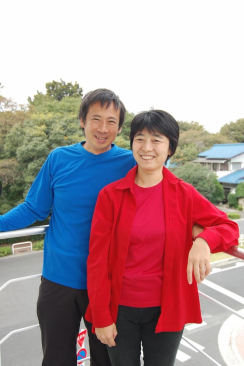
Takaharu and Yui Tezuka of Tezuka Architects.
The following conversation took place in San Diego during the AIA Conference on Architecture & Design 2026, where Takaharu Tezuka was elevated to Honorary Fellowship in the American Institute of Architects, a recognition of the firm’s extraordinary international contributions to the profession.
What makes the Tezukas especially relevant today is their pursuit of design excellence in the service of the health, prosperity, and flourishing of society as a whole. At a time when architecture often struggles to reconcile formal innovation, practical effectiveness, and human well-being, the Tezukas continue to demonstrate that these ambitions are not mutually exclusive. Their work offers a compelling model for a future in which design excellence is measured not only by form and materiality but also by social empowerment.
Blaine Brownell (BB): When we first met about twenty years ago, your firm had already designed many projects. I’m curious how your practice has evolved since then. How would you describe the subsequent growth of your practice?
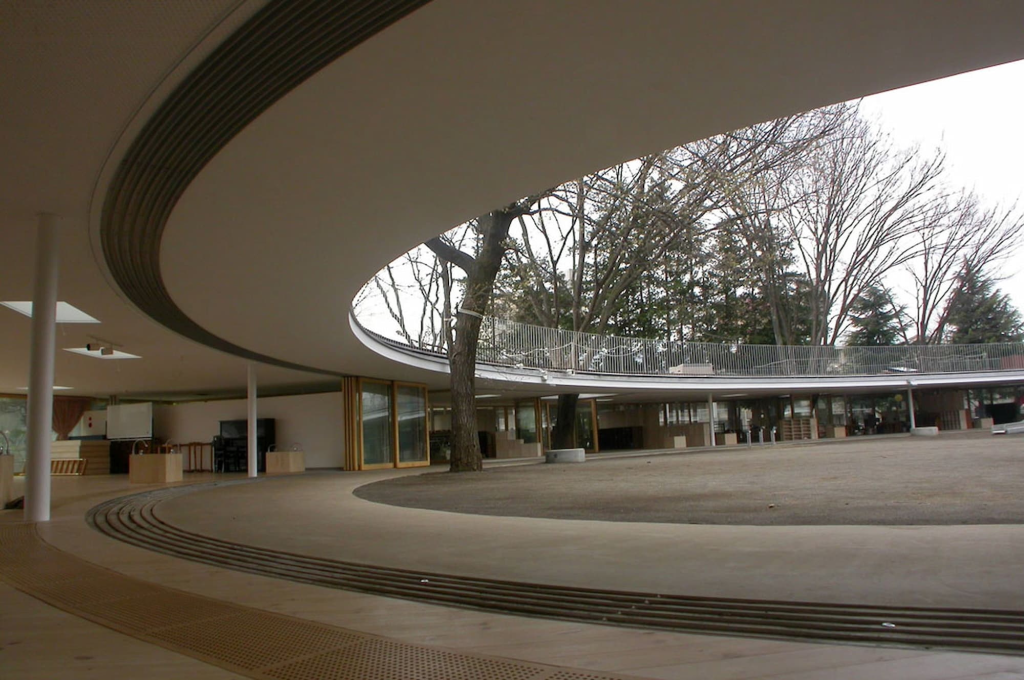
Takaharu Tezuka (TT): Twenty years ago, we were seeking the way—how we should be. Now, we know what to do. Designing a building like the Natural Science Museum (in Echigo) was all about form. But eventually, we became more interested in society itself. The change started with the Fuji Kindergarten project. This project received worldwide publicity and then received a prize from UNESCO. People assumed we had developed a new kind of education, but we didn’t. We helped people establish a new design philosophy.
We’ve met so many people, such as a pastor who has been helping homeless people in Kyushu. This community includes a brutal group of old gangsters, or Yakuza. Now, we are making a beautiful project for them, and we raised money because they had nothing.
After the project’s announcement, many Yakuza now want to quit being gangsters. And the children are trying to come to the new facility, which will be completed in August. I think it’s going to be an interesting project.
We are designing another project for the Jhamtse Gatsal Children’s Community. This school delivers a fantastic education and is far from cities—500 kilometers from the nearest city. The project will be on a very high mountain.
BB: Interesting. Where is this mountain?
TT: It’s in the Himalayas. The community has nothing, but they live an idealized life. 95% of children go to college. It’s unusual, given that the area is very poor. Only 50% of children live to be five years old. Monks find orphans, one by one, and have made a kind of community. We decided to raise money for them, too, after they found us and wanted our help with their school.
BB: Is this in Nepal?
TT: It’s close to Bhutan. It’s in territory disputed by China and India. And 9,000 children go to college, which is unusual there. They have an extremely good education. I’m not helping them just because they are poor, but because they also have the most impressive education. The teaching method is based on sharing. Students are encouraged not only to learn from teachers, but also to teach and support one another. Learning takes place across ages and among peers, creating a community in which everyone becomes both a learner and a teacher.
The school has shifted the focus of education from teaching to sharing. This change represents a transition from the accumulation of knowledge to the cultivation of wisdom. Knowledge can be possessed individually, but wisdom emerges when knowledge is shared and applied for the benefit of others. While knowledge-based education often leads to competition, wisdom-based education nurtures diversity, compassion, and interdependence. It prepares students not only to succeed as individuals but also to contribute to a more connected and harmonious world.
So, we have been raising money for them. I’ve become their ambassador. I was supposed just to be their architect. When we complete the new school, I want to have a world peace conference in that remote area. The funny thing is that although China and India dispute the territory where the school is located, they both want to help the institution. So, I think that would be an amazing place to host a peace conference—that’s the dream.
Also, we have designed the hospital for children who have cancer. In typical hospitals, there is no space for family members. But if you design accompanying houses, the family members can be together. This way, we create a social structure.
BB: Shigeru Ban, who is also speaking at this conference, also focuses on humanitarian work.
TT: Maybe I can tell you the difference between Shigeru Ban and us. Ban focuses on more extreme conditions. He goes to places like Rwanda after a disaster. He uses paper tubes. I think this is fantastic. I actually work with him sometimes. But we are different. We have a longer-term focus. For example, Ban designed a cathedral in Christchurch, New Zealand, with paper tubes. And we designed the Cathedral Grammar school very close to it. But our school is not temporary; it’s designed for long-term occupancy.
After the Tohoku tsunami, Ban built more paper tube structures. The tsunami comes every 400 years. The last time was in 1611 C.E. The most recent tsunami was in 2011—exactly 400 years later. Each one comes like clockwork.
You can tell because there are 400-year-old trees that were planted immediately after the previous tsunami. So, if we build something for longevity, on higher ground, future lives will be saved. We designed and built a kindergarten in this way. If we had built near the coast, the school would eventually be washed away.
Ban is a kind of doctor. He responds to disasters immediately. But we’re focused on the long-term. I’m talking about 400 years—even 600 years. That’s the difference.
Yui Tezuka (YT): Yes, in the last twenty years, our practice has changed. Since the Fuji Kindergarten project, we have had many opportunities to work with people, focusing on children, the homeless, and other vulnerable populations. We design architecture that supports their activity and helps them. That kind of concept is the main theme.
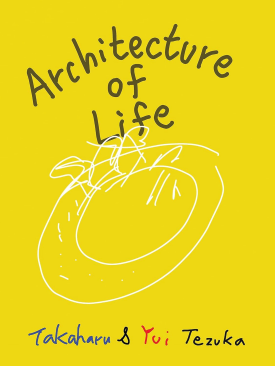
Architecture of Life by Tezuka Architects. Courtesy Oro Editions.
BB: And that’s a primary theme of your new book, Architecture of Life (ORO Editions, 2026). Regarding the theme of longevity, your architecture is also about adaptation. One concept for longevity is durability, or staying in place. But your architecture is also very adaptable.
TT: In the way people talk about durability, one has to be careful. Sometimes people think strong structures endure the longest, but that’s not necessarily true. Even if a building is strong, people may destroy it because they don’t think it’s important. If you go to France, there are some cafes almost tilting down.
The locals use straw to make sure they don’t fall. They are taken care of. So, the most important thing is to be beloved. How people feel is a part of life, and a building itself is alive—you can feel it. I want to make sure that a family in a house we design can live well for a long time—maybe until the occupants get old and have grandchildren.
BB: I’m thinking also about adaptability in terms of user operability. In our prior interview, you said, “The window must be open.” A user must be able to open sliding walls and operable apertures. As the climate becomes more extreme, that’s increasingly necessary, right?
TT: People worry about extreme weather. If you go to Dubai, it’s 60°C in the summer, and if you go to Moscow, it’s minus 40°C in the winter. But we find humans everywhere. People find the good moments. For example, summer in Moscow is extremely nice. And in the winter, Dubai is extremely nice.
If you have a partner, such as a girlfriend or boyfriend, you should think about the good moments. If you talk only about the bad moments, you start protecting yourself. But if you just can think about good moments, you try to be friendly. It’s just like that. So, if you are making architecture, you should focus on the positive aspects of the local climate. It’s very important to be a part of nature.
BB: I love this analogy and the prompt for people to focus on the good moments.
TT: There’s a concept I like called tun in Scandinavian countries. They have a big house, but there is a small house inside because that is where they gather in the winter. There’s a kind of stove, a type of fire, and it encourages people to get very close. In the winter, they are having a good moment, a good memory of family togetherness. But in the summer, they disperse and go out into the forest.
We need to have this double life, correct? People think architecture stays the same, and that everything should be air-conditioned. But most of the time, we don’t need air conditioning with proper roofing and ventilation. And in the winter, it can be a very nice, small, cozy space. So, we should talk about lifestyle, not just temperature. We embrace this concept in our house designs, especially the Roof House.
BB: I love that house.
YT: In this way of living, we must adapt ourselves to the environment rather than controlling it. And our client relationships are long-term. We are building relationships with many people.
BB: When we talked previously, you discussed the importance of taking risks—that every project has to push boundaries. How has your thinking about risk evolved?
TT: We don’t take extreme risks. We don’t want to make dangerous projects. Still, sometimes people are too cautious, avoiding staircases and always expecting level floors. But the world is not flat. Of course, we have to think about disabled people—I know, because my elder brother is disabled.
But if you make everything level, nobody cares about disabled people. So, I think it’s very important to grow. That’s the kind of risk we have to consider. Sometimes we are in mountainous regions, in places where kids are used to climbing trees. This activity is a kind of training. Kids need to have a certain amount of danger for sufficient growth.
BB: I’m reminded of the Hanegi Play Park near Shimokitazawa, where kids can build structures with power tools, unsupervised. It’s quite dangerous.
YT: Yes, children can make fire there.
TT: We did a symposium with the mayor who created the project. Actually, he invited me first, then I invited him back. He is a fantastic mayor. He encouraged the community’s population to grow. And that is proof, if you make a good city, you get more people.
BB: How do you think about your architecture, or architecture in general, in the context of population growth and decline? Young people are moving to places like Tokyo, and the rural towns are depopulating. Can architecture attract people back to rural places?
TT: We designed a particular apartment house, and two couples who were our clients said they didn’t need a kids’ room. But I warned them: if we design the apartment well, you will be encouraged to have a baby. “No, it’s not going to happen,” they said. And then they got pregnant. It’s a natural phenomenon.
When someone moves from a limited condition to a more spacious, better-designed one, they start having babies. It’s interesting: they couldn’t have a baby for a long time, and then suddenly, it happened. This phenomenon also occurs in rural areas. With good design, the population can grow because good design connects people.
When you study sophisticated ancient civilizations like Mohenjo-Daro, you always find architecture. Many people say the first indicators of civilization were the use of tools and the ability to make fire, and that those discoveries helped us become human. I don’t think so.
Civilization started with architecture. People’s lives—their rituals, food preparation, child-raising, education—everything has happened in architecture. So, architecture is like air. If you have good air, you can breathe. If you have a good architecture, you can live well. There is a direct impact. So, I think some amount of population growth is directly connected to the quality of architecture. A well-designed school can be a magnet for people. People will come and live nearby.
BB: Are you interested in taking on more projects in depopulating areas to encourage growth? How do you think strategically about the geography of your work?
TT: The Jhamtse Gatsal school I mentioned previously? In that impoverished area, the school is so good that rich people want to send their children to it. So, the school started accepting children from higher-income families. Some people think that poor students are not intelligent or capable, but it’s not true.
There is a mere tenth of a percent difference between any two humans. So, you and I share 99.9 percent of our genes. So, if you design a good school for poor children, they can perform as well as students from rich families.
At Jhamtse Gatsal School, children from different socioeconomic backgrounds mix, make connections, break down barriers between the rich and the poor, and move toward a more equal and compassionate society. This positive environment is encouraging more and more parents to send their children—it’s amazing.
BB: So, architecture has the power to erase barriers, like cultural barriers.
YT: We need to organize education. For our community building in Kitakyushu, the dream is for the people to become a family, even if they are not related by blood. We are helping them make this kind of place with architecture. It’s essentially a big living room for people with no other place to go: children from single parents who may be into prostitution, drug-dealing—those kinds of things. If you give kids equal opportunity, they can flourish. And then they can contribute meaningfully to society, and that makes a country better.
BB: Absolutely. I’d like to talk more about your clients. For a project to be successful, it takes a successful client relationship. In the past, you’ve said it’s important “to get sacked” by clients with whom you have insurmountable disagreements. How has your client relationship evolved? Do you seek out certain clients that will be good strategic partners?
TT: No, we don’t seek out clients. They come to us.
BB: Ok. So, is it easier now that amenable clients can find you more easily?
TT: Yes, but some projects are still very difficult because what we ask clients to do goes beyond their expectations. For example, we might suggest they change their method of educational delivery. And they will respond, “I know education, so I know what I want; just make the space.” Now, if you think that way, nothing will change. Although we can’t change people, some understand what we have been doing.
BB: I like how you describe “the silent majority.”
TT: Always, five percent of people are very difficult. These days, that minority is very loud. And the majority has become very quiet. To the minority, I say, “You stole this society.” Most people know what is right. So, we have to listen to the very quiet voice.
Of course, we need to take care of marginalized people. And if somebody is having difficulty, we have to help them. We need good healthcare that everyone can access. That is very, very important. At the same time, we shouldn’t forget the majority. It’s just common sense. These days, people are losing common sense. Sometimes we have to worry about this. The loud minority makes something a problem. They don’t represent other marginalized groups, such as disabled people.
YT: I think most people have some kind of common sense. People know what is good, like good food or well-designed streets. Architecture is like that.
BB: What are your thoughts about how Japanese society is changing? For example, there will be increased immigration, and more people from other cultures.
TT: If we accept immigrants, we have to ensure that their children can get a proper education. They need adequate health services. Otherwise, problems arise. In Japan, challenges began when Japanese capitalism brought in immigrants as easy labor. But diversity is an advantage.
On this topic, I should note that the Japanese are not a single race. We have the indigenous Ainu people, and people from places like Southeast Asia, Korea, and China. We have a mixed history, and there’s no such thing as a pure Japanese race or culture. Some people point to historic examples of Japanese cultural imports, such as Buddhism, as being non-Japanese. But the fact is that we assimilated these imports, so they are now part of Japanese culture. Immigrants are very important to this country. But whenever we bring in immigrants, we must remember that they have to have social rights.
BB: What do you think about the young generation in Japan and what they are looking for? How can the built environment support them and their ambitions?
TT: Younger generations, maybe their way of thinking is not so different. But because we don’t have so many kids in Japan now, maybe they are less competitive than previous generations. Still, they are quite happy—they’re much more relaxed than we were at their age. In our age, there were so many children that we always had to keep fighting.
We have a son and a daughter, and they have grown up quite well. They have seen the world, so they are very conscious. For this reason, I am concerned that the current generation of young Japanese people generally doesn’t travel much. This lack of awareness can lead to jingoistic tendencies.
BB: What about young people wanting to become architects—what advice do you have?
TT: I think the world is changing a lot. And obviously, AI is going to change it significantly. But we don’t need to be afraid of new technologies. People thought computer graphics would result in less work, but we’re working even more than before. When photography was invented, people said there was no need for painting anymore, but now we have more paintings than ever. The truth is that we need more ideas. People can watch a movie at home with headgear and a moving chair, but still, people go to the movie theater because they want to be together. And if you go to restaurants, you want to talk to human servers. Why have robots serve food? It’s not tasty at all—same thing. So people want good architecture. People want to communicate.
BB: Do you want to talk a little bit more about your new book, Architecture of Life?
TT: Yes, it is not titled “Architecture for Life” but “Architecture of Life.” It’s about the interplay, the interdependence. This book is not just about architecture. We were writing about nature, family, and culture. Culture—it’s quite a broad range. But to understand architecture, a wide range of curiosity is needed. Architecture is not just a self-sustained object; it’s not self-sufficient. It’s interdependent on other things.
If you don’t understand the forest, you don’t understand the tree. Architecture and human beings have a kind of co-existence. People cannot live without architecture, and architecture cannot be without people. Architecture is there to make people happier. You may encounter this message simply on the book’s cover, which intentionally features informal handwriting. There’s no typesetting, because we want this book to be alive.
BB: The quality of something handcrafted—you say tezukuri in Japanese?
TT: Yes, tezukuri has a physical connotation. Because AI is developing so fast, I think physicality, the human hand, is becoming more and more important. More than ever before, I think we should remember the physical.