Launch Slideshow

Zip-Tie Tek: The Ties that Bind

By paying attention to his instincts, Ammar Eloueini now stands among the leaders of the digital design revolution, testing the limits of form and training the next generation of software-savvy designers.

Zip-Tie Tek: The Ties that Bind

By paying attention to his instincts, Ammar Eloueini now stands among the leaders of the digital design revolution, testing the limits of form and training the next generation of software-savvy designers.

  • http://www.architectmagazine.com/Images/tmpD0F9%2Etmp_tcm20-174191.jpg

    600

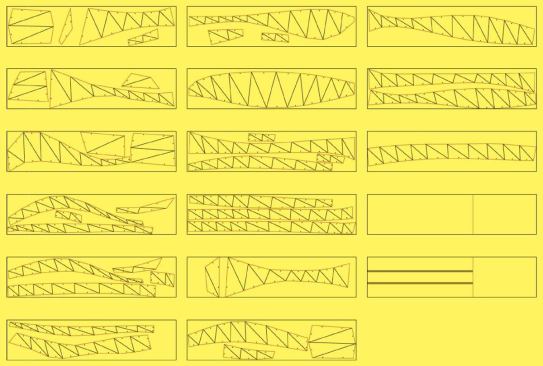
    Pleats Please, Issey Miyake, Berlin - Eloueini typically starts a design with animation software such as Softimage. Once the complex surface is resolved, he imports the drawing into Pepakura, an inexpensive software that flattens the complex surface and numbers the pieces. From there, the drawings are taken into AutoCAD, or a similar program, to complete the data for the CNC (computer numerically controlled) milling machine. The drawings shown here document the 17 polycarbonate panels, each 2 feet by 8 feet, used in the Berlin showroom.

  • http://www.architectmagazine.com/Images/tmpD0FE%2Etmp_tcm20-174226.jpg

    600

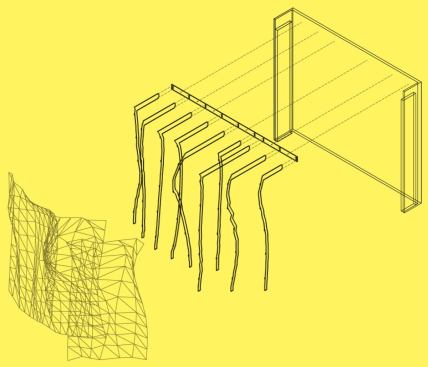
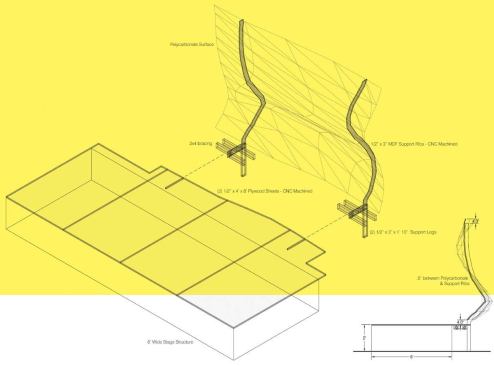
    Pleats Please, Issey Miyake, Berlin - Tenant restrictions at the Galeries Lafayette prohibited attaching fixtures to the floor. So, as this assembly drawing shows, the screen was designed to attach to the wall and simply rest on the floor. The polycarbonate surface, once assembled, gives the piece its stability.

  • http://www.architectmagazine.com/Images/tmpD0FF%2Etmp_tcm20-174233.jpg

    600

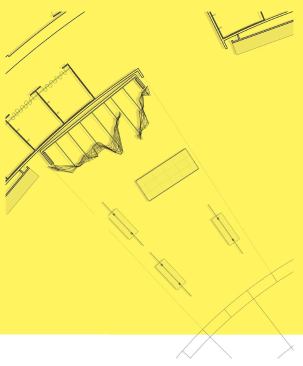
    Pleats Please, Issey Miyake, Berlin - The wedge-shaped space is a product of the building’s circular form. This floor plan shows clothing racks and a table, in addition to the biomorphic screen and its supporting ribs.

  • http://www.architectmagazine.com/Images/tmpD100%2Etmp_tcm20-174240.jpg

    600

    Jay Zukerkorn

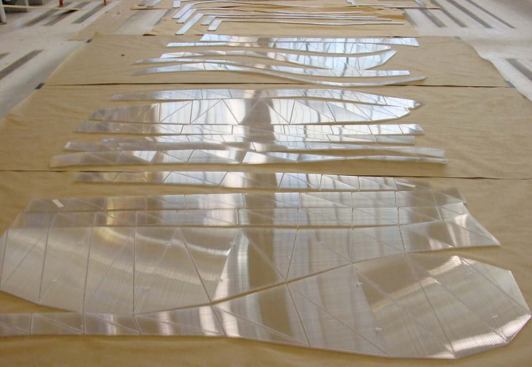
    Pleats Please, Issey Miyake, Berlin - After the milling process, individual sections were laid out on the factory floor. For high-end projects such as the Miyake showrooms, Eloueini favors a 12mm-thick panel for its strength and structural rigidity.

  • http://www.architectmagazine.com/Images/tmpD101%2Etmp_tcm20-174247.jpg

    600

    Jay Zukerkorn

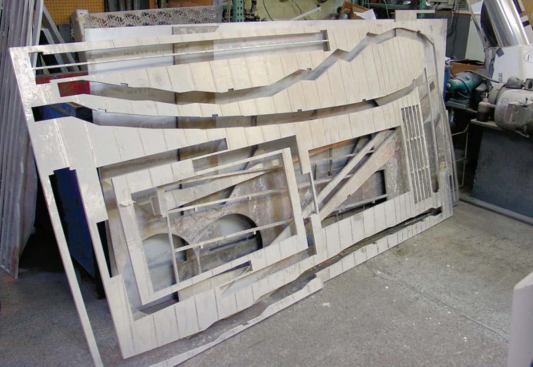
    Pleats Please, Issey Miyake, Berlin - Structural ribs for the wall and frames for the table and racks were cut from 50-inch-by-100-inch sheets of half-inch aluminum plate. This photograph shows the remains of one aluminum panel after pieces have been cut on an abrasive waterjet cutting machine.

  • http://www.architectmagazine.com/Images/tmpD102%2Etmp_tcm20-174254.jpg

    600

    Jay Zukerkorn

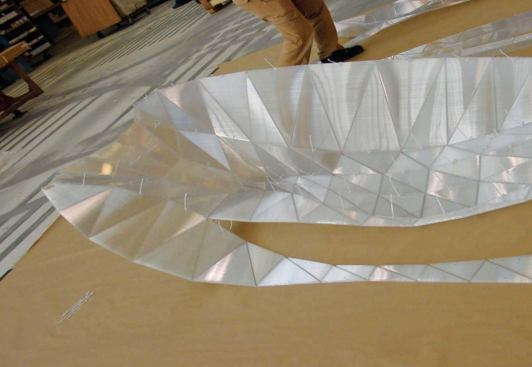
    Pleats Please, Issey Miyake, Berlin - To test its accuracy, the full-scale piece was assembled in a Chicago factory before being shipped to Germany. Here, a section of the wall begins to take on its final shape as the zip-ties are threaded and tightened.

  • http://www.architectmagazine.com/Images/tmpD145%2Etmp_tcm20-174044.jpg

    600

    Jay Zukerkorn

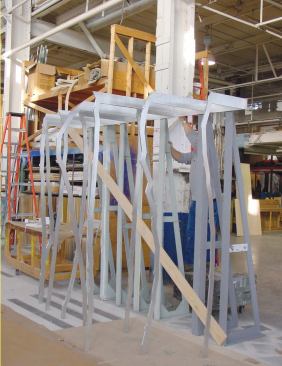
    Pleats Please, Issey Miyake, Berlin - Eloueini chose to have the interior elements fabricated in Chicago because the schedule was critical and he was familiar with the team there. The piece was mocked up in full scale before being disassembled and shipped flat. The lightweight material and zip-tie fasteners make for a system that is easy to transport and quick to assemble.

  • http://www.architectmagazine.com/Images/tmpD0E4%2Etmp_tcm20-174072.jpg

    600

    Jay Zukerkorn

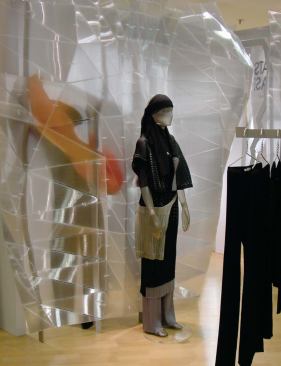
    Pleats Please, Issey Miyake, Berlin - After final installation, the faceted wall blends reflections from the room and filtered light from behind. The effect is multiplied by the addition of Miyake’s clothes. Zip-ties also attach the polycarbonate to the frame.

  • http://www.architectmagazine.com/Images/tmpD0E5%2Etmp_tcm20-174079.jpg

    600

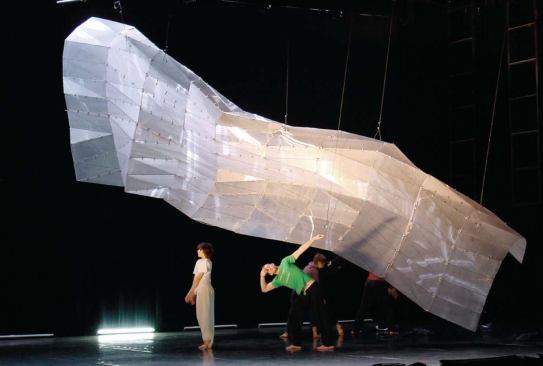
    California: Stage set for John Jasperse - The 25-foot-long set, suspended from overhead rigging, consisted of a three-dimensional canopy that hovered and dipped over the stage.

  • http://www.architectmagazine.com/Images/tmpD0E6%2Etmp_tcm20-174086.jpg

    600

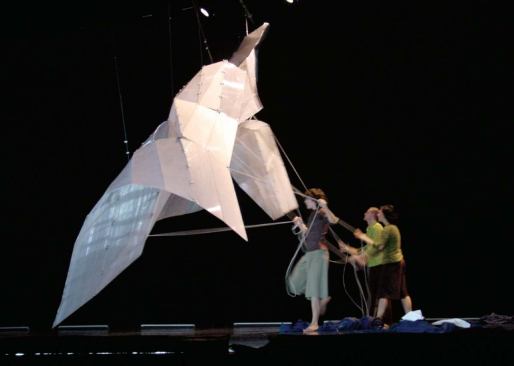
    California: Stage set for John Jasperse - Eloueini conceived of the set as a surface that morphs, allowing for various interactions with the dancers. Here, the parts simulate kites.

  • http://www.architectmagazine.com/Images/tmpD0E7%2Etmp_tcm20-174093.jpg

    600

    Jay Zukerkorn

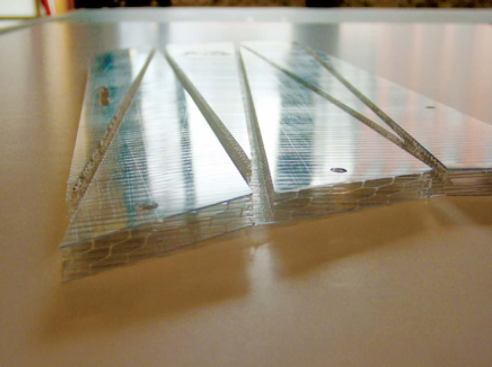
    California: Stage set for John Jasperse - This detail drawing of the polycarbonate material shows the result after routing. One surface of the sheet remains intact to act as a hinge.

  • http://www.architectmagazine.com/Images/tmpD14B%2Etmp_tcm20-174051.jpg

    600

    Jay Zukerkorn

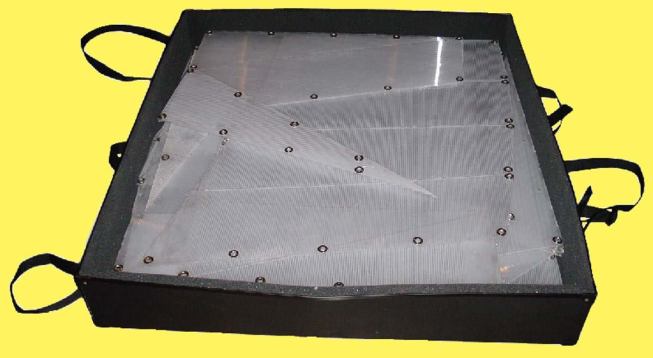
    California: Stage set for John Jasperse - When dismantled, the entire set fit into two 4-foot-by-4-foot boxes that traveled with the dance company.

  • http://www.architectmagazine.com/Images/tmpD0E9%2Etmp_tcm20-174100.jpg

    600

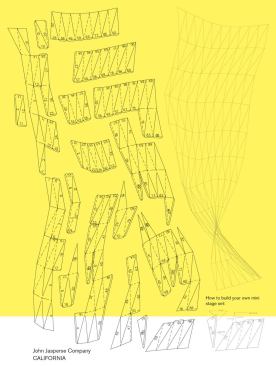
    California: Stage set for John Jasperse - Directions for the stage crew included this diagram showing how the scored and numbered pieces are combined to build the set.

  • http://www.architectmagazine.com/Images/tmpD0EA%2Etmp_tcm20-174107.jpg

    600

    Fashion Show, School of the Art Institute, Chicago - The fleeting use and large amount of material needed for the stage set prompted Eloueini to specify a less expensive polycarbonate.

  • http://www.architectmagazine.com/Images/tmpD16F%2Etmp_tcm20-174058.jpg

    600

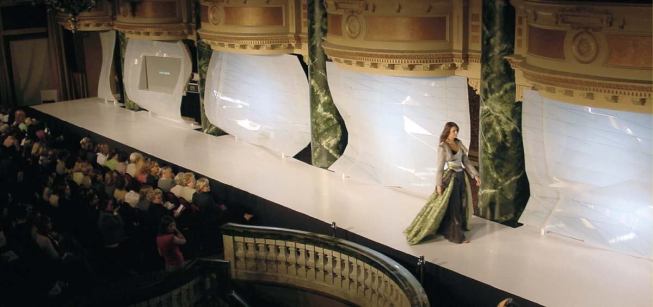
    Fashion Show, School of the Art Institute, Chicago - The fashion show occurred in a beaux-arts ballroom on Chicago’s Michigan Avenue. Eloueini wove the polycarbonate surfaces through an existing colonnade and lit them from behind.

  • http://www.architectmagazine.com/Images/tmpD0EC%2Etmp_tcm20-174114.jpg

    600

    Fashion Show, School of the Art Institute, Chicago - Eloueini used plywood for the structural ribs because it could be cut for a much lower cost on a CNC router, as opposed to the waterjet cutting machine required to cut aluminum.

  • http://www.architectmagazine.com/Images/tmpD0ED%2Etmp_tcm20-174121.jpg

    600

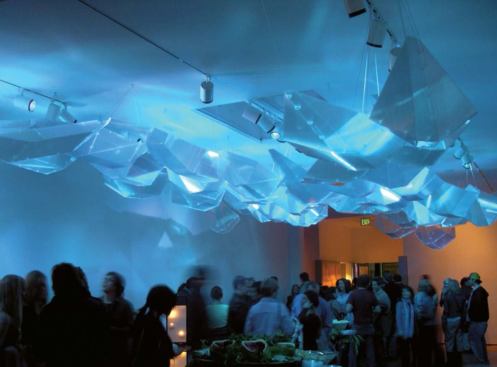
    Nubik, Grand Arts Gallery, Kansas City - At opening night festivities, a crowd gathered beneath the installation, which glowed in blue light.

  • http://www.architectmagazine.com/Images/tmpD194%2Etmp_tcm20-174065.jpg

    600

    Nubik, Grand Arts Gallery, Kansas City - At opening night festivities, a crowd gathered beneath the installation, which glowed in blue light.

  • http://www.architectmagazine.com/Images/tmpD0F0%2Etmp_tcm20-174135.jpg

    600

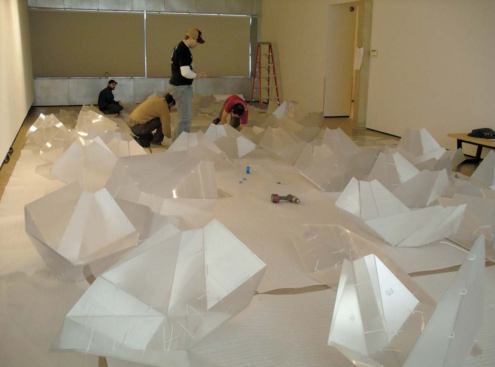
    Nubik, Grand Arts Gallery, Kansas City - Pods were assembled on the gallery floor prior to installation on the ceiling.

  • http://www.architectmagazine.com/Images/tmpD0F1%2Etmp_tcm20-174030.jpg

    600

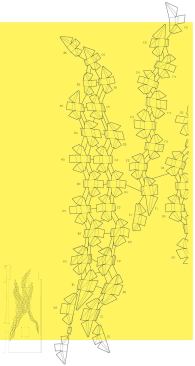
    Nubik, Grand Arts Gallery, Kansas City - The design for the strands of podlike forms creates a dynamic pattern when flattened.

  • http://www.architectmagazine.com/Images/tmpD0F2%2Etmp_tcm20-174142.jpg

    600

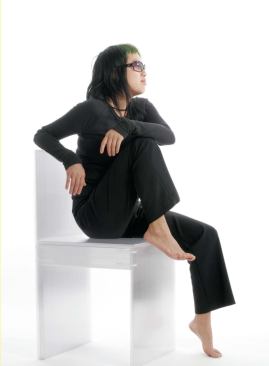
    Mu Chair - This minimalist chair is designed for economy and ease of fabrication and assembly.

  • http://www.architectmagazine.com/Images/tmpD0F3%2Etmp_tcm20-174149.jpg

    600

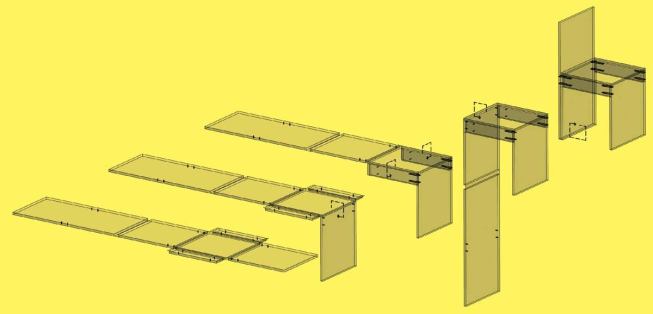
    Mu Chair - After machining, the panel can be folded, connected with zip-ties, and assembled in minutes.

Project: Fashion Show, School Of The Art Institute, Chicago

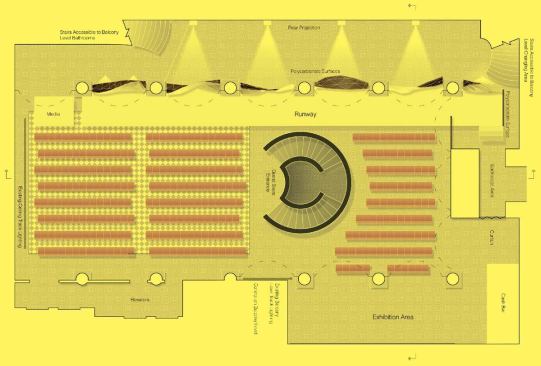
The School of the Art Institute of Chicago commissioned Eloueini to design the stage set for its fashion department's 71st annual fashion show in May 2005. To maximize seating capacity in the school's elegant ballroom, Eloueini placed the runway off to one side, along a colonnade. The runway was backlit by luminescent polycarbonate surfaces placed between the columns. At each end, the panels incorporated a flat-screen TV.

Project: Nubik, Grand Arts Gallery, Kansas City

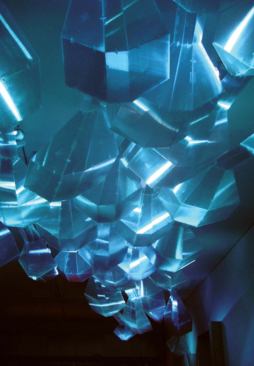
Nubik, a site-specific piece installed in March 2005, created the context for a series of changing exhibitions featuring more than two dozen artists, architects, musicians, and thinkers. Made from a series of nine folded strands suspended from the gallery ceiling by cables, the composition was formed by discrete pods of varying size. By day, the strands diffused direct sunlight passing through skylights overhead. At night, the illuminated form gave the space an otherworldly quality.

Project: Mu Chair

The lightweight and inherent structural characteristics of polycarbonate make it an interesting material for furniture design, says Eloueini. The MU chair is made from a single 2-foot-by-8-foot panel of 100-percent recycled polycarbonate.

Toolbox

Eloueini's grounding in architecture at Columbia's paperless studio has led to projects that are designed—and fabricated—using digital technology. The complex, many-faceted surfaces he creates emerge from a sequence of proprietary software, modeling, and fabrication techniques. To get the job done, these implements are found in his toolbox.

Softimage / www.softimage.com

One of the first investments Eloueini made after launching his practice was to purchase Softimage, a program that incorporates animation. Eloueini compliments how the program “applies force to geometry.” He calls it the ideal software to initiate design. The software's 3-D component is powerful, and 3-D modeling is easy to execute in comparison to other animation programs, he adds. “And Softimage has one of the best rendering engines available.”


Pepakura / www.tamasoft.co.jp/pepakura-en

Eloueini swears by this inexpensive product as the best software for unfolding surfaces. In the case of the polycarbonate projects, the 3-D geometries are flattened by this program so they can be fabricated with the CNC router.


AutoCAD / www.autocad.com

After the geometric forms are flattened in Pepakura, the drawings are imported into AutoCAD for production of the CNC-compatible files. “It's kind of an industry standard,” says Eloueini.


Chicago Scenic Studios / www.chicagoscenic.com

When Eloueini began his polycarbonate odyssey for choreographer John Jasperse, Chicago Scenic Studios was his source for a CNC routing machine—one of the few available in Chicago at the time. Using the same router, the company also produced the plywood rib structure for the School of the Art Institute of Chicago's fashion show stage set.


Industrial Models / www.indmod.com

This precision machine shop in Wauconda, Ill., has CNC milling and water-jet cutting machines. Starting with half-inch-thick aluminum plate, the machines produced the rib structure, racks, and table frame for the Miyake project in Berlin. The same shop also provided the drilling and tapping of the pieces for later screw assembly.


CPI Daylighting / www.cpidaylighting.com

For the high-end Pleats Please showroom, Eloueini purchased stock 12mm polycarbonate glazing panels from CPI Daylighting in Lake Forest, Ill. He tested several available thicknesses before determining that the 12mm product provided the best balance of minimalism and strength. CPI polycarbonate comes only in 2-foot widths.


Green-Tek / www.green-tek.com

Polycarbonate from Green-Tek is about one-fifth the cost of CPI's product, and it is far less substantial. Eloueini specified its use for the backdrop at the School of the Art Institute of Chicago fashion show, which remained in place for only a few days and was not installed where the public had access to it. The product comes in 4-foot widths.


Zip-ties / www.homedepot.com

For all the state-of-the-art technologies that converge to makes Eloueini's dreams a reality, the fundamental tool of the final assembly is the humble zip-tie. His source: Home Depot, where a bag of 7-inch zip-ties sells for about $17 per thousand.