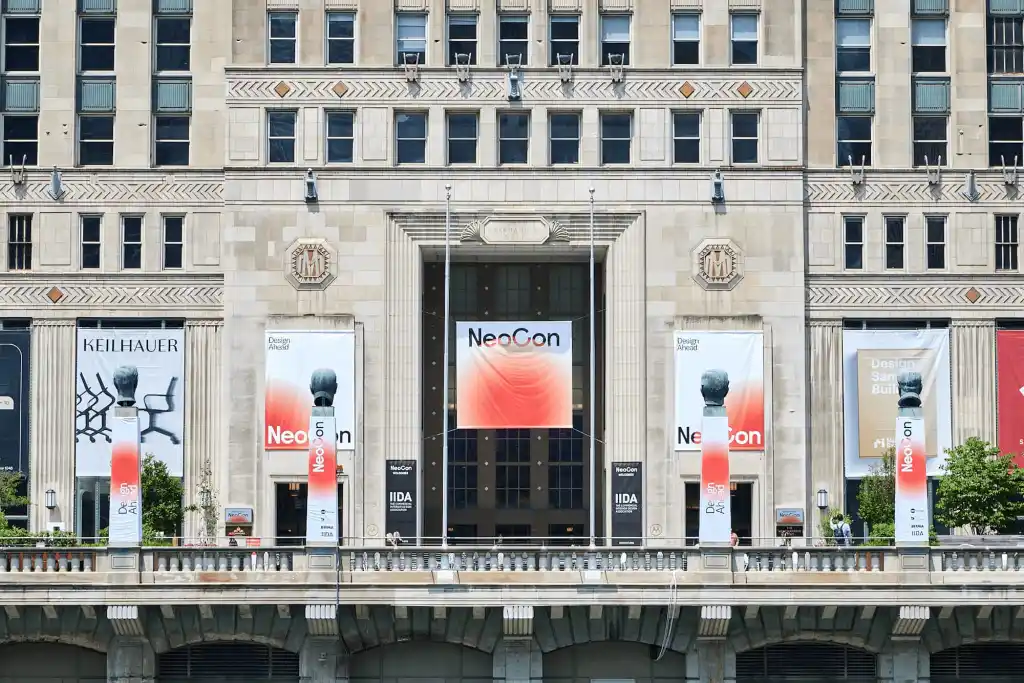
For more than half a century, NeoCon has functioned as the commercial interiors industry’s annual crystal ball.
Long before concepts such as open offices, agile workplaces, biophilic design, coworking, and hybrid work entered mainstream business vocabulary, many of those ideas first surfaced on the exhibition floors of Chicago’s Merchandise Mart. The products, technologies, and conversations unveiled there have often foreshadowed broader transformations in how people work, learn, heal, shop, and gather.
This June, however, NeoCon arrives at a particularly uncertain moment.
The workplace is still searching for its post-pandemic identity. Artificial intelligence is beginning to reshape everything from design workflows to facilities management. Employers continue to wrestle with hybrid work. Wellness has evolved from a desirable amenity into a business imperative. And sustainability pressures are forcing manufacturers to rethink materials, supply chains, and product lifecycles.
Against that backdrop, NeoCon’s 57th edition, running June 7–10 at The Mart in Chicago, is positioning itself around a deceptively simple theme: “Where Design Connects.”
The message may sound straightforward, but it reflects a larger realization emerging across the design industry: technology alone is no longer enough. The next generation of commercial environments must balance digital innovation with human experience.
“NeoCon remains a place and point in time where ideas are tested, relationships are built, and the future of the built environment takes shape,” says Lisa Simonian, Vice President of Marketing for NeoCon. “The 2026 program emphasizes our commitment to experiential design and the value of in-person connection.”
The Return of Physical Gathering
The timing is notable.
Even as digital collaboration tools have become ubiquitous, major industry events have experienced a resurgence. Attendance at trade fairs, conferences, and design festivals has rebounded sharply as professionals seek the kinds of interactions that virtual platforms struggle to replicate.
NeoCon’s organizers expect more than 50,000 architects, designers, manufacturers, dealers, specifiers, and corporate decision-makers to descend on The Mart this year. The show will occupy seven floors of exhibition space and feature more than 450 brands, making it one of the largest commercial interiors gatherings in the world.
This year’s additions suggest NeoCon is responding directly to changing attendee expectations.
For the first time, the event will include a dedicated Preview Day on June 7, offering early access to showrooms and installations before the official opening. The goal is straightforward: give visitors more time to engage with products and conversations in an era when information overload has become one of the industry’s defining challenges.
The expansion reflects a broader trend across design fairs globally. Increasingly, success is measured not by how much visitors see, but by how meaningfully they engage.
Lighting Steps Out of the Shadows
Perhaps the most significant change at NeoCon 2026 is one that many lighting professionals have argued was overdue.
For decades, lighting has been one of architecture’s most influential yet frequently underappreciated disciplines. It shapes mood, productivity, circadian rhythms, safety, retail behavior, and spatial perception, yet often receives less attention than furniture, finishes, or technology.
This year, NeoCon is elevating lighting from supporting role to headline act.
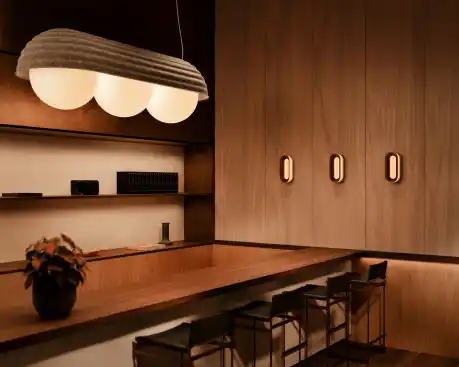
RBW Dimpledash Lighting at Illuminate
The debut of Illuminate at NeoCon introduces a dedicated “show-within-a-show” focused entirely on architectural, technical, and decorative lighting. The new platform will feature more than 50 lighting manufacturers, immersive installations, educational sessions, and specialized programming exploring everything from human biology to adaptive digital environments.
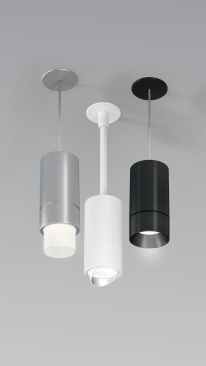
USAI LIghting The Little Two Cylinders at Illuminate
“With Illuminate, our goal is to create a dynamic new hub connecting the lighting industry with the commercial design community and NeoCon’s audience of over 50,000 architects, designers and end-user decision makers,” says Lisa Simonian. “We are responding to an important need for lighting to be more properly recognized as a key and essential component of good design.”
The move reflects a broader shift occurring throughout architecture and interiors.
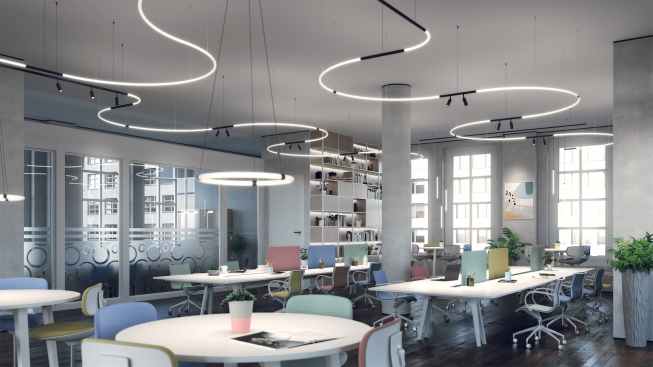
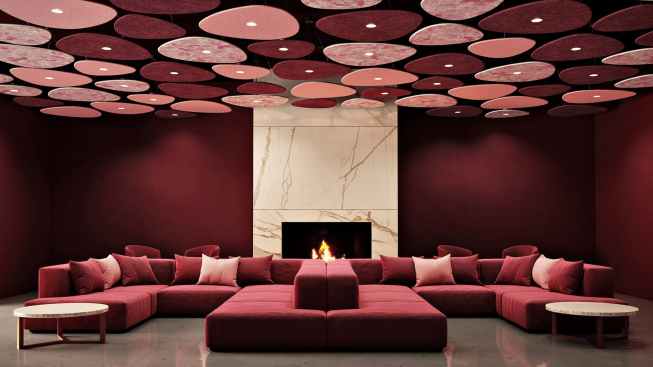
Pure Edge lighting at Illuminate.
As research continues to reveal how light affects cognition, sleep, productivity, and mental health, lighting is increasingly being treated as a performance system rather than simply an aesthetic element. Circadian design, once a niche topic, has become mainstream. Human-centric lighting strategies now influence everything from healthcare environments and schools to offices and hospitality projects.
The result is that lighting has become one of the most consequential battlegrounds in contemporary design.
AI Comes for the Workplace
If lighting represents one emerging frontier, artificial intelligence represents another.
Across NeoCon’s keynote presentations, workshops, CEUs, and featured sessions, AI will be impossible to ignore.
The technology’s influence extends far beyond design software. Increasingly, AI is being integrated into workplace management systems, building operations, environmental controls, occupancy analytics, and product development.
This year’s programming reflects an industry attempting to understand not merely what AI can do, but what it should do.
“Our programming is about challenging assumptions and presenting ideas that are both thought-provoking and directly applicable,” says Nubia Henderson, NeoCon’s Director of Programming. “We’re cutting through complexity to focus on what matters in practice, bringing together perspectives that reflect how design connects across disciplines, industries, and lived experiences.”
Sessions involving Microsoft, NVIDIA, Cisco, HOK, HKS, and other industry leaders will explore how emerging technologies are transforming design practice and the future workplace.
The larger question facing attendees may be whether AI becomes another productivity tool—or something far more transformative.
Neocon is also series of more than 60 AIA- and IDCEC-approved CEU sessions that you can watch on demand, featuring 150+ thought leaders and industry experts across a wide range of timely topics. For example, the “20 Design Needs Every Brain Shares” CEU, features IA’s Managing Director of Strategy, Valerie Jardon, and Dr. Sally Augustin, Principal of Design with Science, this session examines how neuroscience-based design principles can create interior environments that support cognitive performance, well-being, and satisfaction for all occupants.
Three Keynotes, Three Futures
NeoCon’s keynote lineup suggests organizers are deliberately looking beyond design itself.
Instead of focusing solely on architecture or interiors, the conference is drawing from entrepreneurship, futures thinking, and digital culture.

Jessica Matthews.
Entrepreneur and inventor Jessica O. Matthews will open the event with a presentation exploring how personal motivation drives innovation.
“Innovation isn’t just a process—it’s a fight,” Matthews says. “Like in any fight, when the stakes are personal, the innovation is more powerful. At NeoCon, I’m excited to share how taking it personally turns pressure into purpose and challenges into breakthroughs.”

Nick Foster.
Former Google X design leader Nick Foster will challenge conventional approaches to forecasting and future planning.
“Our collective ability to conceptualize what’s next with depth and rigor remains underdeveloped,” Foster says. “Rather than forecasting outcomes, I want to offer a moment of intentional pause to help the NeoCon community become better critics and creators, as we all tackle the overwhelming tide of uncertainty that lies ahead.”

David Shing.
Closing the conference, cultural strategist David “Shingy” Shing will examine the accelerating intersection of technology, culture, and design.
“Every era normalizes what once felt impossible,” Shing says. “This talk is about helping designers and leaders build the creative and cultural readiness to evolve with accelerating technology—without losing the human core that makes design meaningful.”
Collectively, the presentations suggest NeoCon sees design less as an isolated profession and more as a discipline embedded within larger technological and societal systems.
The Workplace Becomes Hospitality
Walking through NeoCon this year, visitors may notice another recurring theme: the continued blurring of boundaries between workplace, hospitality, retail, and residential design.
That convergence appears throughout the show’s installations and experiential environments.
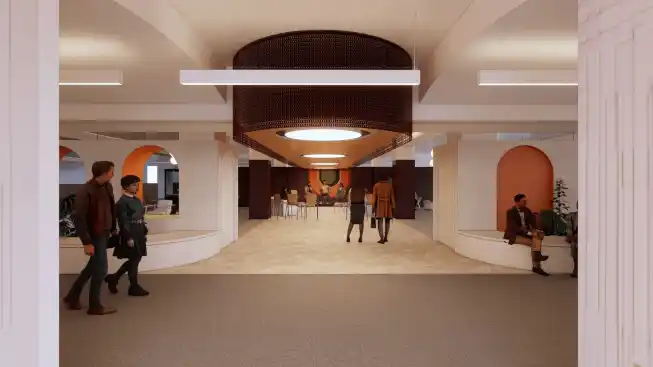
Neocon Collab Space, designed by Charlie Greene Studio.
The new NeoCon Collab: Half Light installation, designed by Charlie Greene Studio, embraces hospitality-driven design principles while drawing inspiration from Chicago’s celebrated “Chicagohenge” phenomenon. The installation brings together multiple manufacturers within a shared immersive environment rather than isolated product displays.
“We’re so excited to share an experience that’s quintessentially Chicago with NeoCon attendees: Chicagohenge,” says Jason Hall, founder and creative director of Charlie Greene Studio. “The way the deep, rich color of the setting sun aligns perfectly with the city grid once a year is memorable and fleeting.”
The concept reflects a broader shift in commercial interiors. Increasingly, office environments are borrowing cues from hotels, restaurants, clubs, and residential spaces in an effort to entice workers back into physical environments.
The workplace is no longer competing with other offices.
It is competing with home.
Beyond Furniture
It is tempting to think of NeoCon as simply a furniture show.
That description has not been accurate for years.
Today’s NeoCon is increasingly a forum for larger questions about technology, culture, sustainability, health, and the future of work itself. Furniture remains central, but the conversations now extend to neuroscience, AI, wellness, material innovation, adaptive reuse, social impact, and environmental performance.
The industry’s biggest gathering has become something closer to a laboratory.
The question facing attendees this June is not merely which products will define the next year.
It is which ideas will define the next decade.
And in a profession increasingly shaped by algorithms, remote work, and digital transformation, NeoCon’s central argument may prove surprisingly old-fashioned: that the most important innovation still begins when people gather in the same room.