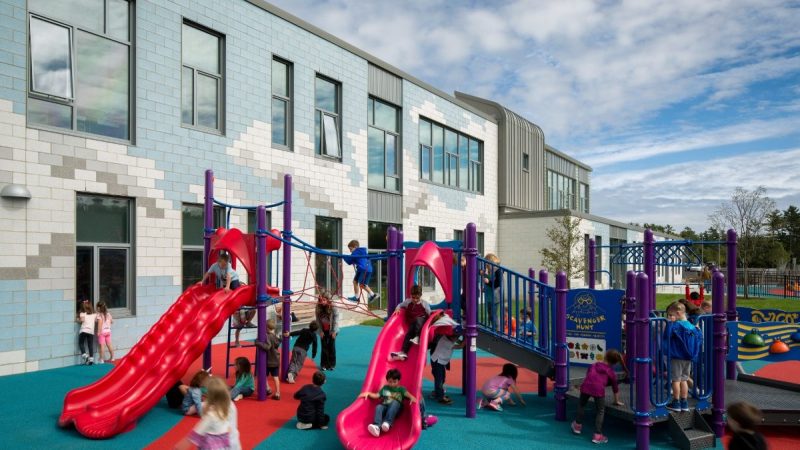
Early in design, decisions can often feel isolated. A wall system here. A detail there. But over time, those decisions ultimately define how a building performs—what it costs to construct and maintain, and how much embodied carbon it carries.
In practice, the connection between cost and carbon becomes clear, as both tend to move together, shaped by many of the same decisions.
You see it most clearly in how building systems come together. As performance expectations have expanded, assemblies have become more layered, with additional materials added to meet specific requirements.
This is where complexity starts to creep in, and where cost and embodied carbon begin to compound.
As Environmental Product Declarations and life cycle assessment tools have become the norm, it’s easier to see how outcomes are influenced not just by individual materials, but by how systems are put together. Material quantity and configuration can have an outsized impact on both cost and embodied carbon.

Project: HFMH Architects ©Ed Wonsek
Seen through that lens, efficiency becomes less about optimizing individual components and more about how systems work together.
Efficient design can sometimes be grouped with concepts like value engineering or “right-sizing,” but it points to something different. Rather than focusing on reduction, it reflects how fully a material or system can perform. That often starts by stepping back and looking at how systems work as a whole, not just how individual components contribute. Materials that serve multiple roles, such as structure and fire resistance, can reduce the need for additional layers, streamline construction, and create a more direct path from design to delivery.
Concrete masonry is one example of how this approach can take shape. As both a structural system and enclosure, it can consolidate functions that might otherwise require multiple materials. Its unit-based design allows for targeted reinforcement, supporting more efficient assemblies. Because reinforcement and grout are placed where needed rather than uniformly, material quantities and labor demands can be more closely aligned with structural requirements. That has a direct impact on both cost and carbon.
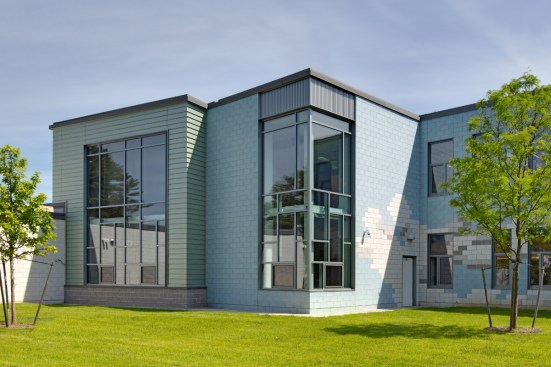
Project: HFMH Architects ©Ed Wonsek
From a carbon perspective, research from the Concrete Masonry & Hardscapes Association (CMHA) builds on a well-understood process. While carbonation in concrete masonry has long been recognized, the extent and rate of CO₂ uptake specific to concrete masonry has not been systematically studied. New data helps quantify both more precisely. Through natural carbonation, concrete masonry units reabsorb CO₂ during manufacture and in the early stages after installation. In 2020, the National Concrete Masonry Association Foundation (NCMA) initiated a study to measure the carbon sequestration rate of CMU produced across North America. The findings show that CMU sequesters 40 kilograms of CO₂ per cubic meter of concrete within the first two years. Research is ongoing and continues to document additional sequestration over time.
A built example brings this into focus. Carver Elementary School in Massachusetts, designed by HMFH Architects, replaced two aging facilities with a single, well-coordinated building organized around a clear system. An E-shaped plan, anchored by a central learning commons, supports both circulation and instruction while limiting unnecessary space.
The high-performance, NE-CHPS verified school incorporates a range of sustainable strategies, but what stands out is how they are integrated. Performance is not layered on. It is embedded in how the building is organized and constructed. As Ron Clarke, former member of the Carver Board of Selectmen, observed, “I really was blown away at the inventiveness that was brought into the school, the out-of-the-box thinking. This school is a tremendous learning environment for the students.”
Material decisions reinforce that clarity. By relying on durable, integrated systems rather than layered assemblies, the design supports long-term performance while simplifying construction and maintenance. The result is a building that meets energy and programmatic goals without unnecessary complexity.
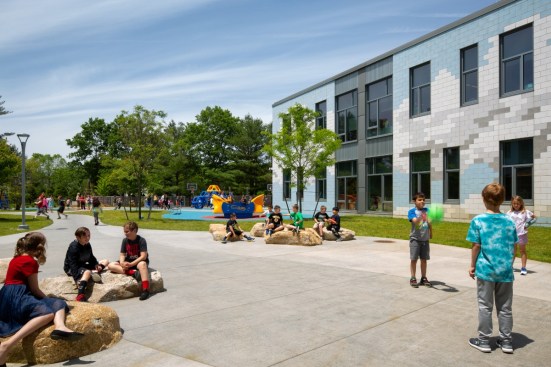
Project: HFMH Architects ©Ed Wonsek
Architects aren’t alone in navigating all of this. Options like delegated design or design assist can help maintain focus on the broader design vision, while specialty experts address the detailed execution. This approach can help expedite how systems are designed and delivered, while keeping cost and carbon targets on track.
That is where the Block Design Collective (BDC) provides the most value. The BDC works with architects, engineers, and contractors to identify material efficiencies, support code compliance and help streamline masonry wall assemblies. These services are provided at no cost or obligation, offering project teams a way to explore options and evaluate system-level decisions early in design.
For more information, contact Tino Kalayil at [email protected] or visit blockdesign.org.
About the Author
Tino Kalayil, P.E., is Senior Technical Director and Midwest Regional Director for the Concrete Masonry Checkoff’s Block Design Collective, where he leads a team focused on technical guidance and system-level design support.