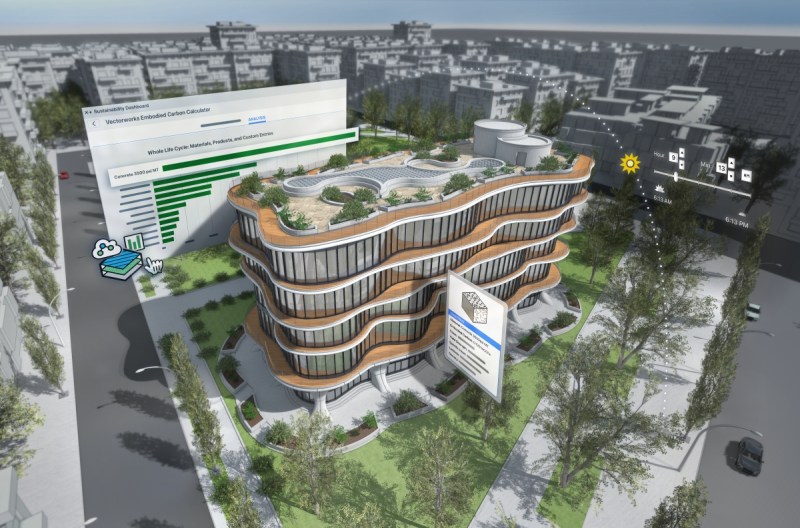
As sustainable building and site design evolves, architects are now expected to address climate resilience, net-zero carbon goals, and responsible material sourcing alongside long-standing performance and aesthetic priorities. That shift is moving sustainability from a late-stage checklist to an everyday part of the design workflow. From early concepts through final specifications, teams are being asked to design responsibly and consider how their decisions support better environmental and human outcomes.
These expectations are becoming increasingly measurable. Clients, communities, and project partners are using embodied carbon analysis, environmental product declarations (EPDs), biodiversity-positive design strategies, and other benchmarks to evaluate whether a project truly reduces its impact. As a result, architects need ways to assess environmental implications earlier, when major decisions about form, systems, and materials are still flexible.
This is where design technology becomes essential. Managing material data, carbon calculations, biodiversity metrics, and documentation manually is difficult to sustain over the course of a project. BIM-enabled workflows help teams compare embodied carbon, evaluate biodiversity-related factors, document material qualities and quantities, and generate schedules and reports that preserve sustainable design intent. They also support clearer visualizations and measurable tradeoffs, making client conversations more informed and productive. Instead of reacting after key decisions have been made, architects can evaluate impact while options are still open.
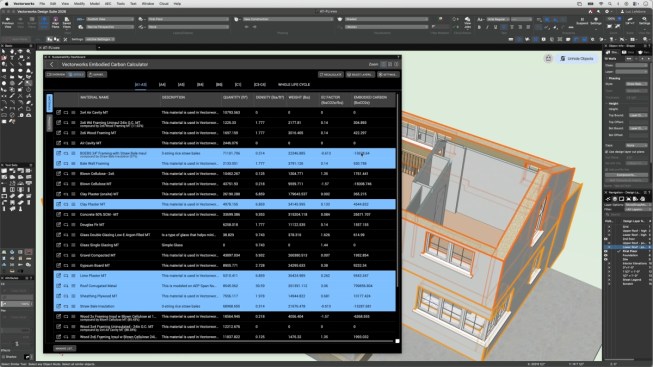
Arkin Tilt Architects VECC Sustainability Dashboard Interface. Image courtesy of Vectorworks, Inc
Material-led design is one of the clearest expressions of this shift. With BIM and carbon assessment tools, architects can compare products, understand how specifications affect a project’s footprint, and track sustainable materials through smart objects, hybrid symbols, and embedded records. Arkin Tilt Architects offers a compelling example: Its “farm-to-wall” approach transforms straw into high-performance, low-carbon buildings that are both environmentally responsive and architecturally distinctive. Their story shows how sustainable material selection can do more than reduce impact; it can also shape design identity and innovation.
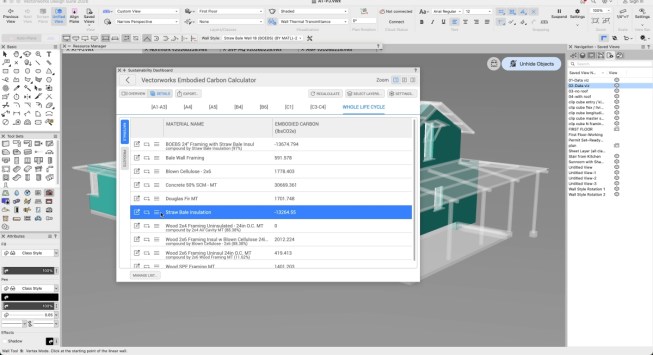
Arkin Tilt Architects VECC Sustainability Dashboard Interface. Image courtesy of Vectorworks, Inc.
Real-time sustainability feedback pushes this even further. Tools such as standards-aligned dashboards and enhanced embodied carbon calculators can show the effect of design changes as they happen, rather than through a separate analysis after the fact. Automated aggregation of materials and products, ongoing tracking as designs evolve, and visibility into metrics such as biodiversity net gain or biomass density can help teams reduce rework and keep projects aligned with sustainability goals. In that sense, better tools do not replace design judgment; they make environmental stewardship more visible, measurable, and actionable.
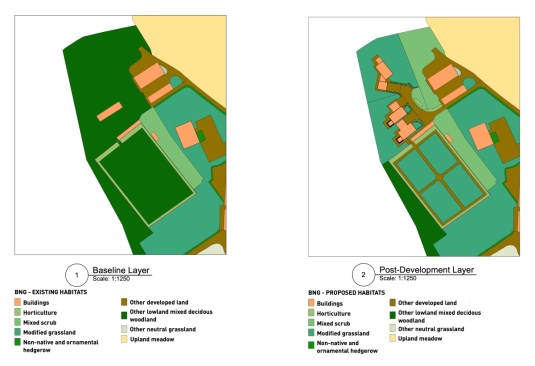
Biodiversity Net Gain Data Pre and Post Development Visualized Lakeshore. Image courtesy of Vectorworks, Inc.
Looking ahead, the firms best positioned to lead will be those that combine design intuition with data confidence. As sustainability analysis becomes more integrated into concept design, architects will be better able to connect material choices, documentation, client communication, and long-term value. The opportunity is not just to meet standards, but to use better information to make stronger design decisions earlier and communicate their value more clearly.
Learn more about data-driven sustainable design workflows and explore additional sustainability resources and educational content at vectorworks.net.