
Every residential project requires architects to balance competing priorities: aesthetics, durability, maintenance, budget, and increasingly, sustainability. And they’re finding that balance in a surprising material: vinyl.
“One of the biggest misconceptions is that vinyl siding is the same product it was decades ago,” says Eric Cotterman, senior leader with Cornerstone Building Brands. “Today’s vinyl products have advanced significantly in design, color technology, impact performance, profile depth, texture, and overall appearance.”
Manufacturing has also evolved dramatically. Modern production processes have reduced emissions, improved efficiency, and eliminated many chemicals of concern.
“The industry has made significant advances in manufacturing efficiency and reduced emissions over the years.,” says Shane Totten, director of sustainability at Mannington Mills. “Regulatory requirements under the Clean Air Act and voluntary improvements have significantly reduced emissions, protecting workers and the environment, during a time period when PVC resin production has doubled.”
MATERIAL TRANSPARENCY THROUGH THE VINYL VALUE CHAIN
Today, third-party verification programs provide architects and designers with greater confidence and transparency when evaluating product sustainability and safety.
The Vinyl Sustainability Council (VSC) is a membership organization taking a leadership role in uniting the industry to advance sustainable performance throughout the vinyl value chain.
Through the VSC’s +Vantage Vinyl verification, an industry-wide vinyl sustainability initiative in the United States, independent third-parties verify the performance of companies making sustainability advancements in five impact areas in alignment with the AIA Materials Pledge and the Common Materials Framework.
“Architects need clear, credible information when evaluating suppliers and materials, particularly when it comes to sustainability and performance,” says Jay Thomas, Vinyl Institute and executive director of the Vinyl Sustainability Council. “The VSC helps validate and communicate performance through a common industry framework making it easier for architects to evaluate vinyl products and make informed specification decisions.”
PERFORMANCE THAT SUPPORTS DESIGN
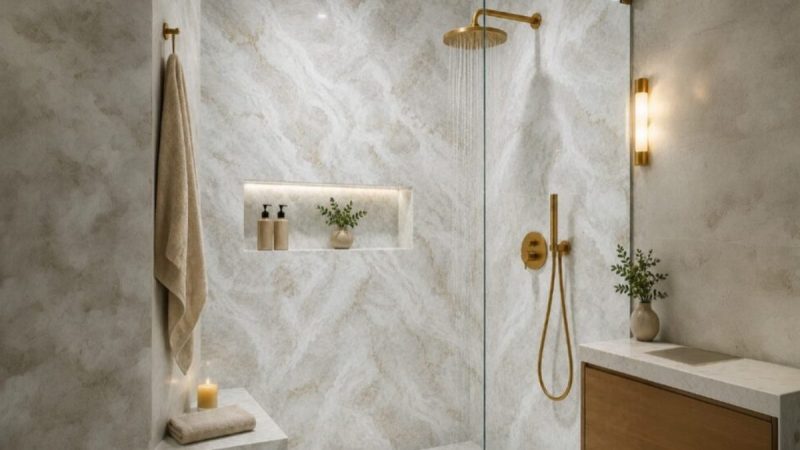
Modern vinyl offers architects exceptional design flexibility through an expanding range of colors, textures, and finishes that replicate hardwood, stone, tile, and other natural materials.
“Consumers are no longer limited by the availability or constraints of traditional materials,” says Alex Grover, CEO and owner of i2M.
Manufacturers continue to improve realism through advanced surface engineering. By combining matte and gloss finishes that interact with light much like real wood or stone, today’s vinyl surfaces create visual depth that closely resembles natural materials.
Performance extends beyond appearance. Modern vinyl products are engineered for durability, moisture resistance, dimensional stability, and weatherability. Exterior systems are designed to accommodate seasonal expansion and contraction while resisting moisture, impacts, and prolonged UV exposure. Interior flooring features waterproof cores and durable wear layers that resist scratches, stains, and everyday wear.
“A premium homeowner experience starts with a product that looks beautiful on day one and continues to perform for years with minimal upkeep,” Cotterman says. “The best exterior products combine aesthetics, performance, and ease of ownership.”
Low maintenance is another significant advantage. Unlike wood products that often require painting, staining, or sealing, vinyl maintains its appearance with minimal upkeep, reducing both maintenance costs and long-term operational expenses.
Longevity also plays an important role.
“We have a saying at Mannington that the longer a flooring product stays on the floor ‘in service,’ the more sustainable it is,” Totten says. “That long life cycle avoids additional raw materials and energy to create new product.”
By combining durability with resource efficiency, modern vinyl supports a lifecycle approach to sustainability that extends beyond recycled content or manufacturing alone.
A STRATEGIC MATERIAL FOR MODERN DESIGN
For architects seeking resilient, low-maintenance solutions with premium aesthetics, vinyl has emerged as a strategic material choice that supports contemporary residential design while addressing the practical realities of today’s construction environment.
Download the VSC’s Specification Guide for model language and guidance for integrating verified companies into project requirements. View all verified companies to see which ones can fit in your next spec.