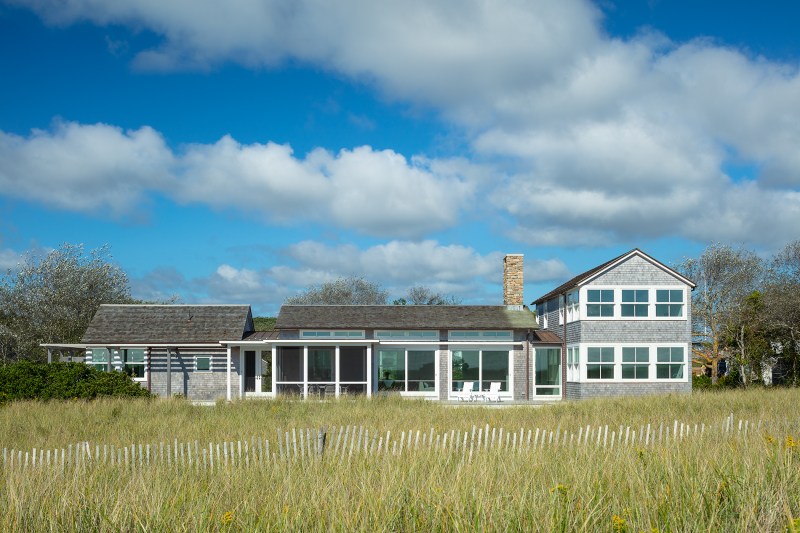
Mention wellness and home in the same sentence, and images of steam showers, plunge pools, and yoga rooms may be the first to come to mind. While those dedicated spaces can support well-being, it’s often the quieter architectural decisions that lay the foundation for physical and emotional health throughout the home.
Take, for example, a home in El Segundo, California, designed by AAHA Studio. Extensive damage from an electrical fire made it impossible to salvage the original structure, so the homeowners decided to rebuild on the same footprint. But instead of recreating the once closed-off rooms, they wanted to rethink the floor plan, opening up the layout and giving rooms more space to breathe. A home gym was part of the new plan, but some of the most meaningful changes were less obvious—expansive windows that bring in daylight and frame views of the surrounding greenery.
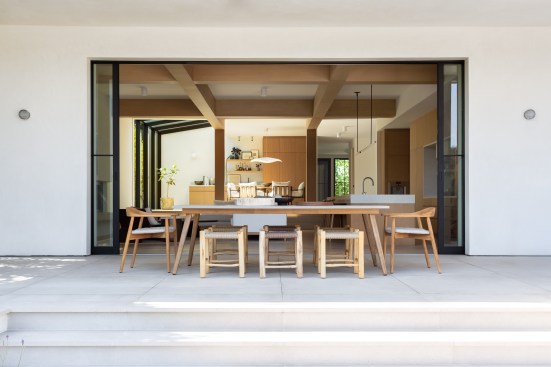
Pine Avenue Residence in El Segundo, California, by AAHA Studio. Photo by Amy Bartlam.
“This family really wanted their house to be a sanctuary,” says architect Aaron Leshtz, a partner and co-founder of AAHA Studio. “Our real focus was, how do we bring light in from different places? So, the first thing we did was create an entry courtyard so that as you come into the space, you’re already enveloped in green,” Leshtz says.
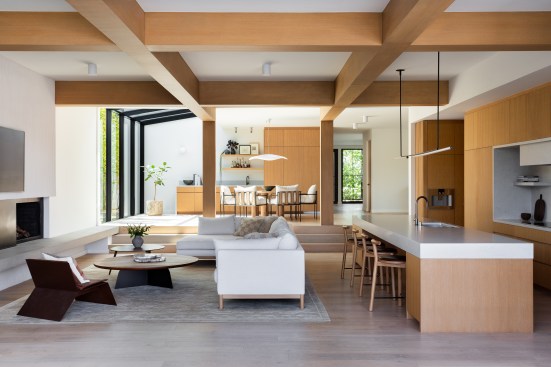
Pine Avenue Residence in El Segundo, California, by AAHA Studio. Photo by Amy Bartlam.
At the core of the house, the architects lifted the ceilings to create an atrium space where a closed-off roof used to be. “The owners—a pediatric neuro-oncologist and an oncology nurse—have pretty hard day jobs, and they are emotionally and physically taxed when they come home,” Leshtz says. “What they wanted was to feel replenishing and nourishing when they got home. They wanted their whole house to feel like a spa.”
Primal Architecture
Human nervous systems respond to light quality, sound, spatial clarity, and visual complexity. In other words, people are most comfortable in places where they feel safe and can observe their surroundings—a concept British geographer Jay Appleton suggested when he coined the prospect and refuge theory more than 50 years go.
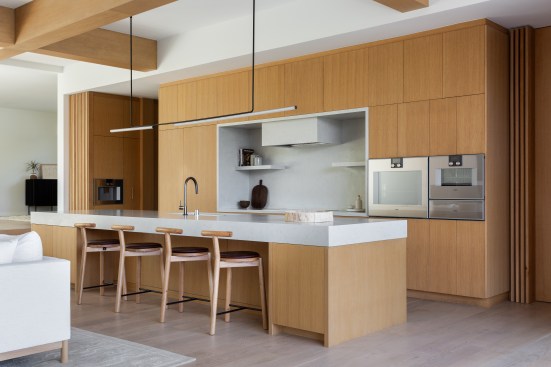
Pine Avenue Residence in El Segundo, California, by AAHA Studio. Photo by Amy Bartlam.
Placing the human nervous system at the center of design thinking is part of an emerging concept known as primal architecture, which considers how spaces make a person feel at a physiological level, according to a 2026 report from the Global Wellness Institute.
“Primal architecture moves beyond conventional wellness design,” the report states. “It creates environments that not only reduce stress but actively support emotional balance, cognitive clarity, and long-term wellbeing.”
That principle plays out in design strategies that reduce sensory clutter and help people shift into a more relaxed state from the moment they arrive. Calming surroundings can also foster a deeper emotional connection between people and their homes.
“People respond positively to environments that are engaging, memorable, and meaningful,” researchers wrote in a study published in Architectural Science Review.
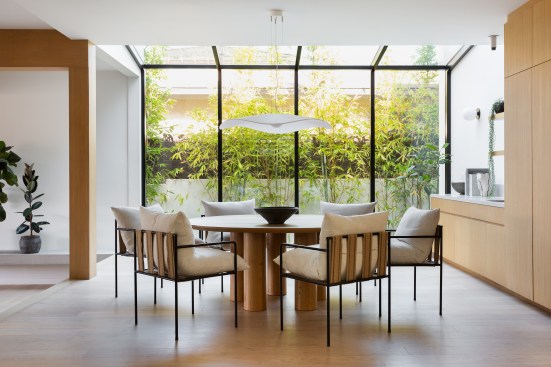
Pine Avenue Residence in El Segundo, California, by AAHA Studio. Photo by Amy Bartlam.
While the idea of primal architecture can be universally applied, how it specifically translates to environments varies. “When we talk to our clients about wellness, we want to find out what it means to them,” Leshtz says. “For this particular family, wellness means coming home and feeling calm and peaceful, and to be in a place without a lot of busy materials.”
A Sense of Belonging
Integrating the outdoors with the built environment improves mental well-being by reducing stress, enhancing cognitive function, and boosting mood, according to the National Institutes of Health. A strong sense of place can also ease the psychological divide between the home and the world beyond its walls.
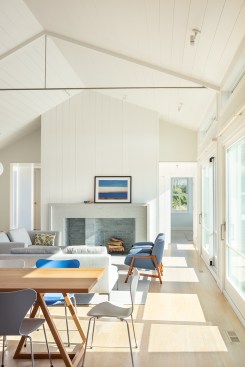
Dune House in Chatham, Massachusetts, by Estes Twombly + Titrington Architects. Photo by Warren Jagger.
Creating deep connections with the outdoors is fundamental to the work of architect Adam Titrington and his firm, Estes Twombly + Titrington Architects, on the East Coast. The firm’s architects dig into each site like archaeologists, observing neighboring homes and studying time-tested materials.
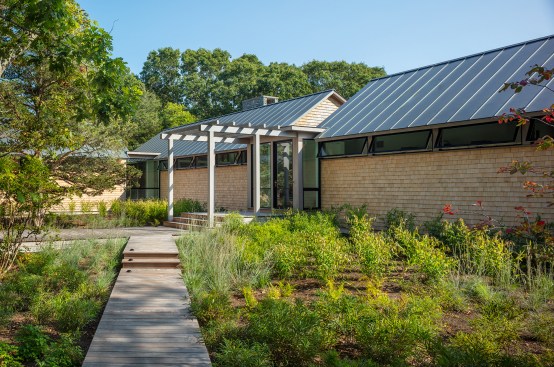
Nonquitt House in Darthmouth, Massachusetts, by Estes Twombly + Titrington Architects. Photo by Warren Jagger.
“We’re responding to the other homes and the vernacular architecture,” Titrington says. “It gives people a sense of belonging. Now that we’re bombarded with things on our phone and coming from all sorts of places, it’s nice to be reminded where we are physically.”
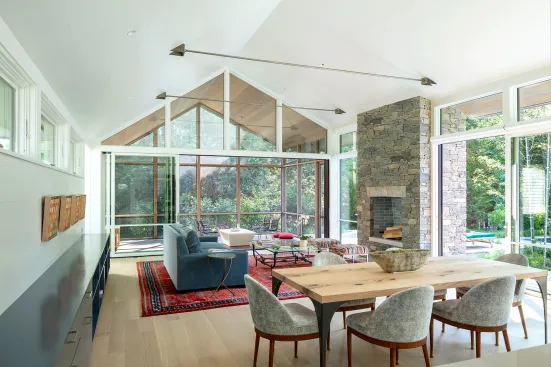
Nonquitt House in Darthmouth, Massachusetts, by Estes Twombly + Titrington Architects. Photo by Warren Jagger.
Seamless transitions further promote that connectivity. Titrington says the firm’s homes are often positioned low to the ground and liberally incorporate operable windows, window walls, and stacked sliding doors to dissolve the transition between in and out.
“The outdoor spaces are of equal importance to the homeowners as the indoors,” Titrington says of one of his projects, the Nonquitt House. “The owners really do leave the house open large parts of the year, so the outdoor space just becomes part of the main living space.”
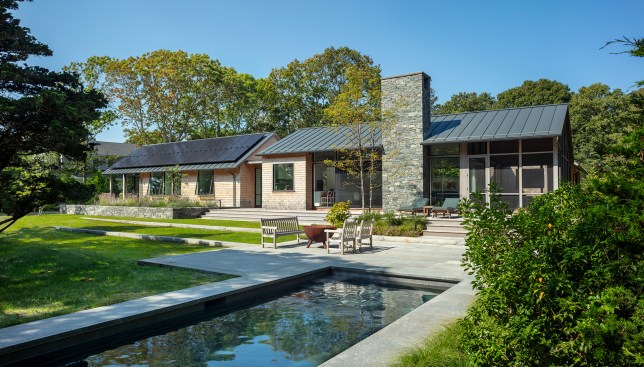
Nonquitt House in Darthmouth, Massachusetts, by Estes Twombly + Titrington Architects. Photo by Warren Jagger.
With larger spans of glass, architects are encouraging clients to use triple-pane windows, not only to provide better insulation, but also to mitigate sound and climate concerns. “We’ve used it with projects that are close to the airport, and we’re doing it on a lot of the Palisades rebuilds for fire hardening,” Leshtz says.
Natural, Breathable Environments
While airtight windows provide safety, noise reduction, and energy efficiency, which all contribute to a healthy home, ventilation and indoor air purification must also be considered. “One of our first priorities is to limit pollutants with responsible material selection and incorporating more bio-based materials,” Titrington says.
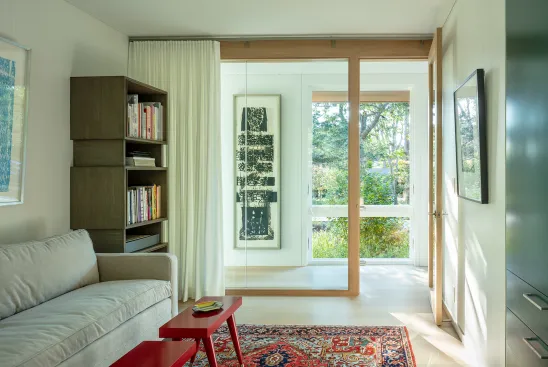
Nonquitt House in Darthmouth, Massachusetts, by Estes Twombly + Titrington Architects. Photo by Warren Jagger.
Choosing natural materials such as wood, stone, and ceramics instead of engineered materials is of growing importance, and floors finished in linseed oil, lime-plaster walls that breathe, and hemp insulation that manages moisture safely are among the invisible architectural features that make a home healthy.
Online resources, such as the Parsons Healthy Materials Lab and the Living Building Challenge Red List, make it easier for design professionals to vet materials and companies that use Declare Labels that list a product’s ingredients. Architects and builders are finding that research helpful when they present less familiar materials and technologies as alternatives to conventional choices.
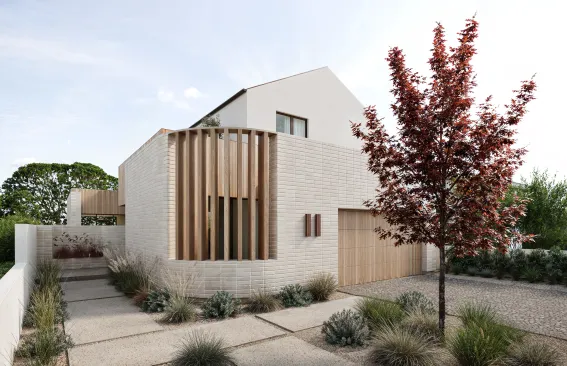
Courtyard House by AAHA Studio. Rendering by AAHA Studio.
“People are not always aware of the technology that’s out there and that it’s not new technology anymore,” Titrington says. “It’s becoming the most logical path to choose.”
In many ways, going back to the basics—the ways a home connects with nature, incorporates natural building materials, and breathes clean air—can have the greatest impact on a person’s well-being at home.
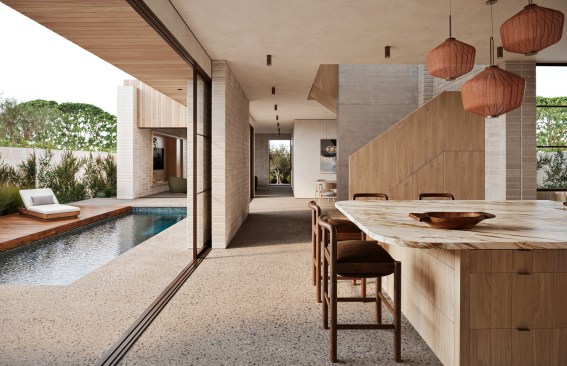
Courtyard House by AAHA Studio. Rendering by AAHA Studio.
“Wellness has become too much of a hashtag,” Leshtz says. “If we’ve learned anything from doing houses with people, it’s that the simpler things work. Providing wellness can be as simple as opening a window and looking at a beautiful plant outside.”