October 19, 2015
Census Bureau Data Analyzes Construction Worker Shortage Employment in the industry deflated by nearly 2.3 million jobs from 2006 to 2011. And it has only recovered half of those jobs back. So where did those workers go? According to U.S. Census Bureau data, 40 percent of construction workers who became unemployed for more than three months during 2006 and 2009 stayed in the industry, either returning to their former employer or finding a new one. A third of those workers switched to another industry, typically work as general laborers, landscapers, and truck drivers, after remaining unemployed for more than a year. A quarter of those workers were still unemployed five to seven years after losing their jobs. Contrary to popular belief, only a handful (less than 5 percent) of unemployed construction workers landed jobs in the oil and gas industry. [The Wall Street Journal]
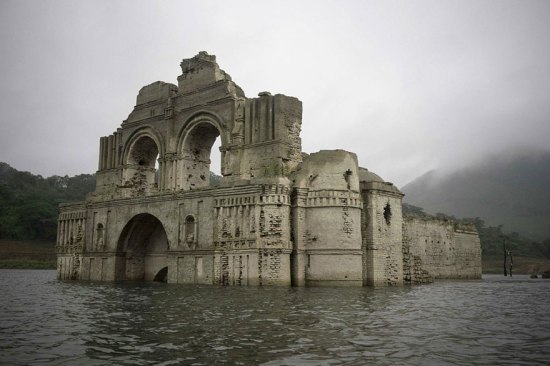
Unveiled by Drought California isn’t the only North American area best by drought. The southern Mexican state of Chiapas, bordering Guatemala on the Pacific side of the country is also facing a major drought. And because of this drought, this year the watershed of the Grijalva river has been battered and the water level in the Nezahualcoyotl reservoir has fallen by 82 feet. The very low water level has revealed an architectural gem, the Temple of Santiago, a church built in the mid-16th century “by a group of monks headed by Friar Bartolome de la Casas, who arrived in the region inhabited by the Zoque people.” The building is 183 by 42 feet, with 30-foot-tall walls and a 48-foot-tall bell tower, and was abandoned around the time of the American Revolution because of diseases spreading in the area. The abandoned structure was left there when the river was dammed in 1966 to create the reservoir, and has been revealed by drought once before, in 2002, when the lack of rain was so bad for so long that tourists could actually walk on the ground of the dry reservoir to explore the church. Let’s hope the drought is not as severe this time. [Associated Press]
Alex Salcedo
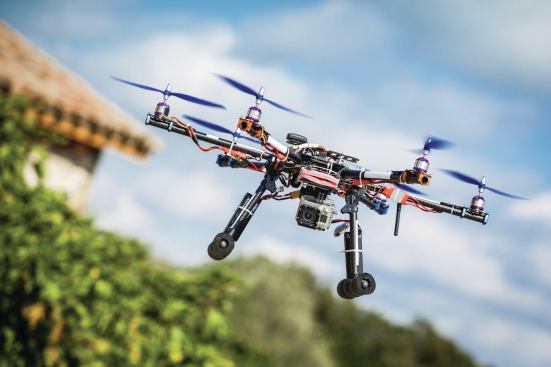
Air Delivery Many believe drones will be used to deliver building materials to jobsites.
Licensing Drones The federal government is starting a registry on which all recreational drone users will need to register their personal unmanned aerial vehicles. The administration has been holding off on such a move, but changed course, feeling that there are simply too many personal consumer drones in the air, and they are causing too many problems when it comes to airline safety. As The Washington Post reports, “Pilots of passenger planes and other aircraft are reporting more than 100 sightings or close calls with rogue drones a month, according to the FAA,” and that American consumers are expected to purchase about 700,000 new drones this year alone. The FAA and the Transportation Department have been tasked with determining how the new registry will work, and their recommendations are due Nov. 20, or about a week before the Christmas shopping season begins. So expect to hear a lot more about this in the days leading up to the Macy’s Thanksgiving Day parade and Black Friday. [The Washington Post]
#SayCheesegrater An Instagram competition celebrated the official opening of London’s Leadenhall Building. Five entries won the contest to photograph the commercial tower nicknamed the Cheesegrater for its distinctive triangular, wedge shape. London’s tallest building (224 meters, or 735 feet), designed by Rogers Stirk Harbour + Partners, opened officially today with a ceremony attended by Prince William and Prince Harry. Instagrammers used the hashtag #SayCheesegrater to enter the competition, which launched in September. The judging panel, which included Instagram user @Igerslondon and representatives from the building’s developers, British Land and Oxford Properties, selected five winners, which capture the skyscraper, located in the Financial District, from various viewpoints in the city. [The Telegraph]
Jahn’s Chicago Legacy Landing in Chicago’s United Terminal at O’Hare, designed by Helmut Jahn, FAIA, on his way to visit the Chicago Architecture Biennial prompted Aaron Betsky to take a close look at on two Jahn buildings in the Windy City that have very disparate futures. [ARCHITECT]
Copyrighting Architecture Amanda Kolson Hurley takes an in-depth look at the (short and recent) history of the copyright laws of architectural design in American with a visit to AIA New York’s Center of Architecture’s “Un/Fair Use” exhibition. [ARCHITECT]
Freedom of Worship Editor-in-chief Ned Cramer takes a look at a little-covered aspect of the recent refugee crisis in Europe: The new shortage of mosques for the growing number of muslims streaming into the continent, and the reactionary politics that are fighting both the people who are looking for safe haven and the religion they are bringing with them. What’s the answer? [ARCHITECT]
Star Search A new online database lets you search the U.S. General Services Administration’s collection of over 26,000 pieces including paintings, sculptures, and video installations online. The Fine Arts Collection website allows users to find works by their favorite artists, search galleries, or discover pieces housed in their state. [ARCHITECT]
Updating Women Online The Guggenheim Museum hosted a series of discussions about why so few female designers have made it into history books, print or digital. Attendees were then encouraged to change that phenomenon by adding Wikipedia entries about women who have made significant contributions in architecture, design, urban planning, and construction. [ARCHITECT]
Nest-ed Fusebox U.K. designer Dan Salisbury created this conceptual box with an e-ink display and white-aluminum construction. Fuse is designed to illuminate when the power goes out, track the amount of electricity used in each room, forecast future energy consumption, and can be managed via a mobile app. Check out this and more amazing tech stories for the week that was. [ARCHITECT]
Awards: Enter Now!
The 63rd annual Progressive Architecture Awards program is now accepting submissions. The winners of our annual program honoring unbuilt designs are published in the February issue. Regular deadline is on Oct. 30, with the late deadline (and extra $50 per entry) on Nov. 4. Enter now!
Nominate an individual or organization that is advancing the green building industry through the adoption of technologies for the inaugural BOLD (Building Optimizers, Leaders and Disruptors) Awards. The deadline is Oct. 28. Finalists will be notified on Nov. 11, and winners will be honored at Greenbuild in Washington, D.C.
The Graham Foundation’s Carter Manny Award recognizes doctoral students working on dissertation topics in architecture. Applications are available online now and due Nov. 15.
The Urban Land Institute is now accepting applications to compete in its student competition to design an urban planning and development scenario. Teams must apply by Dec. 7.
Bathroom products manufacturer Victoria + Albert is challenging designers to create a space that uses its products. Entry is free and submissions are due Dec. 20.
AIA|DC is accepting entries for the Sarah Booth Conroy Prize for Journalism and Architectural Criticism to reward excellent reporting of architecture and urbanism in Washington, D.C. The annual prize is $5,000. Deadline is Dec. 31.
For more news and views, sign up for the ARCHITECT Newswire, the best daily newsletter on architecture and architects.
Click “next” to read past days of the News Roundup.