In an era when American diplomatic architecture is increasingly defined by security barriers, hardened perimeters, and geopolitical anxiety, the new U.S. Consulate General in Mérida, Mexico, attempts something far more delicate: openness.
Designed by The Miller Hull Partnership for the U.S. Department of State Bureau of Overseas Buildings Operations (OBO), the seven-acre diplomatic campus in the Yucatán Peninsula has achieved LEED Gold certification while drawing deeply from the environmental logic, material traditions, and spatial atmospheres of the region’s Maya and colonial architectural heritage.
The project arrives at a moment when diplomatic architecture is under pressure to perform on multiple fronts simultaneously: security, sustainability, cultural representation, operational flexibility, and symbolic power. In Mérida, those demands converge in a building that treats climate not as an obstacle to overcome, but as a design collaborator.
“Sitting on seven acres, the new campus draws upon the dual influences of the historic Maya and colonial eras, seen through the lens of the region’s rich contemporary culture,” the firm states in the project release.
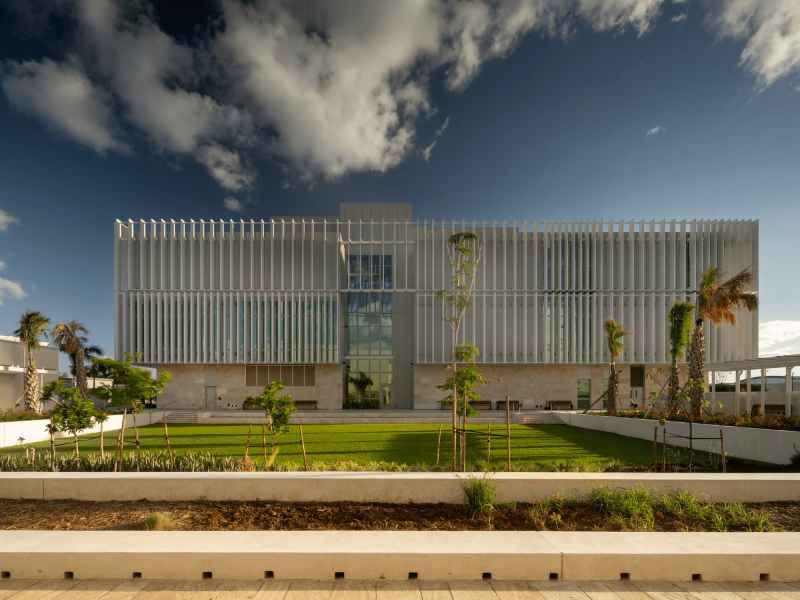
That ambition is immediately visible in the building’s massing and material strategy. Limestone walls, shaded walkways, deep metal fins, water elements, and planted courtyards transform what could have been an anonymous federal compound into something regionally grounded. Rather than importing a generic diplomatic aesthetic, the design borrows heavily from the environmental intelligence embedded in local architecture.
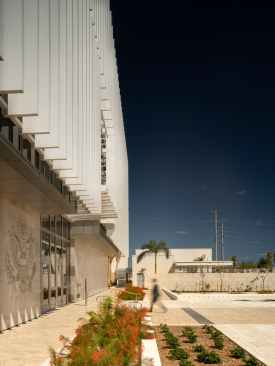
Official visitors and staff approach the building along a low limestone wall inspired by the haciendas of the Yucatán. Water troughs and stone edging reference historic regional landscapes, while the building’s limestone base folds inward to pull visitors toward a skylit atrium at the center of the complex.
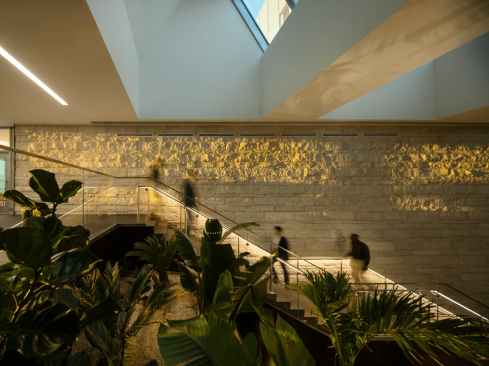
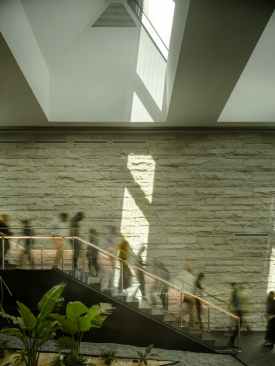
The most striking spatial gesture is the building’s central atrium—a lush, stone-clad circulation spine inspired by the cenotes that punctuate the Yucatán landscape. These natural sinkholes, sacred to the Maya civilization and essential to the peninsula’s hydrology, become both metaphor and environmental device.
“Shaped by the cenotes dotting the peninsula, the heart of the building is a lushly planted, stone-clad, skylit atrium,” the release explains. “The atrium and its ‘irresistible stair’ extend from the lobby, past the gallery, and up through the office area, connecting the entire consulate community and creating opportunities for chance encounters and visual connections across the building.”
That phrase—“irresistible stair”—reveals a larger architectural agenda. In an age dominated by controlled circulation and compartmentalized office planning, the project attempts to reintroduce spontaneity and human interaction into the diplomatic workplace. The stair becomes not merely circulation infrastructure, but a social condenser.
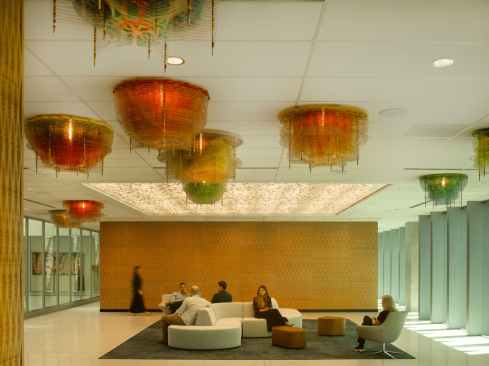
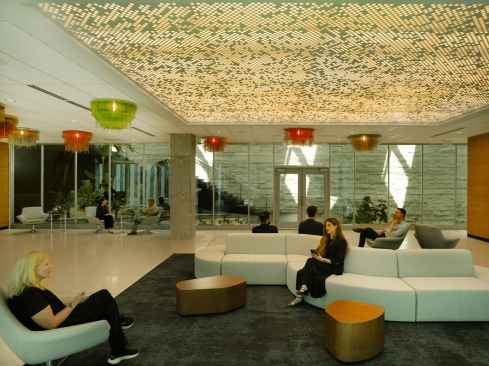
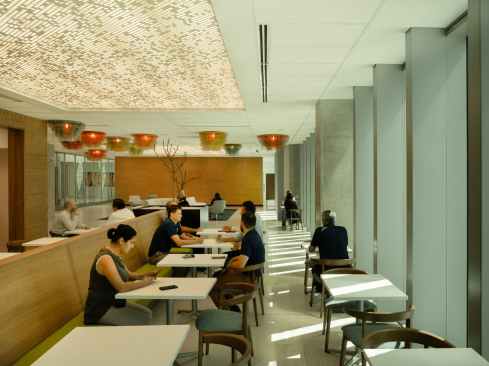
Around this central void, daylight-filled offices and gathering spaces maximize visual connectivity and workplace flexibility. The second-floor gallery doubles as both representational space and informal meeting zone, integrating an artwork by Cuban American artist Jorge Pardo as part of the State Department’s Art in Embassies collection.
Yet beneath the project’s calm visual restraint lies a highly technical environmental strategy tailored to the realities of the Yucatán climate.
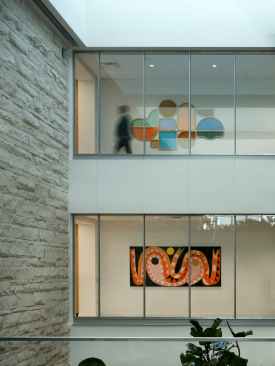
The upper floors extend outward over the limestone base, creating continuous shaded walkways while deep exterior fins reduce glare and solar heat gain. Combined with daylighting systems and efficient HVAC infrastructure, the project conserves 49% of projected energy use, with 29% of its energy supplied through onsite renewables.
The building’s climate adaptation strategies extend beyond energy performance. Seasonal rainfall and flooding risks are addressed through stormwater troughs, sunken landscape areas, and injection wells that slow and manage runoff before releasing water back into the ground.
One of the project’s most compelling details is its use of chukum plaster, an ancient Maya material made from locally endemic tree resin mixed with limestone plaster. Historically prized for its resistance to water infiltration and cracking, the material appears throughout the campus as both cultural reference and high-performance envelope solution.
In many ways, the project reflects a broader shift in diplomatic architecture away from purely representational symbolism toward environmental intelligence and regional responsiveness. Rather than projecting American identity through monumental excess, the Mérida consulate uses restraint, climate adaptation, and local material knowledge as forms of soft power.
The building also represents another milestone in Miller Hull’s growing portfolio of overseas diplomatic work. The Mérida project is the firm’s fourth completed commission with OBO, following the U.S. Embassy in Niamey, the U.S. Embassy in Guatemala City, and the U.S. Consulate General in Guadalajara.
That trajectory reflects how federal architecture is increasingly becoming a testing ground for advanced environmental performance and regionally attuned design strategies. Diplomatic buildings, once criticized for fortress-like isolation, are now being asked to embody cultural fluency, sustainability, and resilience simultaneously.
“The new U.S. Consulate General Mérida is an important physical representation of the long-term commitment to the U.S.–Mexico relationship and a permanent presence in the region,” the release states. “With a focus on functionality, security, and architectural excellence, this new facility provides a safe and efficient environment for consulate operations.”
The deeper significance of the project may lie in what it suggests about the future of American civic architecture abroad. At a time when climate instability is reshaping construction worldwide, the Mérida consulate argues that the most sophisticated buildings may no longer be the loudest or most technologically conspicuous—but the ones most capable of learning from the places where they stand.