For over a century, modern architecture has prioritized transparency. From Joseph Paxton’s Crystal Palace to the contemporary glazed curtain wall, glass has been the defining material of modernity. Allowing unprecedented access to light and views while maintaining a building’s climate control, glass has reinforced a connection with the outside world and embodied a spirit of technological progress. The visual dissolution of the boundary between inside and outside has direct associations with evolving societal values like enlightenment, liberation, and democratization.
It is remarkable to consider that transparency has, practically speaking, been the exclusive domain of one material. With the exception of clear and translucent polymers like polycarbonate, glass has functioned as architecture’s principal medium for transmitting light.
The fact that other common building materials such as concrete, wood, or metal are opaque is an unquestioned fact. As a result, such building elements typically counterbalance glass in architectural facades, juxtaposing their opacity against the transparency of glazing.
And yet, scientists and manufacturers are working to disrupt this long-held presumption. Recent advances in chemical modification, novel manufacturing, and microscopic engineering have delivered light-transmitting versions of these three omnipresent materials.
The results are newly-transformed concrete, wood, and steel that challenge some of architecture’s most basic assumptions and redefine society’s expectations of the fundamental qualities of materials in the built environment.
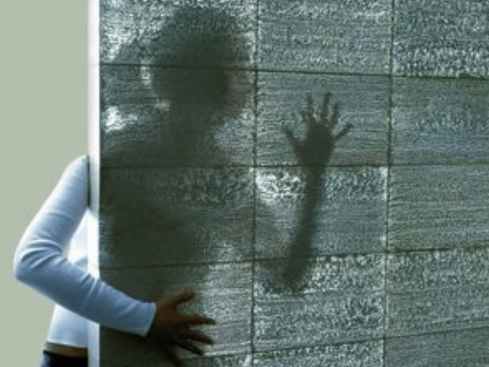
LitraCon.
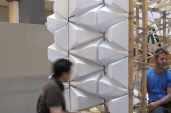
Few substances embody opacity more predictably than concrete. And yet, as Hungarian architect Áron Losonczi demonstrated with the development of Litracon, or light-transmitting concrete, even this solid material can be transformed. Several variants have appeared since, and—like Litracon—these prefabricated concrete modules have been primarily designed to impart unexpected aesthetic effects.
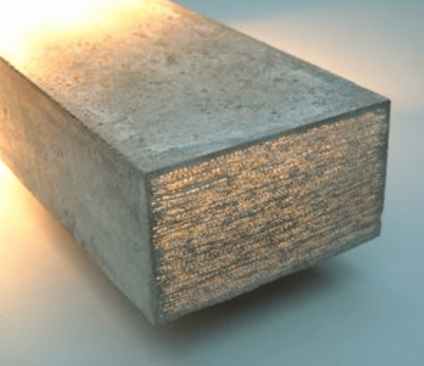
LitraCon.
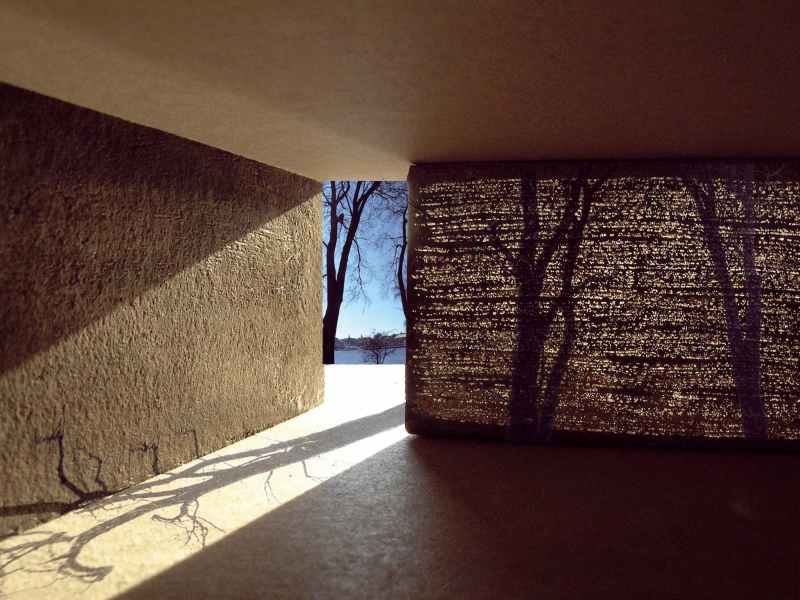
These products incorporate optical fibers, clear polymer channels, or engineered transmission pathways to allow daylight to pass through thick assemblies. Although not transparent, light-transmitting concrete conveys images and patterns via these channels using a phenomenon called total internal reflection (TIR). The result is akin to a low-fidelity rendition of a view; a pixelated, monochromatic transmission of the original image.
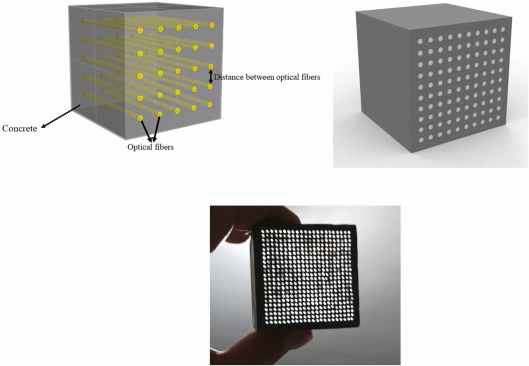
HPLTC Specimens.
A more recent motivation for this technology is energy savings. Today, the focus is on High-Performance Light-Transmitting Concrete (HPTLC). “High-performance” refers to optimizing a building’s operating energy. Because HPTLC transmits daylight through an otherwise opaque material, it can reduce the need for electric lighting and its accompanying energy footprint.
Although glass is an excellent daylight medium, it is often excessive—causing solar heat gain, glare, and unwanted thermal transmission. HPTLC functions like a translucent screen that delivers soft light without these challenges.

3Form Varia Collection.
Like concrete, wood is an unexpected material for light-transmission. The first variant to be developed was translucent wood, such as 3form’s Varia panels, made possible by laminating a very thin veneer to a clear polymer sheet. With front lighting, the material seems opaque; but illumination from behind delivers a surprising glow.
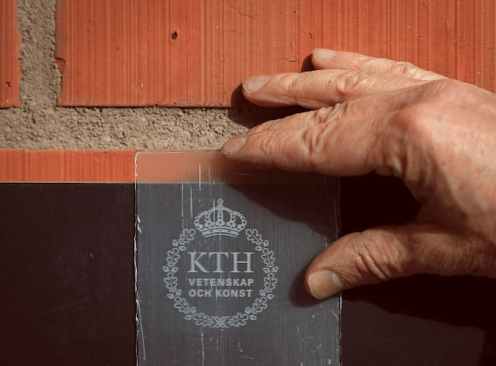
A close-up look at the transparent wood created by Dr. Lars Berglund and co-authors. Image credit: KTH Royal Institute of Technology.
More recently, scientists have modified wood to be transparent. Researchers at the KTH Royal Institute of Technology in Stockholm found that by removing lignin, the structural polymer largely responsible for wood’s opacity, they could create a more translucent variant. By incorporating clear PMMA, the same material used in many forms of light-transmitting concrete, the scientists imparted the wood with optical clarity.
Similar to HPTLC, transparent wood is seen as having energy-saving, sunlight-tempering advantages. According to KTH’s Dr. Lars Berglund, “Transparent wood panels can be used for windows, and semitransparent facades, when the idea is to let light in but maintain privacy.”
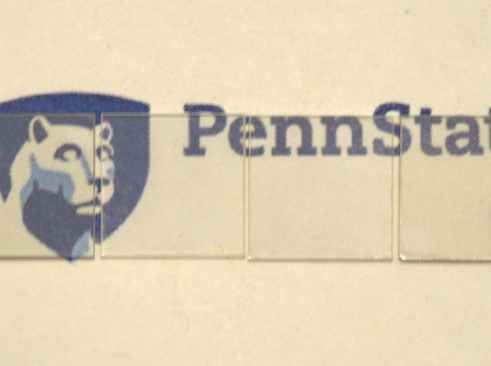
Samples of the correlated metals strontium vanadate (two squares on left) and calcium vanadate (two squares on right) with two uncoated squares in center. Credit: Lei Zhang / Penn State. All Rights Reserved.
Metal is likely the most surprising light-transmitting material. Researchers at Penn State University have developed a thin metal film for displays that is both transparent and conductive. Looking for a more cost-effective replacement for indium tin oxide, they began to work with 10-nanometer sheets of correlated metals like strontium vanadate and calcium vanadate, in which electrons flow like a liquid. This fluid behavior is what makes the film optically clear and highly conductive.
While the scientists first targeted display applications, they have also begun to focus on smart windows that incorporate solar cells made of organic perovskites. The architectural implications are significant: facades composed of transparent, conductive metal films that harness energy, integrate sensing capabilities, and regulate environmental conditions.
These examples illustrate that material identities do not remain fixed, but transform over time in unexpected ways. Glass has been the de facto medium for light and view in architecture for centuries, and while it is likely to remain so for decades to come, its predominance in this role is not guaranteed.
The motivation for increased transparency in envelope materials has led scientists to devise light-transmitting versions of many materials that are typically opaque—even the “big three” of concrete, wood, and metal. A century from now, building facades may be unrecognizable from today’s “all or nothing” transparent and opaque cladding systems.