
Project Description
FROM MISSOURI UNIVERSITY OF SCIENCE AND TECHNOLOGY:
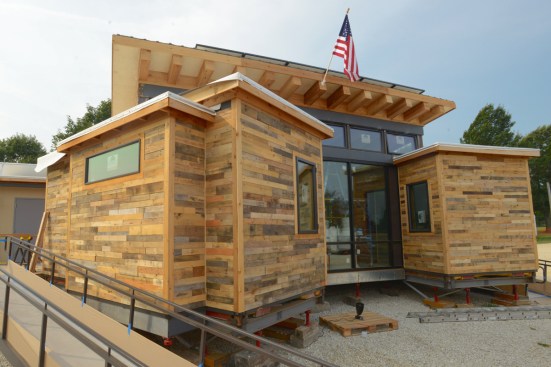
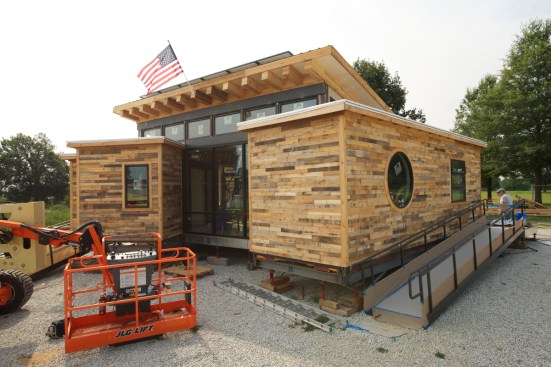
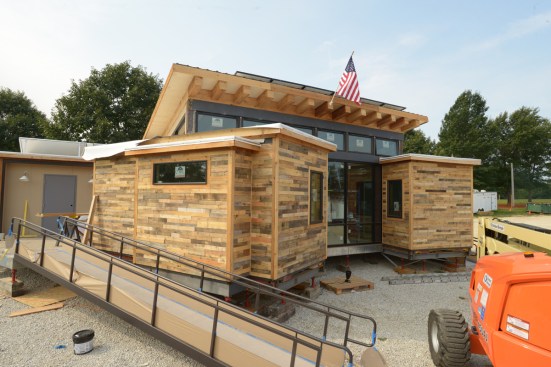
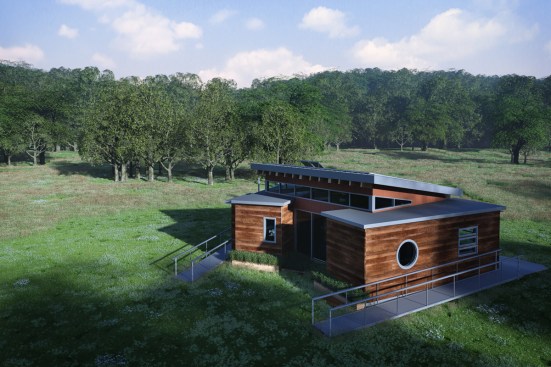
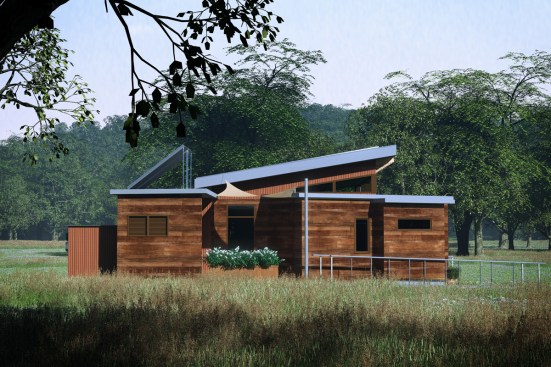
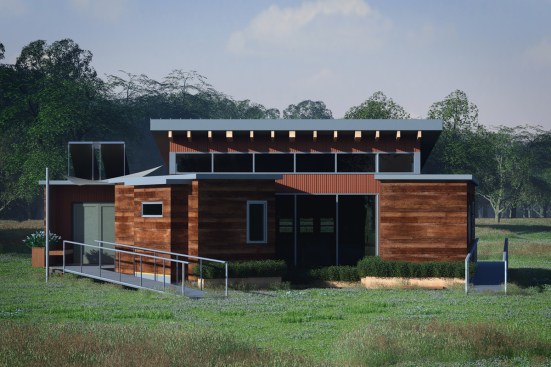
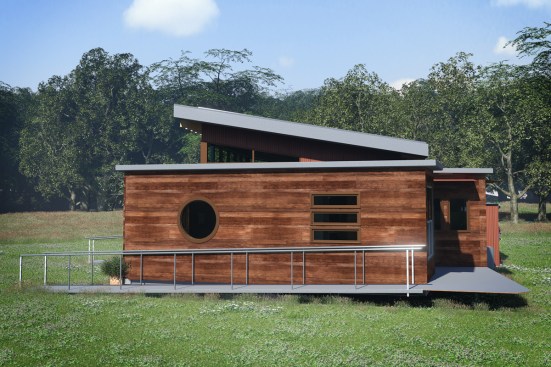
The Nest Home is an
innovative design that works with the environment to meet the needs of a
growing family. Just as birds use materials from their environment to build a
nest, we are reusing materials to build a home.
The primary
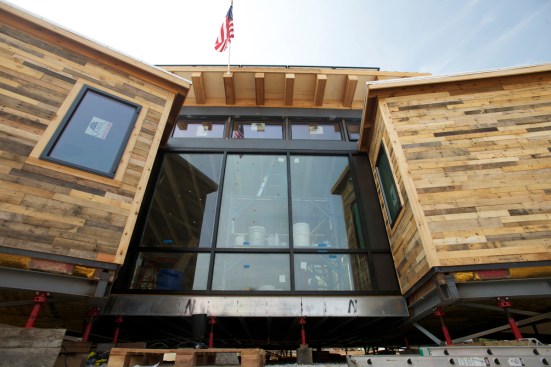
structure of the Nest Home is three shipping containers that, after a lifetime
of transporting goods around the world, have come to retire as a safe haven for
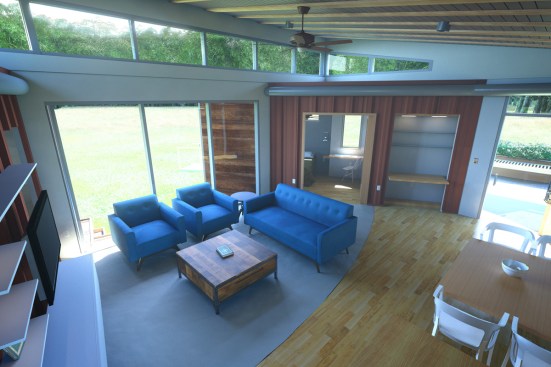
a family. They are set around a central gathering space, expanding the area to
the outdoors and defying the confined feeling of traditional container buildings.
The floorplan as a whole promotes togetherness while providing ample room for
privacy. The steel foundation not only keeps the structure strong, it also
allows the house be assembled with relative ease.
Drawing inspiration
from the way birds build nests, the Nest Home incorporates several materials
that were found locally and repurposed from their original use. This refutes
the notion that the lifecycle of these items ends after they have outlasted
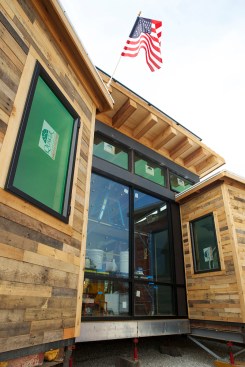
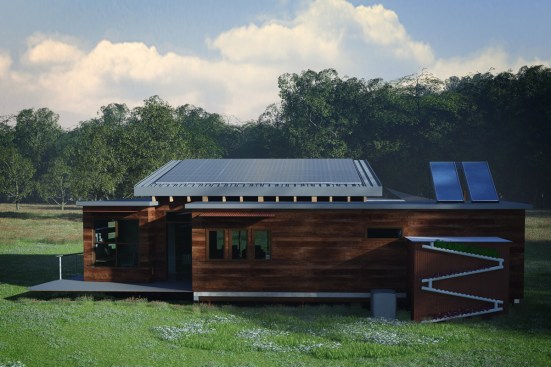
their intended use. Some examples include: exterior siding composed of used
shipping pallets collected from the local community; carpet composed of
discarded fishing nets; a kitchen countertop inlaid with fragments of reclaimed
glass bottles; denim batting made of recycled blue jeans that provides insulation
to the interior walls.
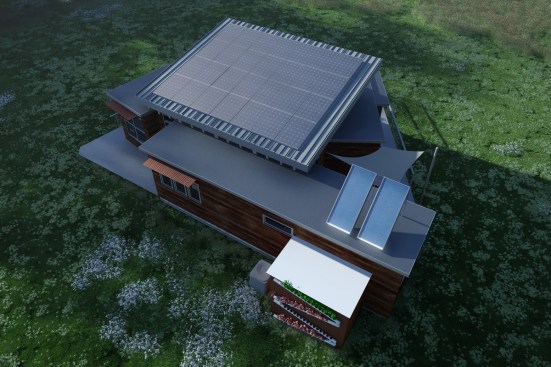
The photovoltaic
array of 24 solar panels is designed to power the Nest Home as well as an
electric vehicle. This system is unique in that each panel contains a
micro-inverter, making the transfer of power more efficient. Solar thermal
panels use energy from the sun to heat water for use throughout the home,
further reducing overall energy consumption. Water enters the collectors and is
directly heated by the sun before being transported throughout the house.
The home automation
system continuously monitors environmental conditions, making adjustments to
the HVAC system, humidity, exterior and interior lighting, fans, and windows.
It integrates weather forecasts and user preferences to meet the needs of the
residents. The resident has control over the entire house remotely from a
wireless device, such as a tablet or smartphone.
The Nest Home’s
greywater reclamation system treats water from the bathroom sink, shower, and
laundry, then sends it to parts of the house for reuse. After passing through a
series of filters, the treated greywater is clean enough to meet all applicable
building codes for use as source water in a garden or hydroponic system.
Greywater contains
nitrogen, phosphorus, and potassium, all nutrients essential for growing
healthy plants, making it an ideal feed for gardens. The Nest Home features
three types of hydroponic, or soilless, gardens: a vertical wall that grows
herbs, two tower gardens ideal for growing vegetables, and a shade garden that
acts as landscaping.
After the U.S.
Department of Energy Solar Decathlon 2015, the Nest Home will return to Rolla,
Missouri and placed on a permanent foundation on the Missouri S&T campus.
There it will serve as student housing and allow tenants to participate in the university’s
ongoing smart-living research and development program.