
Project Description
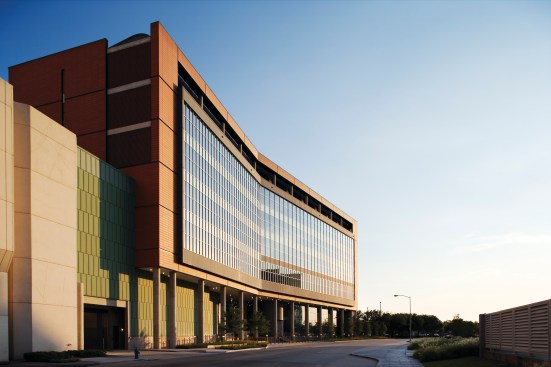
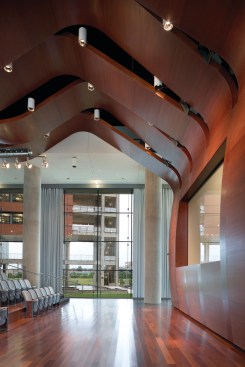
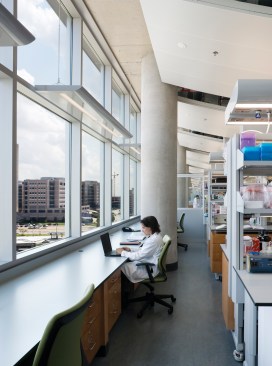
The Fayez S. Sarofim Research Building, home of the Brown Foundation Institute of Molecular Medicine, is a comprehensive research facility on a tight urban site within the Texas Medical Center campus. This facility is designated to support research collaboration in the area of molecular medicine, particularly in genetics and proteomics and bioinformatics. The Sarofim Research Building houses dry and wet laboratories, offices, conferencing areas, a 200-seat assembly facility, and appropriate support spaces. The design creates a dynamic, interactive environment conducive to research and learning on multiple levels. From the relationship with the outdoors, to the architecture of the building, to the interior spaces, the approach considers form and function holistically, promoting the productivity and well-being of users.
The building incorporates sustainable design strategies at many scales. Building orientation allows optimum penetration and control of natural light in relationship to the differing programmatic elements of flexible laboratory space, support laboratories, office and common areas. The separation of office and lab elements enabled the environmental control system to capture and reuse energy that would normally have been wasted. The reinforced concrete column and slab structure employs high fly ash concrete thus reducing the upstream environmental impact of the building. The building also has a specialized facade design that responds to the Houston climate.
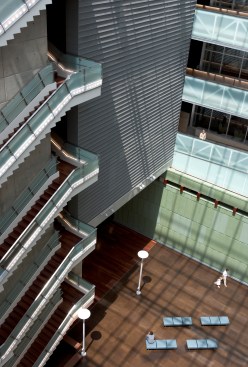
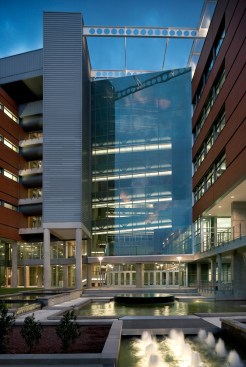
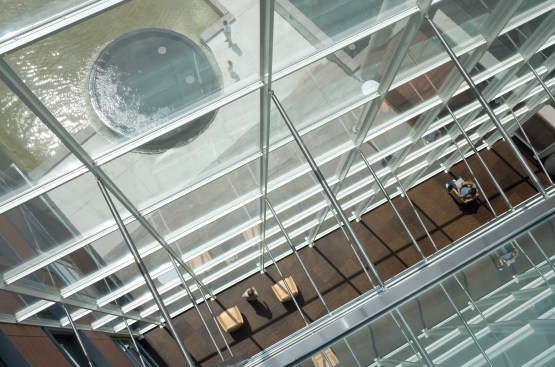
The approach to the design was based on three underlying principles: place, collaboration and sustainability. The design focuses on creating a dynamic, interactive environment conducive to research and learning on multiple levels. The building is a composition of separate functional “species”. Each species is designed as a unique typology fulfilling the specific needs of its function and use. These separate building elements are then connected by an atrium and circulation spaces. Distinction between the interior and exterior is blurred by the continuation of materials throughout.