Project Description
FROM THE ARCHITECTS:
On Feb. 27, 2010, Chile was hit by an 8,8 earthquake and a tsunami just afterwards. We responded to the
disaster at three different time scales: one day, 10 days and 100 days.
Day 1: Water Distribution
We wanted to guarantee water availability. Given that carrying water is difficult, we proposed to make it roll. The idea, transmitted by YouTube and text messages, was to place plastic bottles inside a tire, making it roll, and increasing the collecting capacity, doable even by children.
We wanted to guarantee water availability. Given that carrying water is difficult, we proposed to make it roll. The idea, transmitted by YouTube and text messages, was to place plastic bottles inside a tire, making it roll, and increasing the collecting capacity, doable even by children.
Day 10: Elemental Shelter
Emergency requires us to act fast. But urgency tends to be wrongly associated with delivering disposable solutions. We proposed to frame the problem of emergency shelters as an advance of the definitive reconstruction. The shelters are seen as a kind of down payment for better quality temporary units, and also make definitive reconstruction easier, since parts of the materials to be delivered are already in use by the families.
Emergency requires us to act fast. But urgency tends to be wrongly associated with delivering disposable solutions. We proposed to frame the problem of emergency shelters as an advance of the definitive reconstruction. The shelters are seen as a kind of down payment for better quality temporary units, and also make definitive reconstruction easier, since parts of the materials to be delivered are already in use by the families.
Day 100: Constitución, Plan for Sustainable Reconstruction
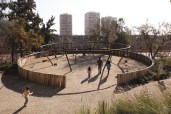
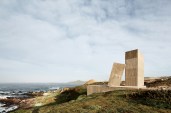
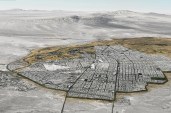
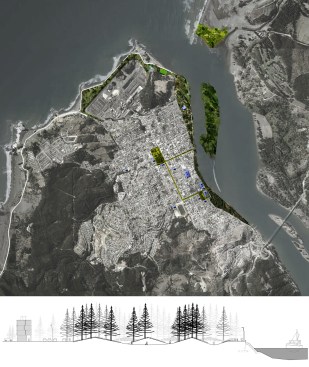
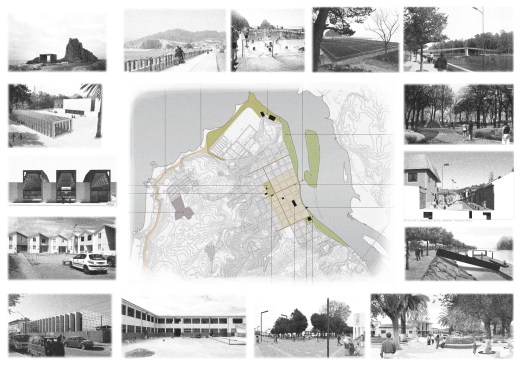
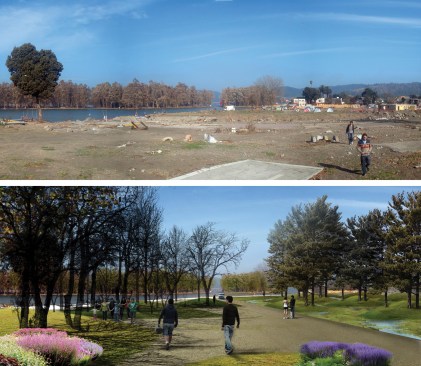
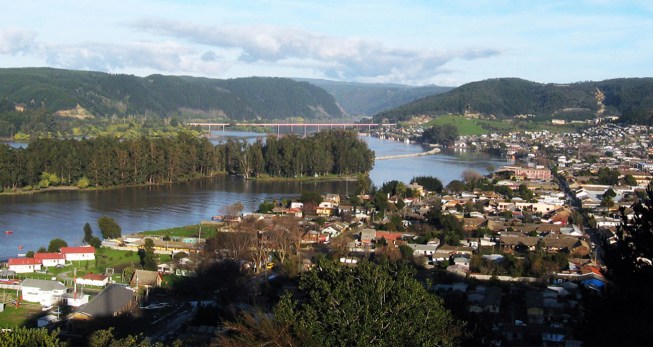
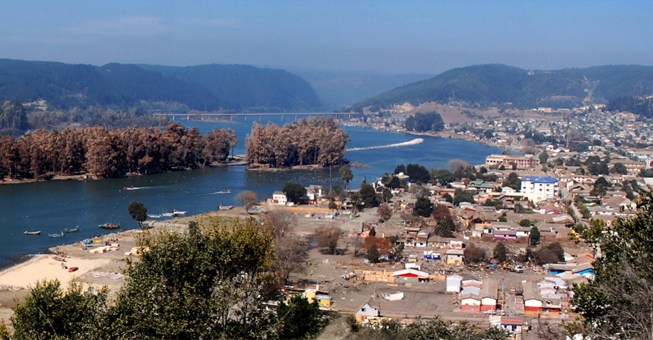
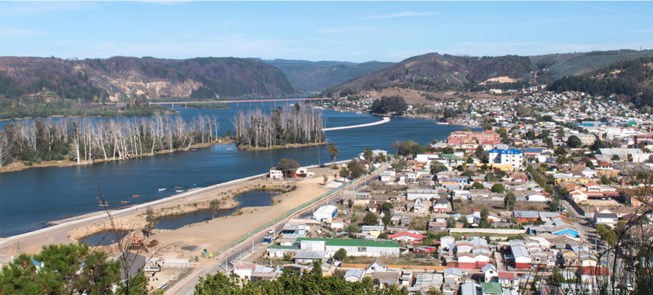
Chile resisted well the earthquake, but was not prepared for the tsunami. We were asked to do the master plan rebuild for the city of Constitución, and we were given a 100 days to do all the designs, from tsunami mitigation to housing, from public buildings to energy and economic reactivation. We started by asking people, through a process of participatory design, about their complaints and dreams for the city. They said: Repair the historic lack of public space and provide democratic access to the river.
Chile resisted well the earthquake, but was not prepared for the tsunami. We were asked to do the master plan rebuild for the city of Constitución, and we were given a 100 days to do all the designs, from tsunami mitigation to housing, from public buildings to energy and economic reactivation. We started by asking people, through a process of participatory design, about their complaints and dreams for the city. They said: Repair the historic lack of public space and provide democratic access to the river.
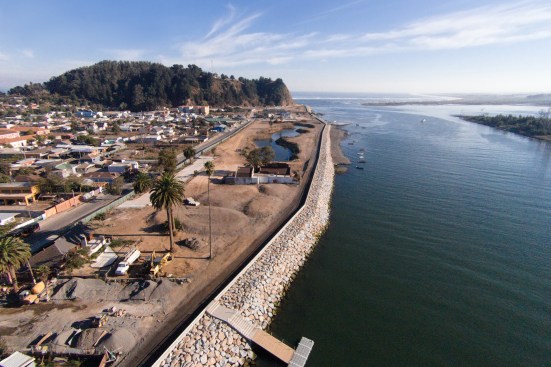
Being a coastal country, we cannot afford to simply abandon risky areas. Evidence shows that infrastructure is useless to resist the energy of displaced water. So we proposed a threefold strategy: First, an alert and evacuation plan so within 15 minutes people can reach a safe zone on the hillsides. Second, a coastal forest able to produce enough friction to reduce the energy of the tsunami’s waves, instead of trying to resist them. And third, a conditioned building zone with collapsible enclosures in the lower levels. By introducing a forest between the city and the sea we are responding to geographical threats with geographical answers. Read more.