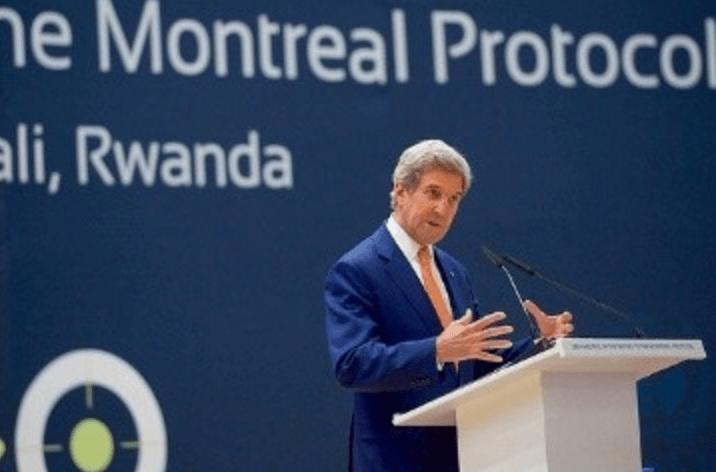
Earlier this month, more than 150 countries reached a deal to reduce emissions of hydrofluorocarbons (HFC), a powerful chemical used in refrigeration and air conditioning. The greenhouse gas can trap “thousands of times more heat in the Earth’s atmosphere than carbon dioxide,” according to the United Nations Environment Programme.
Developed countries like the U.S. will start the phaseout by 2019. What will the change mean for builders, manufacturers, and HVAC professionals? Green Building Advisor‘s Scott Gibson has the answers, along with information about another type of product that will be affected by the deal: insulation.
In addition to their use as refrigerants, HFCs also are used as blowing agents for extruded polystyrene insulation, a rigid foam common to many high-performance buildings, and in some types of spray polyurethane foam. Their high global warming potential (GWP) has steered some builders away from these products even though they excel as thermal insulation.
For further reading, refer to the article from Green Building Advisor >>