
November 17th was the day the last domino fell for Larry Fredlund. A project manager at a small Minnesota architecture firm, Fredlund took on increasing responsibilities over his eight years there, eventually running a $70 million high school construction project. Since getting his B.Arch. from North Dakota State University in 1993, Fredlund had worked without interruption in a series of progressively more senior architectural jobs. Then came 2008, the year of the ruthless domino effect: Housing construction stopped; school bonds weren't passed; the firm's projects were put on ice; and Fredlund was laid off.

Now, with four children and three stepchildren to support, Fredlund is taking side work—spec writing and a basement remodel—and searching for a full-time position. He has sent his résumé to more than 70 firms in the Twin Cities area, receiving responses such as:

Mr. Fredlund,

Thank you for your impressive and comprehensive résumé. Unfortunately, we also share [your former employer's] presumed situation. We have sadly had to lay off well-qualified staff for lack of available work and may have to yet cut deeper.

Larry,

I did review your information per your cover letter, and you certainly have a very solid résumé and experience. I don't know if you heard, but we recently had a layoff of six experienced architectural staff, and we're looking out to 2009 for some sign of an upturn in our markets. Frankly, at this point, it's well into next year before we see a need to hire again, considering the work we have and expect to have.

But nothing quite captures the pain of job hunting in a major recession so much as this auto-reply that popped up in Fredlund's inbox:

As of 11/10/08, I will no longer be employed by [firm name]. Please contact the front desk person at 651-xxx-xxxx.

"Ha-ha," Fredlund grimly joked in an e-mail, "now the people hiring people are no longer working at the firms!;"

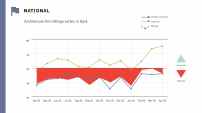
How many architects have lost their jobs since the downturn began? It's impossible to cite an up-to-date figure, because—unfortunately—the waves of layoffs keep coming. The federal Bureau of Labor Statistics reported that employment in architectural and engineering services fell by 10,000 in November and by another 7,000 the following month.

Name : Larry Fredlund, Assoc. AIA
Background: Obtained a B.Arch. from North Dakota State University. Keeps a sketchbook to jot down ideas and considers himself an AutoCAD expert -"I can fly with the best of them." Until now, was never unemployed during a 15-year career.
Plans: Has interviewed for sales and owner's rep positions and is lining up side jobs. "There are no openings for doing what I've been doing," he says.

Name : Larry Fredlund, Assoc. AIA Background: Obtained a B.Arch. from North Dakota State University. Keeps a sketchbook to jot down ideas and considers himself an AutoCAD expert -"I can fly with the best of them." Until now, was never unemployed during a 15-year career. Plans: Has interviewed for sales and owner's rep positions and is lining up side jobs. "There are no openings for doing what I've been doing," he says.

Credit: Joe Pugliese

"Architecture firms are certainly feeling the effects of the economic crisis," noted Scott Frank, an AIA spokesman, in an e-mail. "As credit lines dried up, many projects that were on the boards were put on hold or scrapped altogether. This, along with a general downturn in demand for design services, has forced firms to reduce staff."

In late December, Crain's Chicago Business reported that some Chicago-area firms were laying off 10 percent to 30 percent of staff , with Skidmore, Owings & Merrill (SOM) cutting more than 100 people from its Chicago office. Sources say that SOM shed about 80 people in New York, as well, and that nationwide, employees have been let go by such respected firms as Gehry Partners (three rounds, 30 people, allegedly); Diller Scofidio + Renfro; Gensler; and Robert A.M. Stern Architects.

Anyone who follows the news would guess that the residential, retail, and hospitality sectors are faring the worst, and that seems to be the case. Phoenix-area architect Paul Johnson lost his job in November, after work dried up at the 10-person firm he worked for (which did almost "a hundred percent developer projects," he says). The firm then responded to as many RFPs as it could, but most were for higher education and government work, and it lacked expertise in those areas. On the other side of the country, in New York, intern architect Esther Cheung fell victim to layoffs at an award-winning restaurant and residential design firm that, she says, had to cut about 25 percent of its architectural staff when residential clients started to pull out of projects.

The oft-repeated mantra that the healthcare, education, and government sectors will stay strong may prove too optimistic for this recession. "[Firms] doing institutional projects have been more insulated from the downturn, but even that sector has seen a decline in billings recently," according to the AIA's Frank. The Center on Budget and Policy Priorities in Washington, D.C., reported in January that at least 45 states are facing "severe fiscal problems" that will likely lead to further cuts in K—12 and higher education. Healthcare isn't rock-solid, either: Hospitals are feeling the squeeze as patients lose insurance coverage or defer elective procedures like knee replacements. With credit hard to come by, some hospitals are putting expansion plans on hold.

Like Fredlund, Allison Suriano, an Arizona architect, found herself out of work due to a freeze on state funding for school construction. Suriano had worked for a construction company as its director of preconstruction services. Whereas the company used to be among two or three vying for a $2 million project, she says, after the economy slowed down, her company would be up against 12 or 15 others. "We did 50 proposals, [got onto] 10 short lists, and didn't get a single job," she told ARCHITECT between lessons she was teaching at a ski resort.

Michelle Krochmal is a registered, LEED-accredited architect whose résumé boasts a Cooper Union B.Arch. and five years' experience at healthcare firm Anshen + Allen?in other words, not someone who would have been casting around for work a year ago. In fact, Krochmal wasn't laid off from her last position, in Boston—she moved with her husband to New York in June, and had her second baby in August. Then, in mid-November, she began to look for a new job. "It's been very slow," she says. "This is the first time I've experienced difficulties finding a job." She has been contacted by recruiters and was even offered one position, but she turned it down because it wasn't a good fit, she says.

Name : Michelle Krochmal, AIA, LEED AP
Background: Received a B.Arch. from the Cooper Union in 1998. Has worked in Southern California, northern California, and Boston. Moved back to New York in June 2008.
Plans: Wants to wait for the right job to come along, one that will help her climb the career ladder. Has decided not to look very hard until the spring because of the sluggish market. "Compared to when I moved to Boston a few years ago ... it's completely done a 180," she says.

Name : Michelle Krochmal, AIA, LEED AP Background: Received a B.Arch. from the Cooper Union in 1998. Has worked in Southern California, northern California, and Boston. Moved back to New York in June 2008. Plans: Wants to wait for the right job to come along, one that will help her climb the career ladder. Has decided not to look very hard until the spring because of the sluggish market. "Compared to when I moved to Boston a few years ago ... it's completely done a 180," she says.

Credit: Joe Pugliese

Greg Richter, director of business operations for recruitment firm Aerotek, says that supply far outweighs demand in today's architecture job market. He estimated in early January that the number of available candidates on his books was up 100 percent from a year earlier. Now, not only are very few firms hiring, Richter adds, but those that are often won't bring on permanent staff. "Last year, at this time, two in 10 requests from clients would be temporary," he says. "Today, most likely eight out of 10 are for temp over permanent."

At least Krochmal is fortunate in that her husband's salary can cover their rent and expenses. Phil Meadows, a Chicago-area architect who was laid off in early October, can't rely on his wife's salary to pay the bills. His former employer did mainly hospitality and office projects in Latin America until the downturn nixed investment. With no money coming in, Meadows' boss had to let his entire staff go. But described the layoff as temporary and retains office space as he tries to drum up new work. Even now, Meadows helps maintain the firm's IT system and comes into the office to use the computers for side jobs he's picked up. The day he talked with ARCHITECT, there were about five people at the office—none of them paid to be there. "The only other option is to sit at home and watch TV," Meadows says.

Meadows has been through this before. He was laid off by the same firm in the recession that followed September 11 and was rehired a year later. Back then, he took on side work and held his breath, but not this time: "I'm married now, I have a mortgage, a car payment." A specialist in 3-D computer modeling and animation as well as a registered architect, Meadows at first focused his job search on architecture and interior design firms but then broadened it to include any type of company that might need someone with his skills. Asked if he might start looking outside the Chicago area, Meadows explains that he and his wife have discussed it, but there's one major complication: "Try selling your house right now." In mid-January, Meadows did spend a week looking for work in Charlotte, N.C., where he has family.

Likewise, Johnson in Phoenix feels bound to the area where he owns a house and where his wife's family lives. He has sent out a digital portfolio to more than 40 local offices and been invited to four interviews. "Each [office] said the same thing: They're waiting for a project; when it breaks, they'll get really busy, but they're just waiting for the contract to be signed."

Johnson is staying afloat thanks to side work from friends and from his brother, a contractor in Las Vegas. "I'm optimistic that something will change in the first couple of months of next year," he said in December. He added that his newly independent status has brought one unforeseen benefit—greater confidence in his own abilities. "I don't have enough experience to open my own office right now," Johnson said, "but what I've done in the last month ... is giving me a feeling of how I could start [working] on my own."

Name: Paul Johnson, AIA, LEED AP
Background: Studied architecture at California Polytechnic State University (Cal Poly); graduated in 2003. Knew he wanted to be an architect from an early age. Spent a year studying in Florence, "an enlightening experience."
Plans: Looking for work both in and outside of the Phoenix area, where he lives with his wife and young daughter.

Name: Paul Johnson, AIA, LEED AP Background: Studied architecture at California Polytechnic State University (Cal Poly); graduated in 2003. Knew he wanted to be an architect from an early age. Spent a year studying in Florence, "an enlightening experience." Plans: Looking for work both in and outside of the Phoenix area, where he lives with his wife and young daughter.

Credit: Joe Pugliese

By January, though, Johnson had started to look for jobs out of state. "I need to be realistic about it," he says.

Anxiety may be the constant companion of out-of-work architects, but a very different emotion—a sense of excitement at new opportunities?can follow not far behind. Scott Gustafson of Boulder, Colo., has sent out 300 résumés to architecture firms around the world that he might like to work for. Gustafson was let go from a healthcare firm in October. Since graduating from Kansas State University in 1999, he has hopscotched from Tucson, Ariz., to Los Angeles and then to Boulder and "would pretty much go anywhere" now, he says. He has even become a licensed architect in Iceland, partly for fun, and partly because design competitions may require entrants to be licensed somewhere.

With the LEED exam under his belt, Gustafson is devoting some of his newly free time to preparing for the Architect Registration Examination (ARE), which he aims to complete within the next 12 months. Fredlund, who in the past "never needed to be registered—I just never needed it for pay or responsibility," has set himself the same goal as Gustafson. Unless they find new jobs with employers who will off set the cost, both will have to pay fees—$170 for each of the exam's seven sections—out of their own pockets.

Suriano can stamp her own drawings, in addition to being LEED accredited and having an extensive building-industry network to tap into. She sees those assets as the basis of a successful small business. Suriano intends to set up a consulting LLC and become certified as a Minority- and Woman-Owned Business Enterprise through the city of Phoenix. "There's a lot of potential out there if you're lean and mean," she says. "I have a lot of good contacts and am feeling pretty optimistic about it."

Similarly, Tim O'Brien, a Kansas State classmate of Gustafson's, has chosen to view his recent dismissal by a small Colorado firm as a chance to start up a new venture, a real estate investment trust (REIT). O'Brien has long been frustrated by architects being "kind of at the mercy of developers," so instead of looking for another architecture firm job, he would like to start to assemble financing for high-quality projects himself.

Name: Scott Gustafson, Assoc. AIA, LEED AP
Background: Graduated from Kansas State University with a B.Arch. in 1999. Has worked for firms in Arizona, California, and Colorado. Recently started a Facebook group where unemployed architects can network. Plans: "What I'm looking for is firms that do projects I think are handsome or responsive to their environments." Has applied for jobs in Beijing, Dubai, Rotterdam, and London. Is doing a pro bono project for the Lakota tribe in South Dakota.

Name: Scott Gustafson, Assoc. AIA, LEED AP Background: Graduated from Kansas State University with a B.Arch. in 1999. Has worked for firms in Arizona, California, and Colorado. Recently started a Facebook group where unemployed architects can network. Plans: "What I'm looking for is firms that do projects I think are handsome or responsive to their environments." Has applied for jobs in Beijing, Dubai, Rotterdam, and London. Is doing a pro bono project for the Lakota tribe in South Dakota.

Credit: Joe Pugliese

O'Brien has been let go a number of times since 2001, and, partly because of these disruptions, he has not completed paperwork for the Intern Development Program (IDP)?a required step of the licensing process in most states. Do laid-off interns face a tough climb to complete the IDP? "It's a point of real concern," says Gordon Mills, president of the National Council of Architectural Registration Boards (NCARB). "There's a certain percentage of emerging professionals who could be hit by this." Mills adds that would-be architects can earn some credits outside the workplace, by attending graduate school or even volunteering.

One group that's had to adjust its expectations radically since the downturn began is the class of '09. Last spring, these students watched their older peers get jobs at prestigious firms, sometimes juggling multiple offers. At the University of Notre Dame before the recession, "the only way you couldn't get a job was if you didn't want one," says architect Marianne Cusato, who was a visiting professor at the school last fall. More firms would come to the school's March career fair than there were students graduating. "Firms would take people out to fabulous dinners and try to lure them," Cusato says. "This was the culture."

Needless to say, the culture has changed. Some firms have pulled out of the career fair, and others will be looking to hire one student instead of several. Notre Dame's School of Architecture and the university's career center recently teamed up to give a presentation on job-hunting. Cusato says the students are taking all of it in stride. "They know it's a completely different situation. They're doing things like researching smaller markets. ... There's an openness to exploring other options." And, Cusato adds, "I think that in 10 years' time, they'll be much better for it."

Cusato draws a sharp contrast between today's exiles from Wall Street—whose careers there may well be finished, given the implosion of high finance—and out-of-work architects. However bad the recession gets, "there will still be buildings. The job still exists," she points out.

Intern architect Cheung's career has already bounced back. A mere three weeks after losing her job with the restaurant and residential design firm, she was hired by a firm that had just landed several hotel projects in China. The new job "has been really busy," she says. "Like till 11 at night every day."

Fredlund in Minnesota hasn't given up hope. "When the banks start to release their money, and companies are getting confident they can expand, it's going to come back hard. Really hard," he predicts. In mid-January, he had two promising interviews, one for a sales job with a building products manufacturer, the other to be an owner's rep. He looks forward to early next year, when?fingers crossed?he should be able to get started on a $5 million church project. The contract is signed and in his pocket. The church just needs to raise more money.

Several people who were interviewed for this article asked ARCHITECT not to name their former employers so they might maintain good relationships with them, and so as not to alarm current and potential clients. The editors have complied with this request.


FIRMS FEEL THE SQUEEZE (AND CLAM UP)

Just before the February issue went to press, we contacted 15 prominent firms to ask how they're withstanding the economic storm?and whether they've "adjusted their staffing," to use the current euphemism. Most wouldn't talk. ("You may not speak to anyone," said a helpful staffer at Gehry Partners in Los Angeles—before ARCHITECT's name was even mentioned.) A few firms, however, did agree to submit statements.

Moody•Nolan
"Historically, Moody•Nolan's strongest markets have been higher education, healthcare, and government/institutional. Fortunately, these have been the least impacted by the downturn in the economy. Consquently, our staffing has remained stable, and in fact has grown slightly, during the past six months."

Cannon Design
"As concerns our staffing levels, Cannon Design has not experienced layoffs to date directly related to the economic environment, merely the normal fluctuations that reflect staff resignations, recruitments, and performance deficiencies to be expected in a firm of over 800 people."

Morphosis
"We haven't had to lay anybody off. We've been very fortunate and continue to be fortunate."

Zimmer Gunsul Frasca Architects
"Although these are challenging times, this is also a period of opportunity for our firm. ... We have thus responded to the economic downturn aggressively, expanding our marketing efforts, improving our internal operations, and focusing continuously on delivering quality work for our clients, many of whom have been loyal to our firm through similarly difficult times."


EMPLOYMENT UPDATES FROM THE ARCHITECTS

Paul Johnson (as of Feb. 20):

I just started a temporary drafting position at a pipe detailing company. They somehow have plenty of work and I am grateful to help. I am still searching for something in an architectural firm, though. I tried several out-of-state firms, but realized pretty quickly that even outside of Arizona, jobs are very scarce. I have had a few more interviews, but again, the available positions hinge on the illusive next project. I have had one seasoned [local] architect approach me about a partnership in his very small firm. He contacted me after I emailed him with my mini portfolio and resume.For the most part, though, things are the same as they were when we talked last. I am hoping that this new drafting position along with my side work will bridge us into a full time, more suitable position ... and I am remaining optimistic. This whole thing has been a huge learning experience ... and while I wouldn't wish it on anyone, I actually feel that it has been a positive experience.

====================

Larry Fredlund (as of Feb. 21):

[Fredlund has started a job as a sales rep for Pella.] In this newly created Architectural Sales Rep. position, my job is to work directly with architects so they understand Pella a little better and understand the pros and cons of various window types and manufacturers, to help them write or review specifications when needed, and, where called on, to help contractors and sales reps get permission to bid Pella on projects where an architect or designer is leading. ... Please consider spreading the word to your architect contacts ... Larry is at Pella as a resource for them.

Fredlund can be reached at fredlundls@pella.com.

====================

Michelle Krochmal (as of Feb. 23):

I've had a few interviews and am waiting to hear back from a couple of companies. However, I have a personal project moving forward that is keeping me very busy. I am buying a fixer upper house with my husband. I am currently working on the architectural drawings for the house. It should be done this summer. For the time being, I am going to continue searching for a part-time job only. However, if a really interesting position comes in, I will of course apply for it regardless.

====================

Scott Gustafson (as of March 2):

I started at a new job on the 19th in Denver. The firm is called JoeArchitect (www.joearchitect.com). I had interviewed with them in November. They primarily do dental offices (and very nice ones I think) but also do other residential and commercial projects.