

Launch Slideshow

Now You See It…

The city's library system may abandon its Mies-designed headquarters. The site is ripe for redevelopment, and the building's future is unclear.

Now You See It…

The city's library system may abandon its Mies-designed headquarters. The site is ripe for redevelopment, and the building's future is unclear.

  • http://www.architectmagazine.com/Images/tmp931E%2Etmp_tcm20-159644.jpg

    600

    Stewart Ferebee

  • http://www.architectmagazine.com/Images/tmp9316%2Etmp_tcm20-159637.jpg

    600

    Stewart Ferebee

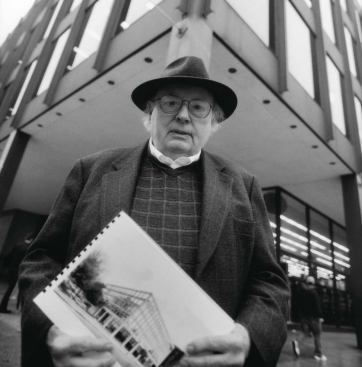
    The library's champion, architect Kent Cooper, conducted a study for the building's renovation at the behest of the AIA D.C. chapter and the library board.

  • http://www.architectmagazine.com/Images/tmp9317%2Etmp_tcm20-159709.jpg

    600

    Stewart Ferebee

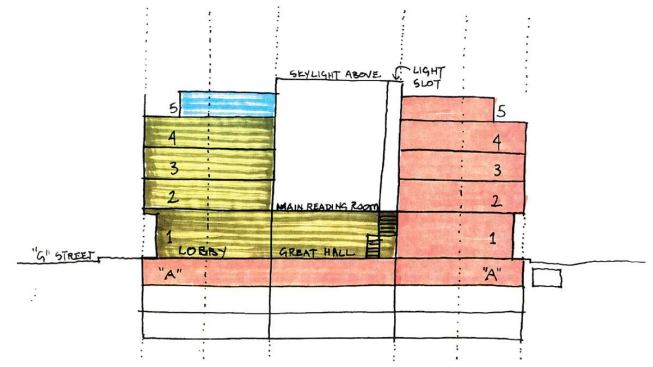
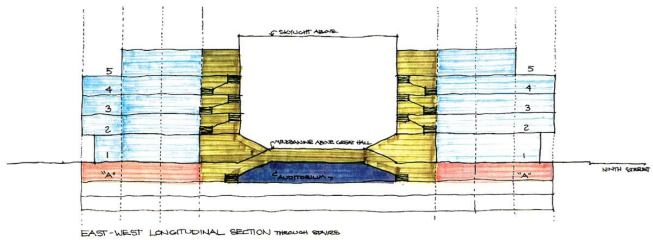
    His proposal entails the reworking of the interior program and the addition of a fifth floor to the building, as Mies originally intended.

  • http://www.architectmagazine.com/Images/tmp9318%2Etmp_tcm20-159716.jpg

    600

    Stewart Ferebee

  • http://www.architectmagazine.com/Images/tmp9319%2Etmp_tcm20-159723.jpg

    600

    Stewart Ferebee

  • http://www.architectmagazine.com/Images/tmp931A%2Etmp_tcm20-159730.jpg

    600

    Stewart Ferebee

    His proposal entails the reworking of the interior program and the addition of a fifth floor to the building, as Mies originally intended.

  • http://www.architectmagazine.com/Images/tmp931B%2Etmp_tcm20-159737.jpg

    600

    Stewart Ferebee

    A new reading room carved out of the library's core is at the physical and conceptual center of Kent Cooper's proposal.

  • http://www.architectmagazine.com/Images/tmp940C%2Etmp_tcm20-159651.jpg

    600

    Stewart Ferebee

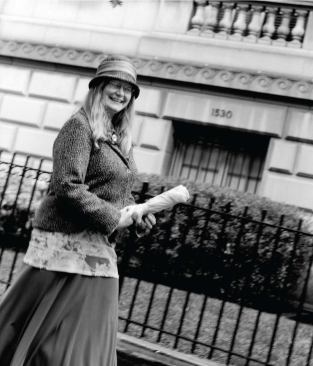
    D.C. Library Renaissance Project director Robin Diener argues that Cooper's renovation plan has been unjustly ignored.

  • http://www.architectmagazine.com/Images/tmp931D%2Etmp_tcm20-159744.jpg

    600

    Stewart Ferebee

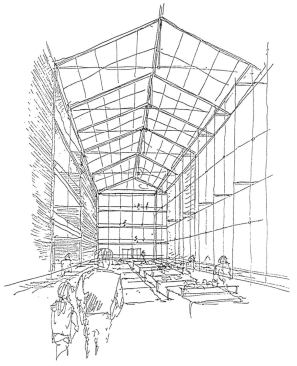
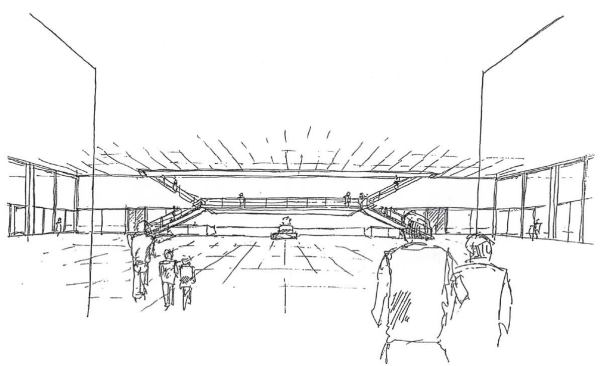
    A sketch of Cooper's renovated lobby shows a new staircase to the mezzanine and main reading room above.

  • http://www.architectmagazine.com/Images/tmp940F%2Etmp_tcm20-159660.jpg

    600

    Stewart Ferebee

    Ginnie Cooper D.C.'s new head librarian, has begun neglected repairs to the MLK Library but would like to build a new building.

  • http://www.architectmagazine.com/Images/tmp9310%2Etmp_tcm20-159667.jpg

    600

    Stewart Ferebee

    Missing lamps represent the least of the MLK Library's problems.

  • http://www.architectmagazine.com/Images/tmp9311%2Etmp_tcm20-159674.jpg

    600

    Stewart Ferebee

  • http://www.architectmagazine.com/Images/tmp9312%2Etmp_tcm20-159681.jpg

    600

    Stewart Ferebee

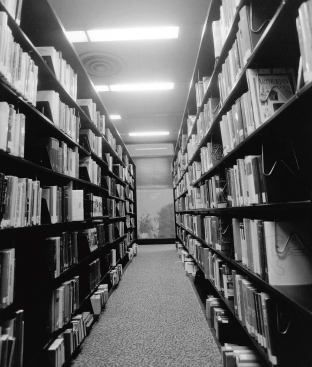
    Perimeter stacks near windows and direct sunlight may harm book collections.

  • http://www.architectmagazine.com/Images/tmp9313%2Etmp_tcm20-159688.jpg

    600

    Stewart Ferebee

    Card catalogs remain as a vestige of the unwired library.

  • http://www.architectmagazine.com/Images/tmp9314%2Etmp_tcm20-159695.jpg

    600

    Stewart Ferebee

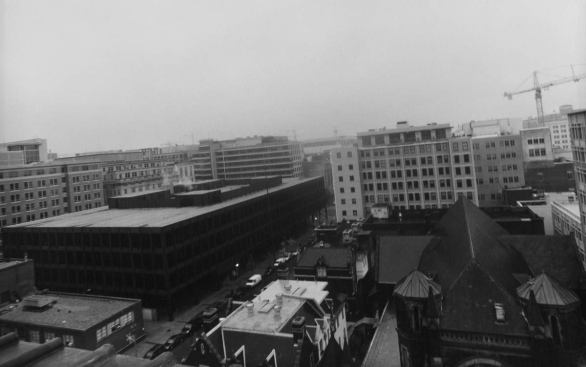
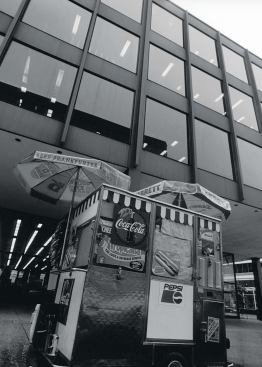
    Pedestrian life has thankfully begun to return to the MLK Library's neighborhood.

  • http://www.architectmagazine.com/Images/tmp9315%2Etmp_tcm20-159702.jpg

    600

    Stewart Ferebee

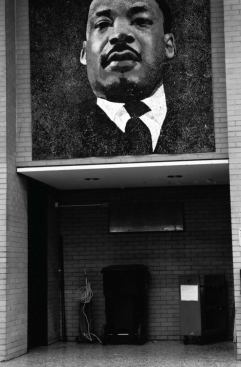
    Pedestrian life has thankfully begun to return to the MLK Library's neighborhood. Nonetheless, the Mies-designed building broods a little too much for some people who live and work in downtown D.C.

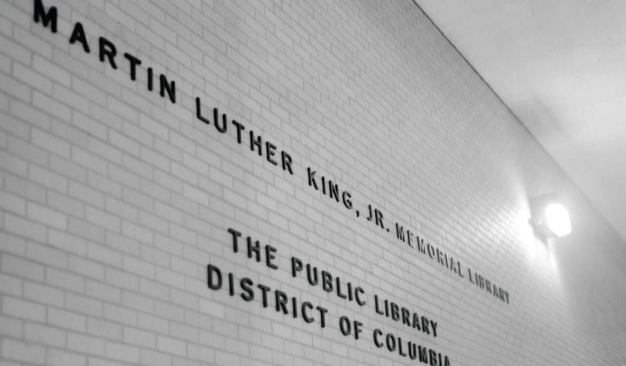
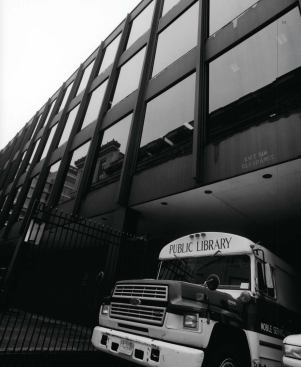
IT WOULD BE HARD TO DESIGN a major public library more dismal than the Martin Luther King Jr. Memorial Library in downtown Washington, D.C. The blame lies only partly with the building itself. The MLK Library, as it is called, opened in 1972 as the city's central facility and was one of the last designs by Ludwig Mies van der Rohe. It resembles one of the architect's handsome skyscrapers, only one lopped off at the fourth floor. From the outside, on G Street, near the heart of downtown, the black building with tinted windows has a rational purity that precedes its purpose. Its colonnade spans almost a block. The building's frame is set on a 30-foot grid to allow a large, airy lobby and bright reading rooms. When it opened, the building was in many ways the classical ideal of a library made modern.

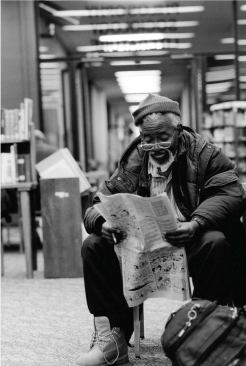
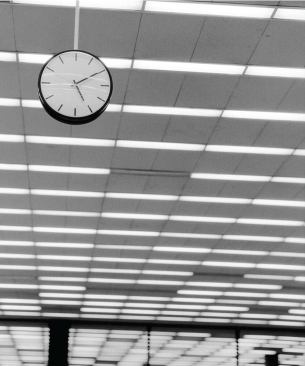
These days, the library usually seems empty. At the entrance, there are no signs to direct visitors. The lobby terrazzo is worn, and the fluorescent lights overhead are harsh. Few of the library's moving parts work correctly, owing to decades of deferred maintenance. The elevators are unreliable, and the stair halls are dark, hidden, and, like many of the corridors, depressing.

Collections like those for periodicals and black history occupy airless rooms with no natural light. The amenity of the rest rooms is best described by three words posted inside them: “No Bathing Loitering,” though homeless people routinely ignore that injunction.

There isn't much that people in Washington agree on, but most concur that their public libraries are shabby, and that the MLK Library, especially, is practically unusable. Over the past decade, as cities from Nashville to Seattle have opened grand new libraries, the MLK Library's condition has only saddened while its neighborhood has revived around it.

The once-slatternly east end of Washington, where the 400,000-square-foot library sits between two major subway stations, has recently surged with sparkling blocks of new offices, hotels, and restaurants surrounding a new sports arena and two newly renovated Smithsonian museums. And the library's block of G Street, long a pedestrian plaza, has reopened and swirls with traffic. Amid this activity, the library is a holdout of the abandonment that defined Washington's years under its former mayor, Marion Barry.

Although the MLK Library is roundly seen as broken, there are sharp differences about the best way to fix it—or even if it should be fixed at all. Washington's outgoing mayor, Anthony Williams, waited about five years, until his final months in office, to acknowledge the condition of the library.

Two years ago, Williams began pushing a plan that involves closing and leasing the Mies building and using the money to help build a new library nearby on a site formerly occupied by the old Washington Convention Center. It would accompany 1.5 million square feet of offices, housing, and stores on the four-block site being developed by Hines Interests and its architect, Foster and Partners. But the mayor seems uninterested in the fate of the library building—the only Mies building in the District of Columbia.

The city's disdain for the MLK Library did not begin with Williams. The building's condition has worried local architects and preservationists at least since the mid-1990s.

In 2000, on behalf of the local American Institute of Architects chapter and at the request of the library's board of trustees, Washington architect W. Kent Cooper led a volunteer team of six other architects in conducting a detailed study of ways to renovate the Mies building.

In recent years, Cooper has worked to preserve the National Mall's open space from increased pressure to install new memorials. Cooper began focusing on the MLK building in the 1990s, when two officials with the Downtown Business Improvement District alerted him to talk of tearing it down and replacing it with an office building as downtown's redevelopment got under way.

“I got into this because I want to have a really good library,” Cooper says, “but I was really trying to save the Mies building.”

His study showed that the library could be retrofitted to serve the city more effectively while preserving its Miesian character. The library staff have complained that the placement of stacks near perimeter windows has caused books to bake in the sun. Cooper's plan would replace the tinted glass with new lights that would block ultraviolet rays and protect the collection.

But the principal overture of Cooper's concept is to carve out a daylit atrium at the core of the building that would serve as a new main reading room and become a social heart for the building. (The space that would be lost would be replaced in a new fifth floor that Mies intended but that was never built.)

“From the second floor up, it's a free span,” making a central atrium structurally feasible, Cooper says, “which would make it kind of an interesting contemporary building of the kind Mies would be doing now if he were still alive—skylit, sustainable.”

Cooper believes that renovating rather than replacing the library would be the city's most sustainable option in any case. When his plan was done, his team presented it to library and city officials. “The library board was ecstatic,” Cooper recalls. But the city's then-planning director, Andrew Altman, was less so. “What we didn't know was that he was planning to move the library,” Cooper says. Six years went by. “Our design got very nice press in the architectural community, and I put it on a shelf, and nobody said anything to me.”

The local AIA chapter, which sponsored the renovation study, did not contact Cooper earlier this year when its directors changed position and decided to support a new library on the eve of a hearing in June before the D.C. Council's library committee. The committee was to consider legislation submitted by the mayor that would finance a new building with proceeds from a 99-year lease on the MLK building, with payment accepted in lieu of taxes from a developer, who would have to treat the older structure “in a manner that preserves the historic character of the building.”

The AIA's testimony to the council supported a new library. It stated that the chapter supports preserving the exterior of the MLK Library building and “adapting its interior” to a different public use, but that it no longer favors updating the building as a library “because of its inherent limitations” in accommodating the latest information technology. Cooper says he found the building infinitely more adaptable to rewiring than many older masonry libraries that have been upgraded.

The local AIA chapter's executive director, Mary Fitch, said that the board changed position because “there are different factors involved now,” namely a plausible site and palpable will to build a new library, which hadn't existed previously. As for Cooper's proposal, Fitch says, “Some people find the retrofit a little alarming. Some find it a possibility to be useful.”

The AIA “made an about-face,” says Robin Diener, the director of the D.C. Library Renaissance Project, a nonprofit group founded by consumer advocate Ralph Nader to rehabilitate the city's libraries. Diener supports Cooper's proposal because “it's a beautiful plan, simple, and bigger than anything the mayor is proposing.” The mayor has proposed a 350,000-square-foot library—50,000 square feet smaller than the MLK building. The city hired Polshek Partnership Architects to study the new site and at the council hearing presented a stacking diagram of a library at this summer's hearing.

Richard Levy, a Washington developer and library trustee who chairs its facilities committee, says the Polshek study was troubleshooting to determine “whether a 350,000-square-foot library would fit on a 50,000-square-foot site. … whether we can get the adjacencies.” Levy says it will work: “We could fit what we need and in a much more efficient way.”

If the council approves a new library, the city would conduct a new search for an architect, he says. But there has been a hang-up over the cost. At the June council hearing, the library's construction director, Jeff Bonvechio, said that building a new library would cost $206 million and that restoring the MLK building would cost $40 million more.

But in September, the city's chief financial officer, Natwar Gandhi, wrote to Councilmember Kathleen Patterson, who chairs the Committee on Education, Libraries, and Recreation, that his review of a cost-comparison study by design firm PSA-Dewberry found that the costs of renovating and building anew are roughly equal, though higher than either previous estimate at $275 million.

Diener believes that the city's renovation cost figures are excessive because they account for closing the MLK building and moving the library to temporary space. One option the city has not explored, she notes, would be to keep the building open during renovation, an idea supported by Cooper and also by the architect Arthur Cotton Moore, who completed the renovation of the Library of Congress without its closing.

“But it's just not worth it,” Diener says. “This isn't the Library of Congress.” A more sensible option, she says, would be simply to close the MLK building during renovation. Special collections could be moved to other city libraries for use. Otherwise, she says, “there's not a book in there you can't get somewhere else.”

In any case, the bricks-and-mortar debate, Diener says, ignores the “extraordinary internal problems” of the library system, which had been without a permanent director for three years until this year, when the trustees hired Ginnie Cooper, who arrived this year from the Brooklyn Public Library in New York.

Cooper has overseen construction of new libraries before. She has already prompted repairs of “little things and big things” within the Mies building—fixing leaks, painting, repairing elevators. “There are many ways in which this building I'm sitting in now is a fine and wonderful library,” she says from her office in the MLK Library. Yet, she adds, “I'm excited about the opportunity for a new building.” Diener says that building a new library would be throwing good money after bad, unless there are major staff reforms in the library system.

“We have evidence of incredible abuses— people who work for [the library] and draw a salary and rarely come to work,” Diener says. “It's a no-work culture. That's why we think it's stupid to put all this emphasis on buildings right now when we don't even know that they can maintain an elevator or a roof or a bathroom, and they can't deliver a reasonable level of customer service.”

If Ginnie Cooper can assemble a competitive staff —and union rules will be problematic— then, Diener suggests, it will be time to spend some money on renovating the Mies building. And, she says, Kent Cooper's plan provides a sensible place to start.

After all these years, however, Cooper sounds resigned never to see his plan picked up again. “If they want to move the library and can get a good library, as a citizen, I don't want to pay through the nose,” he says. “The Mies building really does need to stay. I hope they get a good library.”