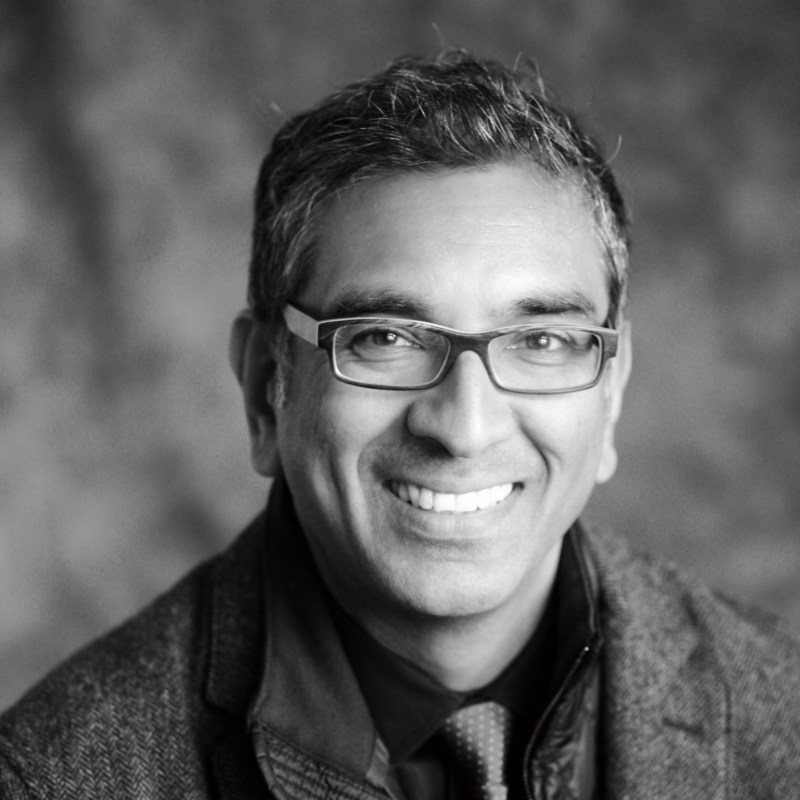
To the surprise of many, New York–based architect and urban designer Vishaan Chakrabarti, AIA, announced in October that he was leaving a three-year partnership with the high-flying New York firm SHoP Architects to open his own shop named PAU, an acronym for Partnership for Architecture and Urbanism. ARCHITECT discussed the new venture with Chakrabarti during his recent visit to Chicago’s Archeworks.
ARCHITECT: So it’s pronounced
“pow”—as in a comic strip emphatic?
Chakrabarti: As in impact.
I think it’s really important that as designers, as educators, as urbanists,
that we have impact. PAU comes at a time when I really believe that a
refocusing of the world’s energy on better cities is incumbent on all of us.
I’m really excited about having a firm specifically dedicated to architecture in
the urban realm, the advancement of cities, to strategic urbanism.
What are the differences
between an urban designer and an architect?
I see it as a
fluid spectrum. This division occurred in the 1960s and 1970s and was the
very bad byproduct of urban renewal. People didn’t trust architects to do urban
planning, because they felt they did a lot of damage to cities—which is both
fair and unfair. Planning, especially after Jane Jacobs, went in a public
policy direction. The term urban design crept into the everyday vocabulary
somewhere in the 1980s, and it was at some level, a replacement for the idea
of physical planning.
What do you think of New
Urbanism?
I’m an
advocate of performance-based code, rather than form-based code. Don’t give us
set forms, set materials. Give us your goals as a municipality, as a community,
and let us try to meet those goals—whether it’s light and air to the street, or
maintaining a certain texture that people are concerned about. It’s problematic
to revert to prescribed methods of design. That has the tendency to limit
innovation, to suffocate our ability to create.
How do you see today’s
political climate regarding cities and design?
I have a lot
of optimism about cities in North America. I was at the Mayors’ Institute in Charleston. [Ed note: The National Session for the Mayors’ Institute on City Design took place in September.] By and large, the mayors were very sophisticated about
their understandings of design issues. There’s an acknowledgement that some of
it is smaller-scale infrastructure—bike lanes, pocket parks, the things that
improve people’s lives without billions of dollars of funding.
“I’m really excited about having a firm specifically dedicated to architecture in the urban realm, the advancement of cities, to strategic urbanism.”
Cities are the last and best hope for humanity, in terms of climate change, social mobility, getting through our cultural and racial divides. These are non-architectural, non-planning issues; they’re social issues. They’re also a big part of the physical fabric of our cities. It’s harmful when planners don’t want to engage the physical city. It’s also harmful when architects say they want to talk about cities, but if they get the chance to do a fancy museum in the middle of the desert somewhere in the Middle East, they jump at the chance.
Beyond the firms you’ve
worked for, where would you place PAU within architectural discourse?
There is a
lineage of humanist modernists who were critical of orthodox modernism and
urban renewal. I’ve always seen myself growing out of that, whether it’s Alvar
Aalto or Bruno Taut. If you look at Mies’ Lafayette Park in Detroit, you see smaller
scale townhouses in the landscape—so it’s not just a pure tower in the park
dichotomy; there’s this middle scale that’s quite fascinating. More recently,
I’ve always been an admirer of Richard Rogers [Hon. FAIA] and Norman Foster [Hon. FAIA]. Both of them
operate at the scale of architecture as well as at the scale of the city.
What’s unique about starting PAU in 2015?
Before a
project hits the architect’s desk, a number of decisions are already made. I
try to help my clients understand those questions and make those decisions
before it becomes a fully formed program brief. I hope I will be able to
practice urban architecture in a way that’s heavily informed by the breadth of
my experience.
It’s called
Partnership for Architecture and Urbanism. So do you have partners yet?
I named the
firm because I wanted other people to have agency in it, and not feel it was
only about one person at the top. I want to have my own voice in this field, so
it’s something that I feel an intense sense of ownership over, but at the same
time I want the firm to have the latitude to grow with younger people.
This interview has been edited for clarity and length.