
Project Description
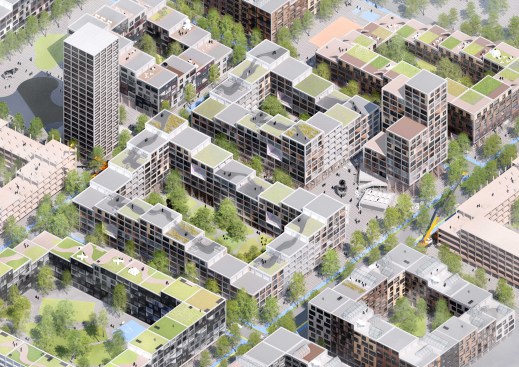
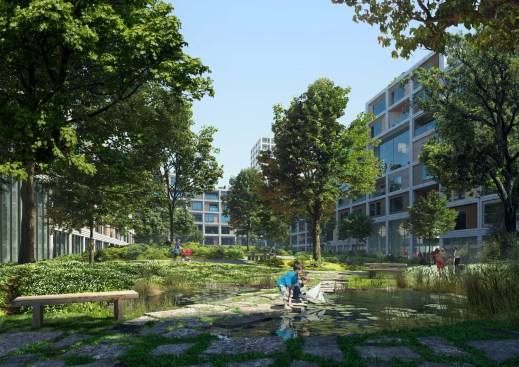
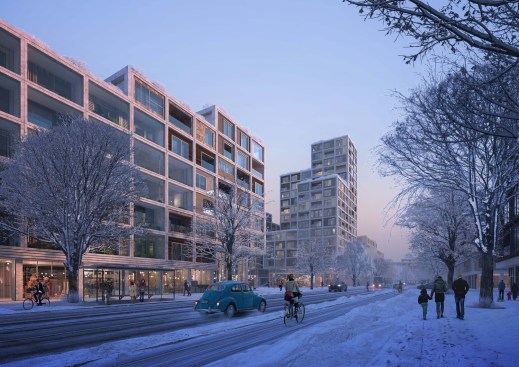
The Housing development program initiated by the Government of the Russian Federation is a unique possibility to set the new standards of residential developments in Russia and beyond. With over 900 million m2 of housing to upgraded throughout Russia, this will be one of the largest redevelopments in history. The Superframe project is an argument for wood as the primary material to be used, to bring about a new and unprecedented sustainable future to the Russian housing industry. The proposal creates cheaper homes, at better quality and individualized spaces. Mass timber construction can create low cost, high quality housing which is highly competitive to existing forms of construction! Today most realistic climate models predict, that if we are to maintain global temperatures will not increase above the international target of two degrees, carbon capture technology is imperative. BOLD imagines a world whereby our cities can actually become the solution to global warming and not the problem! BOLD presented a new strategic vision for the timber industry in Russia at the Living Environment Forum. Together with collaborators Apex Project Bureau Bold developed a road map into a new future in architecture for the Russian Federation which outlines the opportunities to become a global player in the sustainable construction market. The strategic vision outlines the process’s involved within the particularities of the Russian political system, and how to develop towards a model which offers considerable opportunities for the Russian economy. Using sustainable forestry, countries can store millions of tons of CO2 within their built urban fabric! Within this program, SUPERFRAME offers a 21st-centrury Russian vernacular of future mass housing. It has the potential to not only set a new standard to housing for millions of Russian citizens, but also foster the potential to gradually expand the industry of construction towards a domestic independence, based on the main construction resource found in the Russian Federation – timber. Beyond developing the potential for industry and economy, an essential aspect of Superframe is the creation of a liveable urban environment for the Russian people. The balance of community, individuality and urban diversity are approached by the proposal, creating human scale and the framework for contemporary living within a program of 900 million square meters of housing developments. How to define a liveable city in the Russian context in the 21st century? The design imagines a humanistic cityscape re-establishing the existing Russian Microrayon into a new kind of district that creates liveable, walkable neighbourhoods. Rather than the existing isolated block typology. The model proposes courtyards to create public & private spaces with in-between pedestrian zones for activities and public functions. Cities should be fun, engaging, easy to navigate through, offering new possibilities for the urban citizen! The proposal re-evaluates contemporary urban life and new modes of living. We propose greater individual expression in the city fabric, timber architecture and standardized systems offering sustainable & affordable housing! To create a versatile and lively urban framework as well as to adapt to developers programmatic aims, adaptability is a key aspect of SUPERFRAME. From the overall balance of housing and commercial spaces, to the mix of residential units, to the integration of semi-public and private spaces, the proposal can react to any requirements and standards. Furthermore, the standard construction system promises unlimited adaption to local conditions, such as resource availability, climate conditions as well as soil and seismic requirements. Overall, SUPERFRAME has the potential to fundamentally change the way mass housing is being developed. As a holistic approach integrating Russian domestic industries and creating high and diverse qualities of living within the new housing developments, it can contribute to setting a new standard for the future of the Russian way of living.