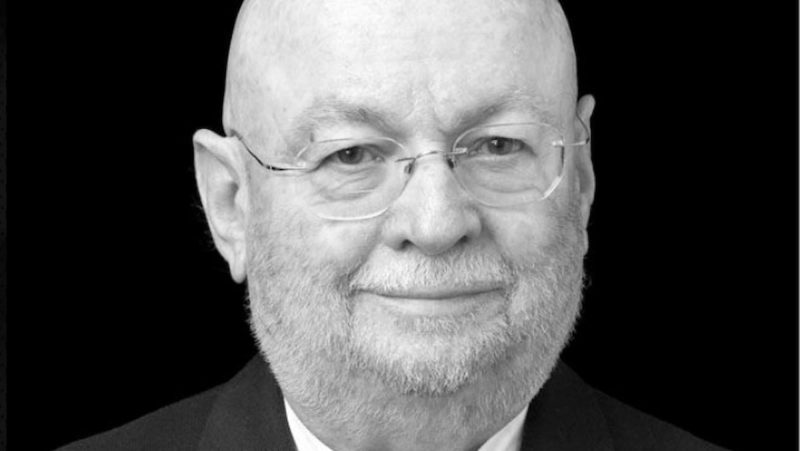
Thomas Spight Hines Jr., the architectural historian whose deeply researched and elegantly written books redefined the study of American architecture and established Southern California as one of the essential centers of modern architectural history, has died at the age of 90.
A professor emeritus of history and architecture at UCLA, Hines spent more than five decades demonstrating that buildings cannot be understood apart from the political, cultural, social, and intellectual worlds that produced them.
Few historians have had a comparable impact on how architects, scholars, and the public understand modern American architecture. Through landmark biographies of figures including Daniel Burnham, Richard Neutra, and Irving Gill, Hines reshaped architectural history from a discipline centered on style into one equally concerned with reform, culture, urbanism, and ideas.
His books remain foundational texts for students of twentieth-century architecture and continue to influence generations of historians, preservationists, and practicing architects.
Born in Oxford, Mississippi, in 1936, Hines earned his bachelor’s degree from the University of Mississippi before completing a Ph.D. in history at the University of Wisconsin–Madison in 1971.
His doctoral dissertation on Daniel Burnham became his first major book, Burnham of Chicago: Architect and Planner (1974), which won the John H. Dunning Prize and helped restore Burnham’s reputation as one of America’s defining architects and planners.
Hines joined UCLA, where he would spend the remainder of his career, holding joint appointments in the Department of History and the Department of Architecture and Urban Design. His unusual position reflected the breadth of his scholarship.
Rather than treating architecture as an isolated artistic discipline, he situated buildings within broader narratives of politics, literature, technology, and American culture. That interdisciplinary approach would become a hallmark of both his teaching and writing.
His 1982 biography, Richard Neutra and the Search for Modern Architecture, remains one of the definitive studies of the Austrian-born architect whose work helped define California modernism.
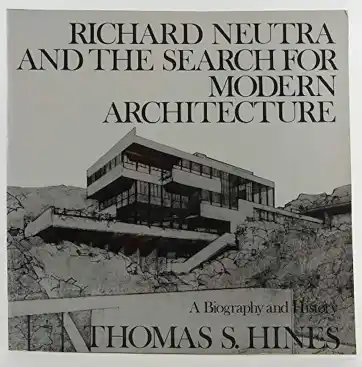
Thomas S. Hines, Richard Neutra and the Search for Modern Architecture.
Hines portrayed Neutra not simply as a gifted designer but as a cultural figure negotiating immigration, technology, psychology, and the promise—and contradictions—of modern life in America. The book elevated Neutra’s standing internationally and became essential reading for anyone studying twentieth-century modernism.
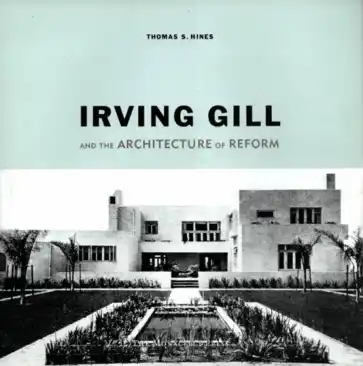
Thomas S. Hines, Irving Gill.
Yet it was perhaps his scholarship on Irving Gill that most profoundly altered architectural history. Published in 2000, Irving Gill and the Architecture of Reform: A Study in Modernist Architectural Culture fundamentally changed perceptions of the San Diego architect, revealing him not as an isolated regional pioneer but as one of the earliest and most intellectually ambitious modernists in the United States.
Hines argued that Gill’s stripped-down architecture emerged from progressive social reform movements, public health initiatives, and changing ideas about domestic life, rather than from purely formal experimentation.
The book has long been regarded as the definitive study of Gill’s life and work. Following Hines’s death, the Irving J. Gill Foundation described it as “the definitive, foundational text that illuminated Gill’s genius and his crucial role in modernist history.”
The foundation added that Hines had “broken new ground in architectural history, forever changing how we view the built environment of Southern California,” while remembering him not only as an eminent scholar but also for his “kindness, wisdom, and friendship.”
Hines’s influence extended well beyond his major monographs. His essays on Los Angeles, John Cage, Wilshire Boulevard, and modern American culture helped establish Southern California as a legitimate subject of serious historical inquiry at a time when East Coast architectural narratives still dominated scholarship.
His writings demonstrated that Los Angeles was not an architectural outlier but one of the twentieth century’s most important laboratories of urban and architectural experimentation.
He also ventured beyond architecture, writing William Faulkner and the Tangible Past (1996), a study that explored the relationship between literature, memory, and place. Even there, Hines’s enduring fascination with the built environment remained evident. Buildings, cities, and landscapes were never merely settings; they were active participants in the cultural histories he sought to explain.
Students and colleagues remember Hines as an exceptionally generous teacher whose meticulous scholarship was matched by intellectual curiosity and humility.
At UCLA, he mentored generations of historians, architects, preservationists, and urban scholars, encouraging them to look beyond stylistic labels toward the larger social questions embedded within architecture.
His scholarship arrived at a moment when architectural history was rapidly expanding its methods and ambitions. Hines became one of the scholars who demonstrated that architecture could illuminate questions of democracy, technology, race, reform, economics, and identity as effectively as any other historical source.
In doing so, he helped move the discipline beyond connoisseurship toward cultural history without sacrificing close attention to buildings themselves.
Today, nearly every serious study of Southern California modernism, Richard Neutra, Irving Gill, or Daniel Burnham begins with Thomas Hines. His books remain models of historical writing—richly researched, beautifully argued, and accessible to specialists and general readers alike.
Architecture continually reinvents itself, but few historians permanently alter the lens through which an era is understood. Thomas S. Hines accomplished precisely that.
His greatest legacy may not simply be the remarkable books he left behind, but the generations of architects, historians, and readers who now see American modernism—and particularly the architecture of California—with greater depth, complexity, and appreciation because of his work.