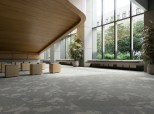
In today’s commercial design landscape, the definition of a “high-energy space” is rapidly expanding. Environments that demand extreme durability—such as fitness centers, active workplaces, educational facilities, and bustling retail hubs—are no longer relegated to purely utilitarian design. Architects and designers face a unique pain point: how to specify materials that can withstand rigorous, high-impact use while still delivering on progressive aesthetic and sustainability goals.
Historically, heavy-duty flooring meant compromising on visual appeal or environmental footprint. However, a significant shift toward circular design is challenging this standard. By embracing materials rooted in the circular economy, specifiers are finding innovative ways to divert waste from landfills and transform it into high-performance architectural solutions.
The Power of Repurposed Materials
One of the most compelling trends in sustainable commercial interiors is the closed-loop reuse of consumer goods. A prime example is the repurposing of end-of-life athletic shoes into commercial-grade surfacing.
Hero Rubber made with Nike Grind embodies this material evolution. By utilizing recycled rubber from discarded athletic footwear, the collection offers a flooring solution that is inherently durable, slip-resistant, and acoustically beneficial. This approach not only breathes new life into discarded materials but also provides a tangible narrative of sustainability that resonates with end-users.
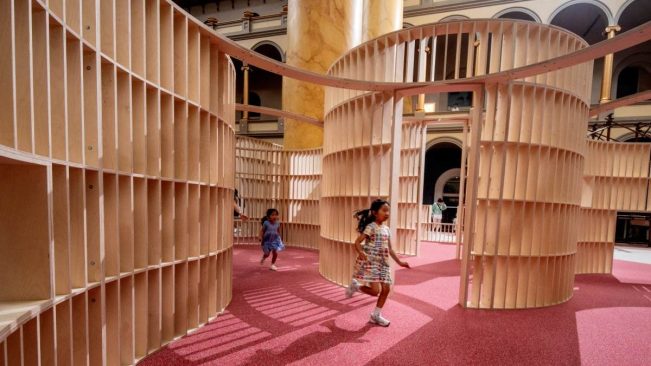
“For years, specifying for high-traffic, heavy-use zones meant choosing between a product that could take a beating and a product that looked sophisticated,” says Reade Palmer, vice president, product management for Hero Flooring at Mohawk Group. “When we can integrate materials like recycled shoe rubber, we solve the performance equation while significantly lowering the embodied carbon of the space. A perfect example of this is the recent ‘Playground’ exhibit at the National Building Museum. They needed a surface that could handle the high impact of thousands of visitors engaging with an interactive, physical space. Hero Rubber provided the durability required for that kind of motion and exploration, while also aligning with the exhibit’s celebration of thoughtful, sustainable design.”
Marrying Performance with Elevated Aesthetics
Beyond environmental metrics, the next generation of recycled rubber flooring is redefining visual expectations. The aesthetic limitations of the past have been replaced by dynamic, design-forward visuals that actively contribute to the energy of a room.
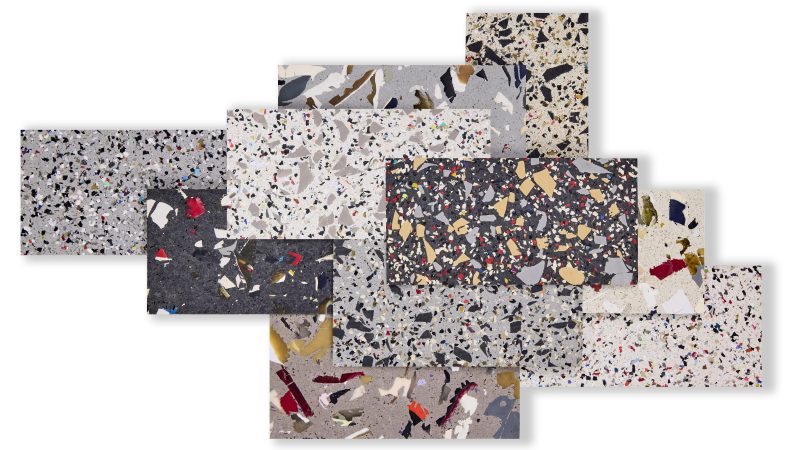
Through varied manufacturing techniques, recycled rubber can achieve surprising depth and texture. Hero Rubber demonstrates this versatility across three distinct visual scales:
Original: Utilizing the smallest rubber granules to create a clean, uniform speckled pattern with rich color contrast.
Vitality: A mid-scale visual that blends two granule sizes, resulting in a layered, terrazzo-like movement.
Axis: The boldest option, featuring visible sneaker scrap elements and outsole components that celebrate the material’s origin.
Available in 17 distinct colorways and offered in both roll and tile formats, these materials empower designers to use flooring as an active branding and wayfinding tool, rather than just a passive backdrop.
A Foundation for the Future
As building codes and industry standards place greater emphasis on material transparency, occupant health, and lifecycle impact, the specification of closed-loop materials is shifting from a niche trend to a foundational best practice.
“The conversation with clients has shifted,” adds Jackie Dettmar, vice president of marketing, design and product development at Mohawk Group. “They no longer just want to know how long a material will last; they want to know where it came from and where it will go when the building is eventually renovated. Products that transparently utilize post-consumer waste provide a clear, compelling answer.”
The integration of materials like Hero Rubber made with Nike Grind proves that high-performance environments do not require ecological compromise. By transforming everyday waste into dynamic, durable architectural surfaces, the design industry is successfully paving the way for a more resilient and responsible built environment.
See how sustainability and performance come together in high-impact spaces. Learn more at Mohawkgroup.com