America’s affordable housing crisis is usually discussed in terms of units.
Not ownership.
Politicians debate shortages. Economists tally missing homes. Developers wrestle with financing. But another question receives far less attention: Who actually builds the housing—and who benefits from the wealth it creates?
For Cruz Companies, one of the nation’s oldest and largest Black-owned real estate and construction enterprises, the answer is inseparable from the housing crisis itself.
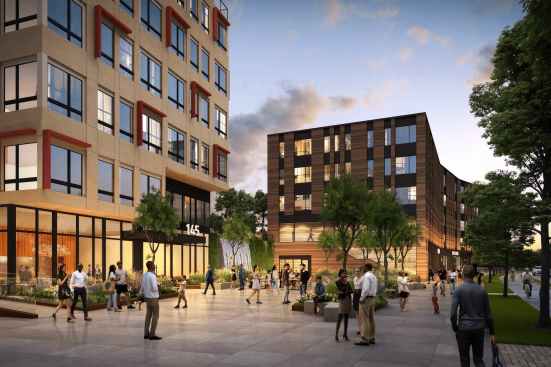
Nubian Square. Courtesy Cruz Companies.
On Juneteenth, the Boston-based company launched BUILD BLACK, a national campaign aimed at spotlighting the relationship between affordable housing, economic opportunity, and racial wealth disparities. The initiative seeks to elevate Black and Brown developers, architects, contractors, and community organizations while encouraging greater investment in neighborhoods that have historically experienced decades of disinvestment.
The campaign arrives at a moment when the United States faces a severe housing shortage and widening wealth inequality. Black homeownership rates remain significantly lower than those of white Americans, and minority-owned businesses continue to face barriers to capital and participation in the development industry.
For John B. Cruz III, CEO of the third-generation family business, the effort is less about branding than about challenging assumptions about who gets to shape American cities.
“Since our founding in 1948, we’ve been committed to affordable housing and economic development,” Cruz says. “Our projects are created to serve their neighborhoods and current residents while delivering the highest-quality housing possible.”
A Different Kind of Legacy
Founded nearly eight decades ago, Cruz Companies occupies a unique place in the American development landscape.
The firm has grown into a vertically integrated enterprise encompassing construction, development, and property management while remaining 100 percent Black-owned. Its headquarters sits in Boston’s Roxbury neighborhood, long considered the historic heart of Black Boston and a community that has experienced both chronic underinvestment and waves of revitalization.
Unlike many large national developers, Cruz Companies built its reputation not through luxury towers or corporate campuses, but through affordable and mixed-income housing projects.
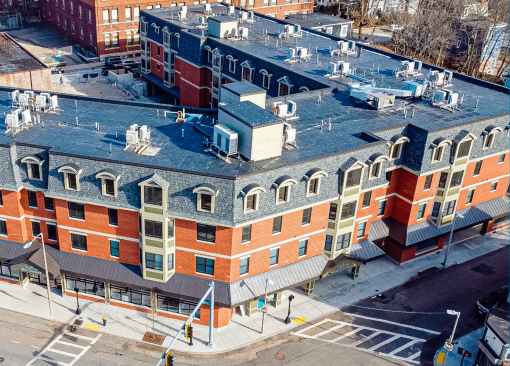
Michael E. Haynes Arms. Courtesy Cruz Companies.
Among its recent work is Michael E. Haynes Arms, an 85,000-square-foot mixed-use building named after the influential Boston minister and civil rights leader. The brick-clad development includes 55 mixed-income residences and houses the company’s headquarters.
Other projects extend beyond Massachusetts. In College Park, Maryland, the firm recently announced Branchville Crossing, an 87-unit senior housing community designed to expand aging-in-place options. In New Bedford, Massachusetts, Cruz is developing an 83-unit affordable housing initiative spread across multiple sites, while One Waverly—a fully affordable 52-unit building—has been championed by state officials for incorporating sustainable design strategies.
Taken together, the projects illustrate a philosophy that prioritizes long-term neighborhood investment rather than isolated development.
Building Wealth, Not Just Buildings
The BUILD BLACK campaign rests on a broader argument: that affordable housing should be understood not only as a social necessity but as a mechanism for creating wealth and economic mobility.
Justin Cruz, the company’s COO, argues that decades of redlining and disinvestment continue to shape many of the communities where the firm works.
“We’ve seen firsthand the impacts that historical inequities have had on neighborhoods,” he says. “The disparities are still present in construction and development, and we’re committed to demonstrating that more inclusive teams can succeed.”
That commitment extends beyond hiring practices. Cruz Companies says it intentionally works with minority-owned subcontractors, architects, and consultants, helping sustain businesses that have often struggled to gain access to large-scale projects.
The company’s approach reflects a growing movement among developers and community organizations seeking to diversify an industry that remains overwhelmingly white. According to numerous industry studies, Black architects, contractors, and developers remain dramatically underrepresented relative to the demographics of the communities many serve.
BUILD BLACK aims to raise awareness of those disparities while celebrating firms that have managed to thrive despite them.
Among the companies highlighted by the campaign are developers including Peebles Corp., DVM Housing Partners, and OnyxGroup; architecture firms such as McKissack & McKissack, Stull and Lee, and Victor Body-Lawson Associates; and contractors including H.J. Russell & Company and Greenup Industries.
Many, like Cruz Companies itself, are multigenerational enterprises.
The Long Shadow of Redlining
The campaign’s launch on Juneteenth is symbolic.
The holiday commemorates the emancipation of enslaved African Americans, but it also serves as a reminder that economic freedom has often remained elusive. Housing policies throughout the twentieth century—from redlining to urban renewal and discriminatory lending practices—helped shape racial wealth gaps that persist today.
Those inequities are visible in homeownership rates, household wealth, and access to capital.
For Cruz Companies, addressing housing shortages without addressing those structural disparities risks leaving the underlying problems intact.
The campaign also seeks to elevate leaders working on housing policy and community development. Figures highlighted by Cruz include Boston Housing Chief Sheila Dillon, National Fair Housing Alliance President Lisa Rice, Local Initiatives Support Corporation CEO Maurice Jones, and HOPE Enterprise Corporation CEO Bill Bynum.
Their work underscores a growing recognition that affordable housing challenges cannot be solved by developers alone.
An Expanding Conversation
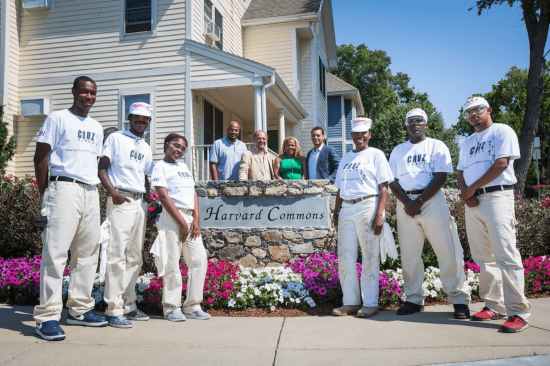
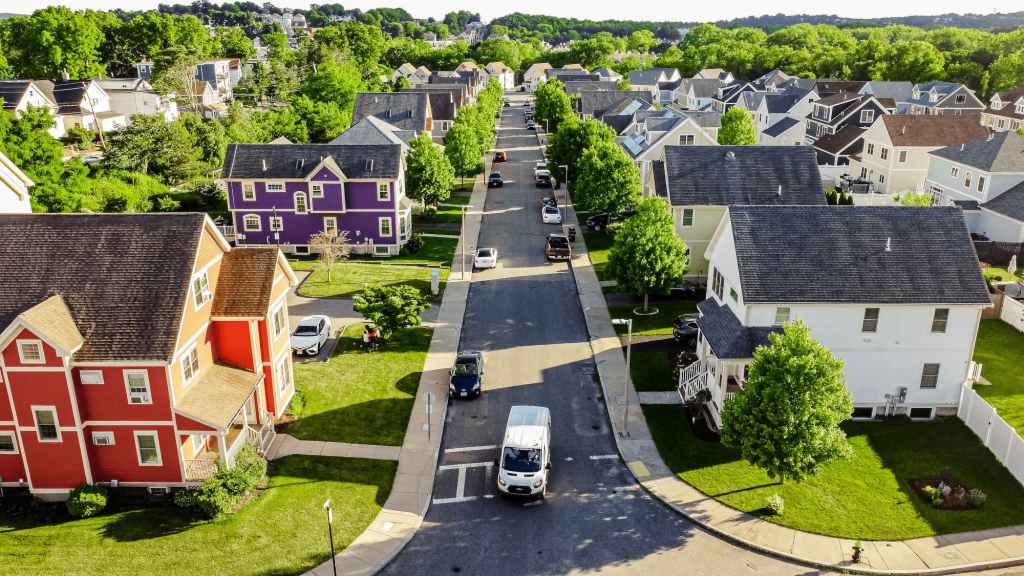
Harvard Commons Crew. Courtesy Cruz Companies.
Over the past decade, discussions around equity in architecture and development have increasingly focused on representation. Yet translating those conversations into economic outcomes has proven more difficult.
Cruz Companies argues that ownership and participation throughout the development ecosystem—from design to construction to management—are essential components of lasting change.
The company has attempted to model that philosophy internally while supporting broader community initiatives through its charitable arm, Cruz C.A.R.E.S., which funds education, youth programs, and arts initiatives.
Those efforts have helped earn the company recognition from organizations including Engineering News-Record, Fast Company, and the City of Boston.
But BUILD BLACK may represent the firm’s most ambitious undertaking yet—not because it involves a new building, but because it seeks to reshape a narrative.
For decades, affordable housing has often been framed primarily as a question of scarcity.
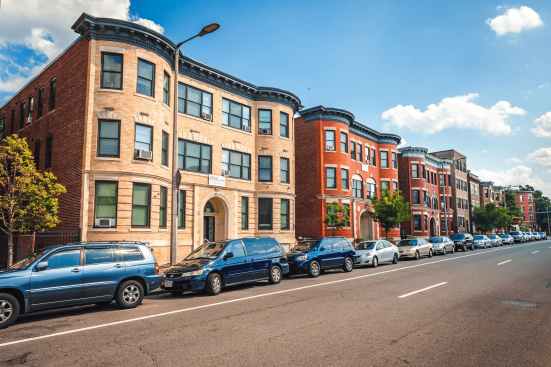
Cruz Management.
Cruz Companies is proposing a different framework: one that views housing as a tool for economic empowerment and asks who benefits when communities are rebuilt.
In that sense, BUILD BLACK is less a marketing campaign than a challenge—to policymakers, developers, and communities themselves.
Because for the Cruz family, the question isn’t simply how America builds more housing.
It’s who gets to build the future.