Throughout much of recorded history, human society has faced the ongoing challenge of accommodating population growth. However, that paradigm is changing. In the coming century, we must learn to thrive with fewer people.
The End of the Growth Era
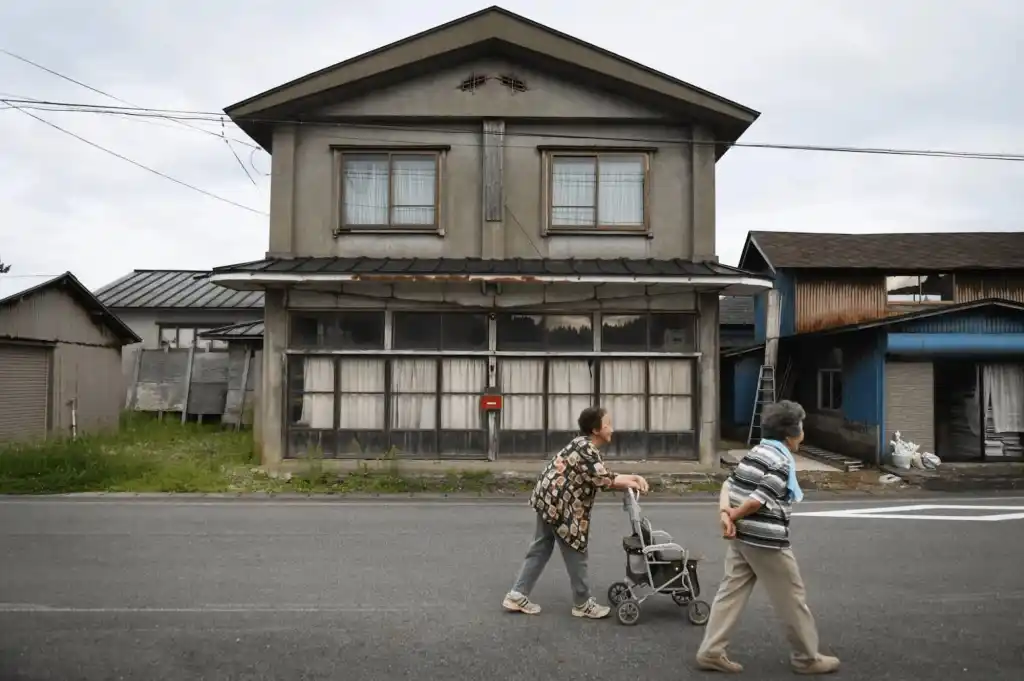
Recent headlines reinforce what demographers have known for some time: humanity is entering unfamiliar territory. Last month, The New York Times reported that Japan’s population declined by three million people in five years, the largest decline in the nation’s modern history. While megacities like Tokyo continue to grow, rural communities are hollowing out and the ratio of young to old continues to skew toward the elderly. Japan’s population was 128 million at its peak in 2008 and is expected to decline to 87 million by 2070 without significant changes.
Japan is certainly not alone. The Economist predicts a population decline in India, a particularly surprising projection for the world’s largest nation. In fact, most developed economies—and many developing ones—are following this demographic trajectory. For decades, the fear of a population explosion dominated public discourse about human development. Today, governments are increasingly concerned with labor shortages, aging populations, and shrinking tax bases.
In these discussions about the causes of demographic decline, there is a conspicuous omission: the built environment. News coverage focuses primarily on economic and cultural shifts, which are important yet obvious, while overlooking the role environmental factors play in shaping human behavior.
From Expansion to Adaptation
The scientific underpinnings of population growth and decline are outlined in Jonas and Jonathan Salk’s A New Reality, which reveals the fundamental relationship between a community of organisms and its environment. Whether microbes in a Petri dish, sheep on an island, or people on the planet, populations within finite systems follow a sigmoid—or S-shaped—curve. We are familiar with the first part: a steep incline representing accelerating growth. What follows is the transition to a deceleration phase.
Humanity, the Salks argued, is approaching the threshold between the rapid rise of Epoch A and the tapering arc of Epoch B.
This shift is not merely quantitative; it represents a change in the underlying conditions of life itself. The Salks envisioned Epoch B as an era characterized by greater awareness of resource limits, ecological interdependence, and planetary stewardship.
In that vision, architects and allied disciplines continue to play a central role. Just as the built environment created conditions conducive to population growth through modern infrastructure, sanitation systems, housing, and transportation networks, it will also shape how societies navigate population decline.
Design’s Uncomfortable Contradictions
The path ahead is not simple. Design is often associated with improving humanity’s circumstances, but the same strategies that enhance quality of life may also contribute to slowing population growth.
Understanding these tensions may be one of design’s most important challenges in the coming century. And there are many paradoxes to navigate.
The Quality of Life Paradox
Improving conditions for healthier, more productive lives often correlates with lower fertility rates. Increased access to education, healthcare, and economic opportunity typically slows population growth. Schools, hospitals, sanitation systems, and healthy communities improve living standards, but they do not necessarily produce more children.
The Urban Opportunity Paradox
Cities concentrate educational, cultural, and economic opportunities and remain society’s engines of innovation and productivity. Yet they also tend to delay family formation.
Tokyo illustrates the dilemma. Young people migrate to metropolitan centers seeking careers and social opportunities, often postponing marriage and childbearing while pursuing education and professional advancement. Cities owe much of their demographic resilience to this migration, but in doing so they accelerate rural decline and contribute to broader demographic contraction.
The Density Paradox
Urban density is frequently celebrated for its efficiency. Dense cities optimize land use, reduce transportation emissions, and lower infrastructure costs.
Yet density often comes with limited living space, housing shortages, high prices, and long commutes—all factors associated with declining fertility. Density itself is not the problem. The challenge lies in creating forms of density that support families rather than discourage them.
The Amenity Paradox
Well-designed parks, walkable neighborhoods, cultural institutions, and public spaces make cities more desirable. But desirability often comes at a cost.
Amenities increase demand, raise property values, and drive up housing costs. Ironically, the very qualities that make places attractive can make them less accessible to younger residents and families. Good design creates value, but that value can undermine demographic stability.
The Sustainability Paradox
The pursuit of environmental responsibility often collides with the demographic ambitions of modern nation-states.
Compact dwellings, shared infrastructure, and lower per-capita consumption support ecological goals. Yet governments confronting population decline frequently seek larger homes, more parking, and policies that encourage family growth—all of which can run counter to sustainability objectives.
Architecture increasingly finds itself caught between competing priorities: environmental stewardship and demographic expansion.
The Shrinkage Paradox
Not every contradiction is growth-oriented.
Population decline is typically framed as a crisis, but shrinking communities may offer unexpected advantages. Reduced development pressure can facilitate ecological restoration and improve resource efficiency.
Urban designer Hidetoshi Ohno’s Fiber City proposal for Japan envisions shrinking cities not as failures but as opportunities for reinvention through enhanced green infrastructure and new forms of urban organization.
At the same time, population decline places enormous stress on transit systems, schools, utilities, and local economies. The challenge is not how to prevent shrinkage altogether, but how to design for it while preserving quality of life.
Building for a Smaller World
These paradoxes suggest that the built environment plays a meaningful role in shaping population growth and decline. To be sure, the relationship is often correlational rather than causal. Architecture does not determine fertility rates. But it undeniably influences the conditions under which demographic choices are made.
Housing affordability affects family formation. Transportation systems influence where people live and work. Public spaces shape social cohesion and community life.
The Salks believed that humanity would eventually shift from a mindset of expansion to one of adaptation. Shrinking populations will undoubtedly present enormous challenges, from contracting economies and declining tax bases to abandoned infrastructure and reduced social services.
Yet this new era may also foster more collaborative, adaptable, and ecologically minded societies.
If the twentieth century was defined by designing for endless growth, the twenty-first may require architects to embrace a different ambition: learning how to create prosperity in a world with fewer people.
And that may prove to be one of the profession’s most consequential assignments.