Ian Allen
Maryland’s WaterShed house took top honors in the overall comp…
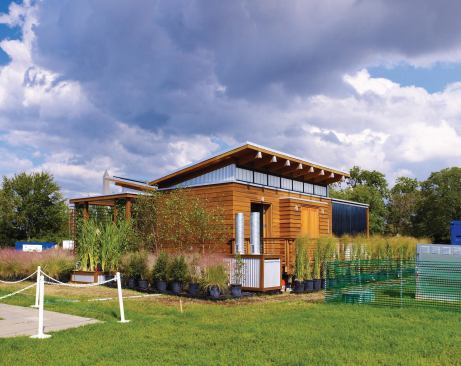
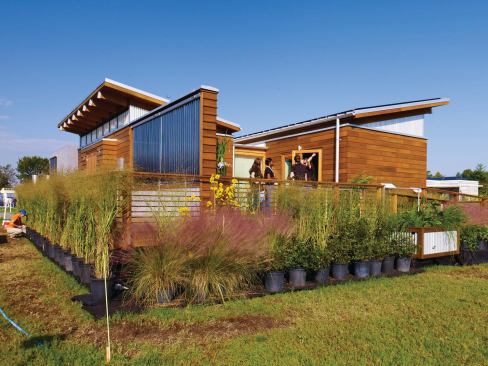
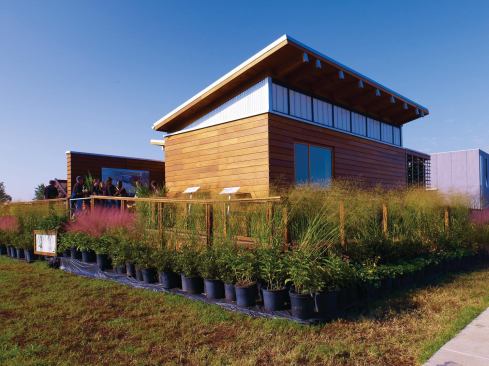
Maryland’s WaterShed house was not a leader in affordability but nevertheless took top honors in the overall competition. The home’s internal liquid desiccant waterfalls, which were originally developed by Maryland’s 2007 team, received an upgrade this year. The waterfalls consist of a high-saline liquid solution that absorbs humidity from the air, reducing the load on the mini-split air conditioners, says Amy Gardner, associate professor at Maryland’s School of Architecture, Planning & Preservation. WaterShed features a green-roof system with 156 modular trays for growing sedum plants, and a 42-panel, 9.2-kilowatt PV array with individual microinverters. A Crestron Electronics control system processes data from 40 different sensors in the house, so that homeowners could monitor and control everything from lights to overall energy usage.
Estimated cost: $336,335.89
2011 Solar Decathlon
For full coverage of every team, slide shows of the houses, video walkthroughs, interviews, and an essay by Lawrence Biemiller on the importance of the competition, click here.