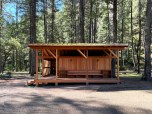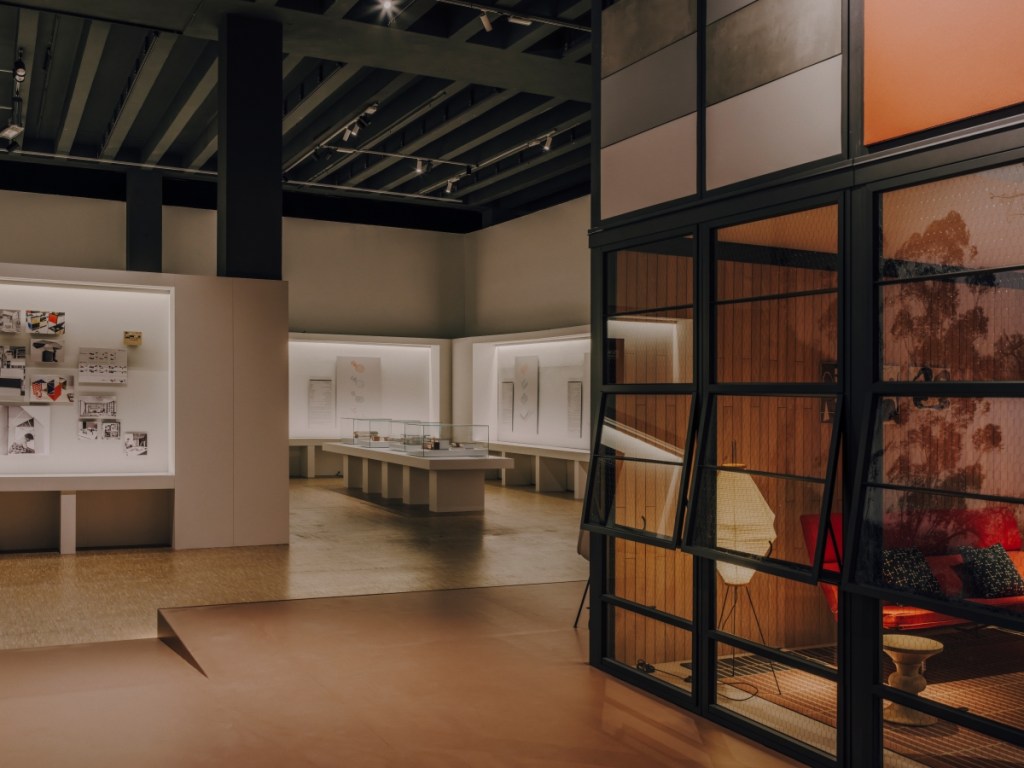
During Milan Design Week 2026, the Eames Office is presenting a new architectural initiative that looks beyond the familiar image of the Eames House and back to Charles and Ray Eames’ broader body of residential work. Centered at Triennale Milano, the effort includes an exhibition, a new book, and the debut of the Eames Pavilion System, a modular prefabricated building system developed with Barcelona-based manufacturer Kettal.
Credit: Salva López, courtesy of Kettal, 2026
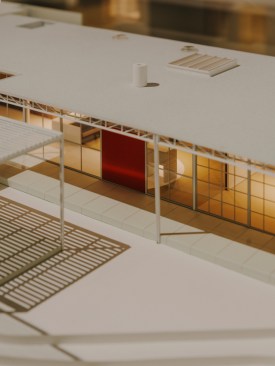
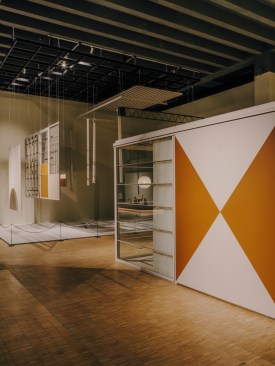
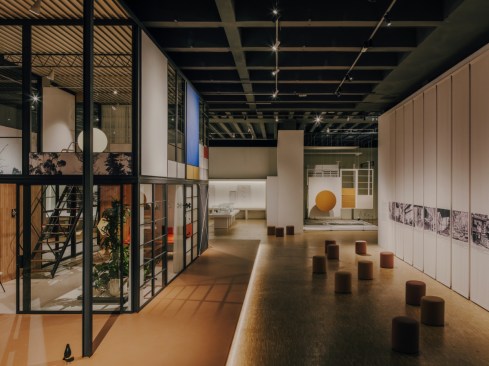
The exhibition, The Eames Houses, draws on archival research into built and unbuilt residential projects from the 1940s and 1950s, including Case Study House No. 8, Case Study House No. 9, designs for Billy Wilder, and timber-frame studies such as the Shelter House and De Pree House.
At the center of the initiative is the Eames Pavilion System, which translates ideas explored in those earlier houses into a contemporary kit-of-parts system built around repeatable structural modules with interchangeable roofs, facade infills, glazing, textiles, and accessories. It can be configured for everything from one-story, 16-square-meter pavilions to two-story houses. Materials include aluminum, glass, polycarbonate, and wood.
Credit: Salva López, courtesy of Kettal, 2026
Rather than reproducing the Eames House as an icon, the system is framed as an effort to carry forward the Eameses’ underlying logic: rational grids, compact footprints, generous volume, and spaces meant to adapt over time.
“Architecture was foundational to Charles and Ray’s practice,” says Eckart Maise, exhibition curator and author of The Eames Houses. “While the public often associates their work primarily with furniture, their systemic architectural thinking shaped everything they did.”
The Eames Office says the work grew out of nearly three years of research and development led by Maise in collaboration with Kettal. That process involved studying published and unpublished residential projects dating from 1945 to 1954, then reworking their proportions, joints, and materials to meet current technical and regulatory requirements such as sealing, tolerances, UV resistance, and durability.
For Kettal, the challenge was less about historic recreation than system design. “The goal is evolution, not stylistic reproduction,” says Antonio Navarro, the company’s creative director.
Credit: Salva López, courtesy of Kettal, 2026
The exhibition is accompanied by a 288-page Phaidon publication, also titled The Eames Houses, described in the release as the first comprehensive sourcebook devoted to Charles and Ray Eames’ residential architecture. Together, the book, exhibition, and pavilion system make a broader point: that the Eameses’ housing work was always about more than a single house in Pacific Palisades. It was about testing how industrialized building, modular thinking, and everyday living might fit together.
The exhibition will run from April 21 through May 10 at Triennale Milano.