
Project Description
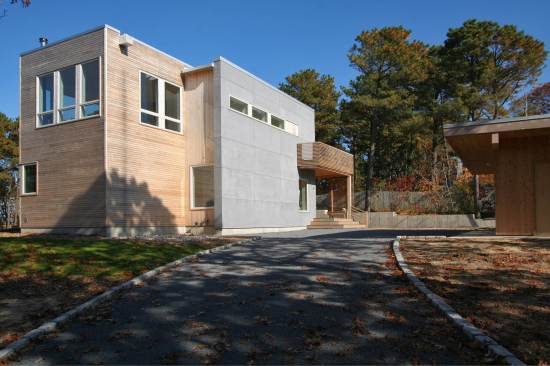
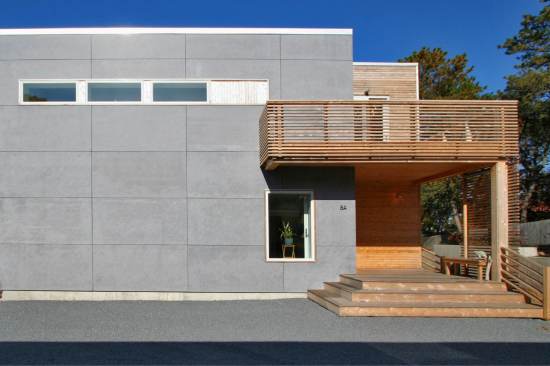
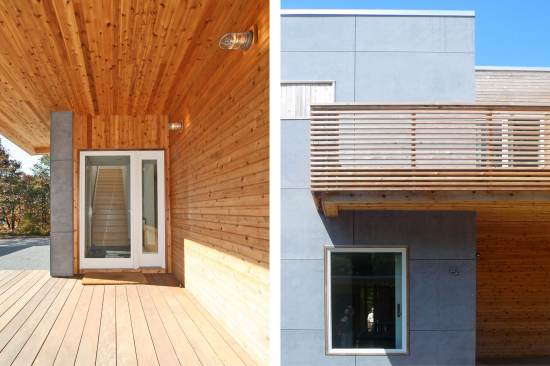
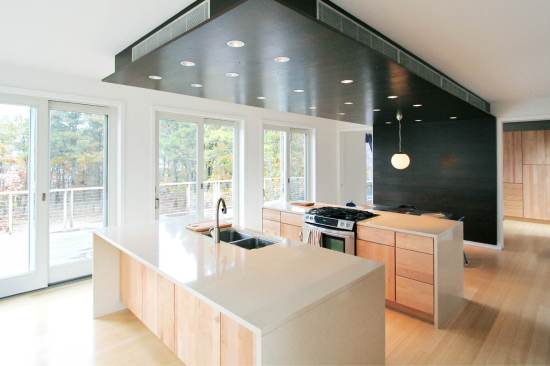
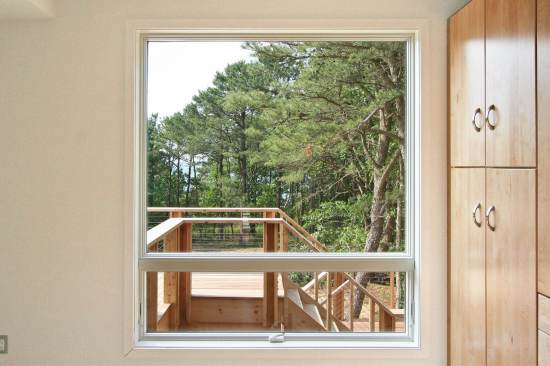
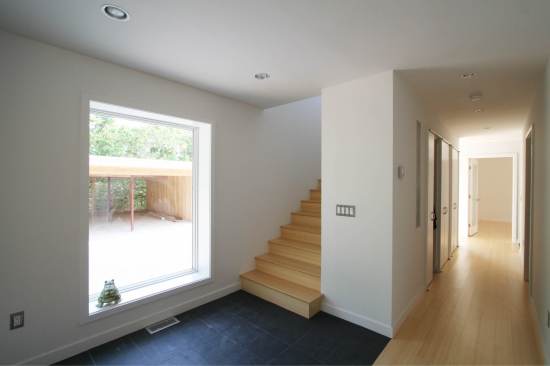
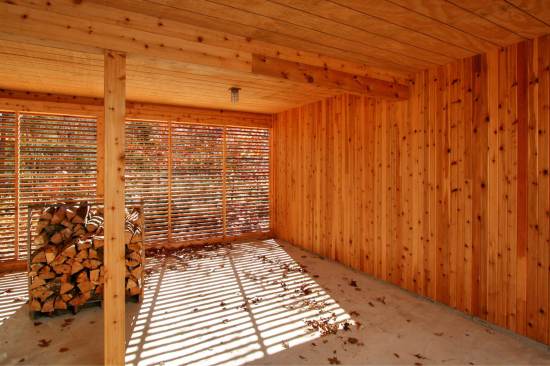
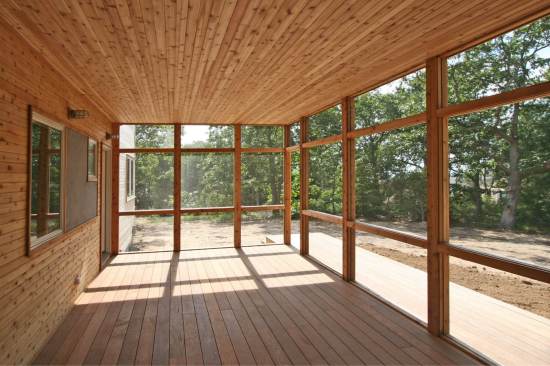
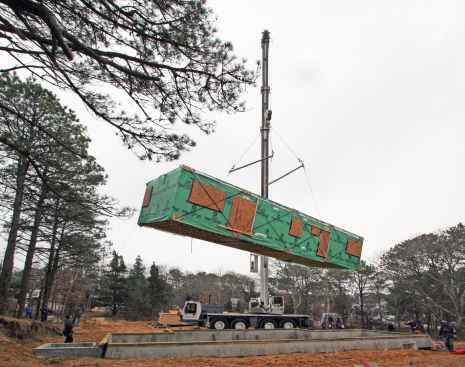
Located on Great Peconic Bay in the Hamptons, this two-story modular prefab house was conceived as an efficient solution to a tight 3-bedroom, 2-bath home. The house sits perched on a high point of the site with the living spaces and master bedroom located on the second floor to take advantage of the bay views. An entry and media room / study are located on the lower level, along with two guest bedrooms and a bath. A 'saddlebag' module accommodates the circulation and storage space, and is clad in slate-colored cement board to contrast the warm tones of the western red cedar siding used throughout. With its compact footprint, this prefabricated home employs many sustainable strategies, ranging from passive approaches like strategic site selection to the use of renewable energy. The initial decision to build modular also comes with its own environmental benefits. The nature of prefabricated construction, being done in a controlled factory environment, allows for more advanced framing techniques and minimizes construction waste. The home’s manufacturer incorporates extensive waste management and recycling programs in their plant operations. A 9kW photovoltaic solar panel array on the roof has allowed the house to act as its own power plant, nearly eliminating electric bills and even contributing power back to the grid daily. The forced-air heating and cooling system is a high-efficiency, Energy Star-approved geothermal system. The open-loop geothermal well eliminates outdoor condensing units, minimizing ozone depletion and global warming contributions. Meanwhile, efficient windows with low-E glazing and Energy Star appliances help to reduce energy consumption. The landscaping also sought to minimize environmental impacts. Permeable paving limits stormwater runoff and encourages ground water infiltration to protect the nearby bay. Permanent erosion control measures, such as protective retaining walls, have also been designed and installed. A large turf lawn was forgone for drought tolerant plants and native species.