
Project Description
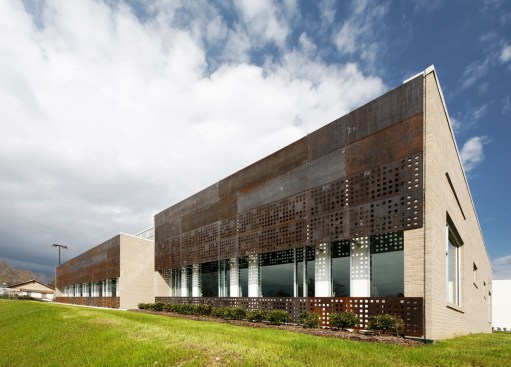
The project is a small office building addition for the executive and support personnel for TEXAS STEEL PROCESSING, a carbon alloy and stainless steel plate processing facility in Houston, Texas specializing in precision plasma cutting, rolling and press breaking with CNC technology.
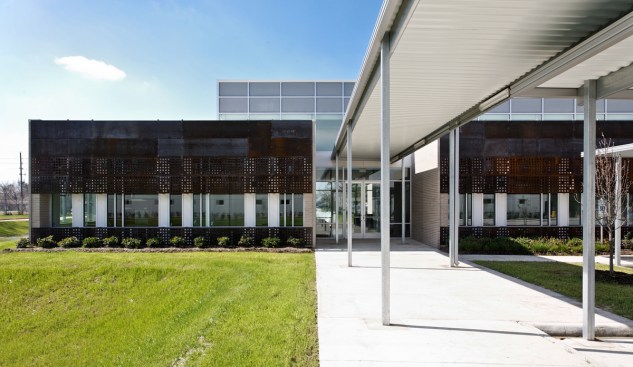
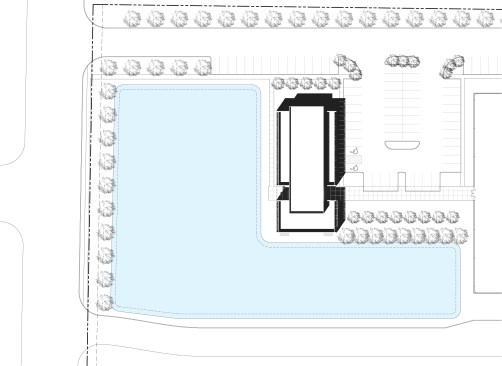
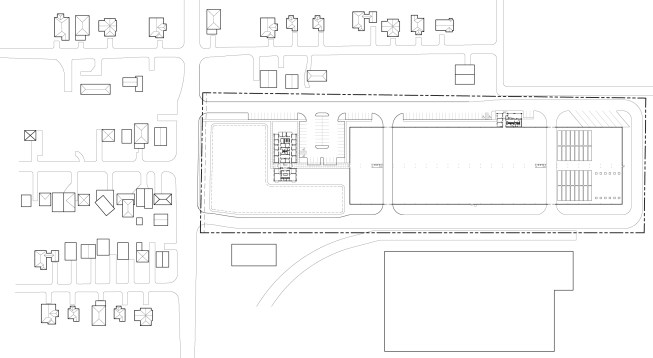
The project began with a preconceived economically driven solution – an expansion to the existing 200,000 sf manufacturing facility. In other words, ‘Just make it bigger.’ A site analysis was independently conducted revealing a discordant juxtaposition between the scale and function of the big box manufacturing building with the residential neighborhood it is sited within. Separating the office functions into a smaller building, contextually compatible with existing building patterns, was an eminently more sensitive response to the problem. This solution provided a campus like atmosphere with a new building that would take advantage of daylight on all four sides of its perimeter.
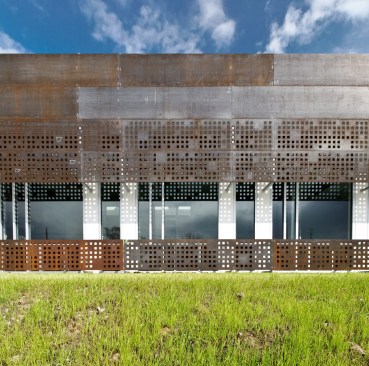
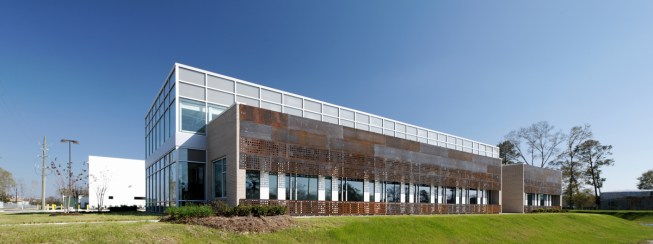
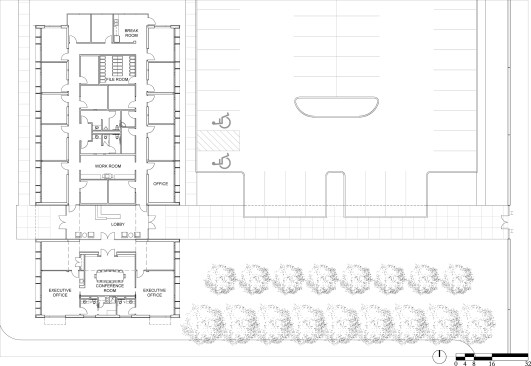
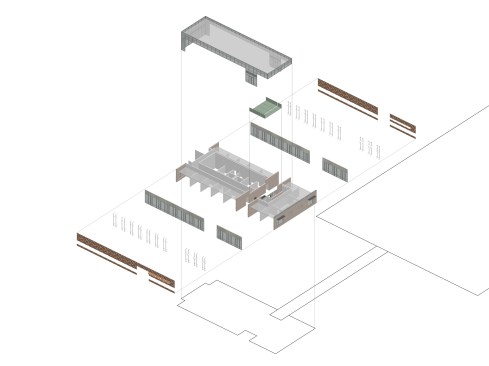
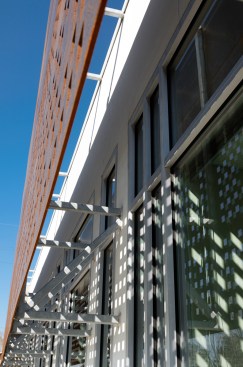
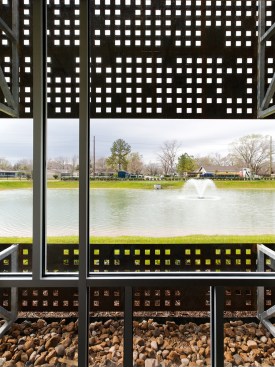
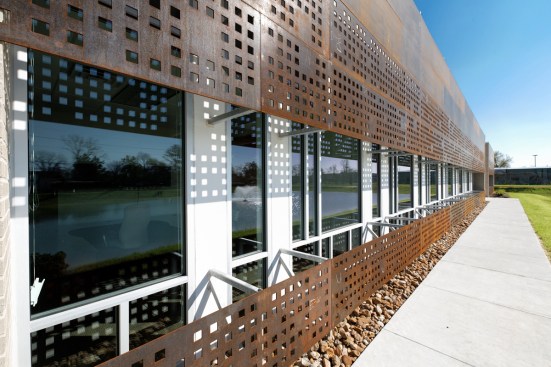
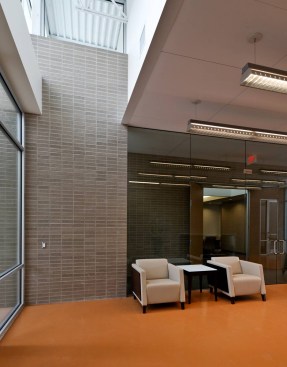
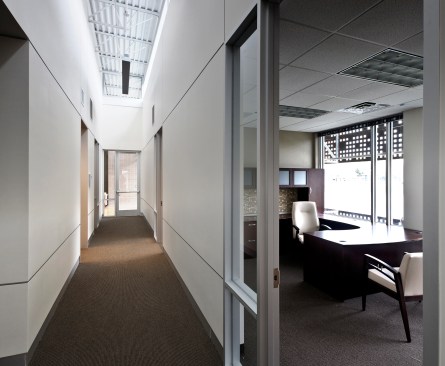
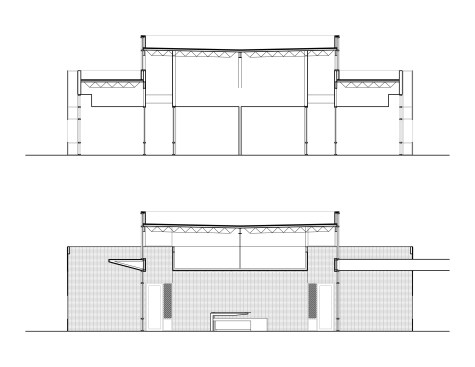
The plan arrangement of the offices is simple with executive offices at the lateral perimeter anchored by entry and conference rooms at one end and the employee amenity area at the other. The entry area serves as the main organizational spine connecting the detention water feature through the offices and under cover to the plant itself – a kind of Main Street for the campus. The cross section reveals a building within a building massing strategy. A clearly defined four sided glass box gives the building its office iconography while allowing natural light into the public corridors. The lower building is a tectonic expression with brick planes running east-west indexing the residential character of the neighborhood and perforated weathering steel screens running north-south.
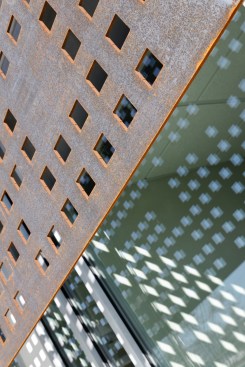
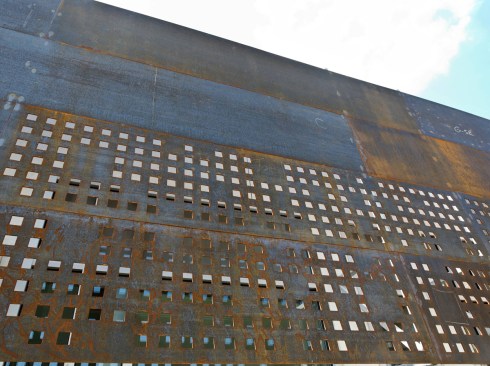
Weathering steel screens, indexical to the program, are what allow the building to perform autodidactically. Combining the logic of machining and digital input, we came up with a pattern and the client, who has never before provided services for architectural applications, manufactured them. This process explores the intersection of pattern and composition working toward the compounded argument of formal validity and economic viability while moving beyond the limitations of repetitive industrial production. Ultimately, the building has an iconographic presence that supports its purpose without recourse to un-transformed literal devices.