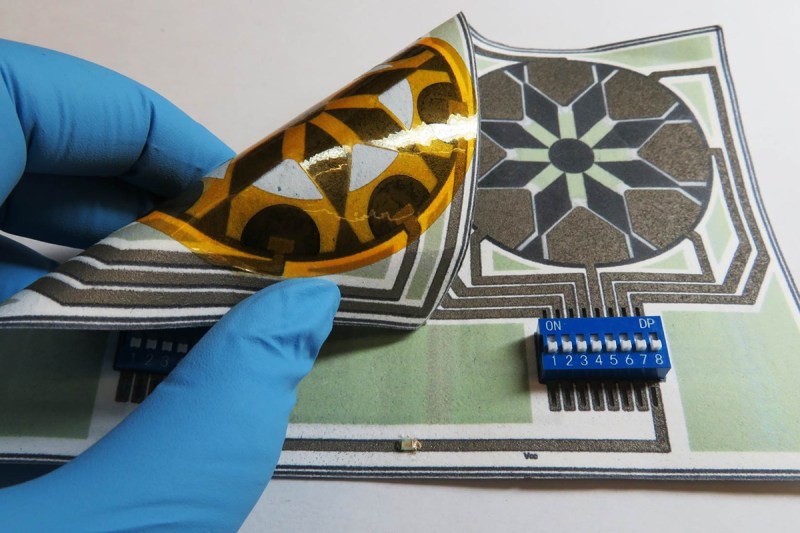
A team of researchers from the State University of New York at Binghamton, led by computer science assistant professor Seokheun Choi, have developed a paper-based battery that is activated by saliva. To build the battery, the team used microbial fuel cells—a system that uses microorganisms to transform chemical energy into electricity—created from “inactive, freeze-dried exoelectrogenic cells,” that activate within minutes of contacting saliva, according to a university press release. Choi, who has worked on this project for the past five years, believes that this battery would be advantageous in deprived areas, and especially for use with diagnostic technologies.
In a recent test, the team was able to connect 16 microbial fuel cells on a sheet of paper to power a single LED. Choi says that the current prototype reaches a power density of only “a few microwatts per centimeter square,” but he is optimistic that soon the team would be able to increase the battery’s power density to accommodate a wider range of applications. Read the full press release here.