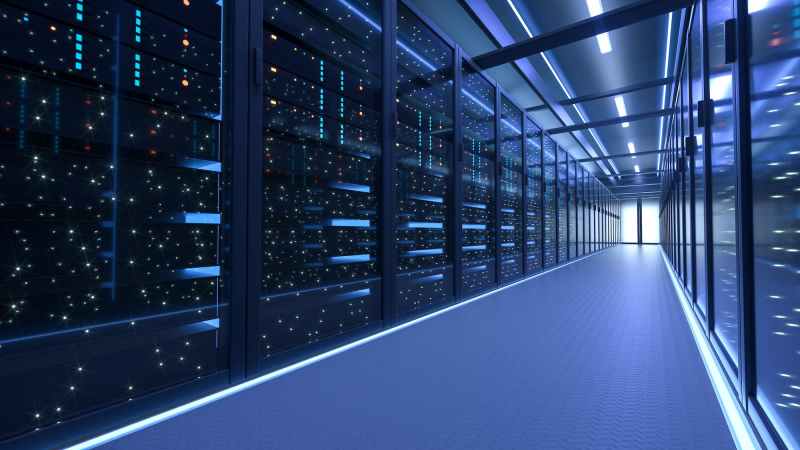
In the early 2000s, I had the opportunity to work on designing a data center project. The effort was merely a feasibility study, and nothing was ever built. However, the project was a fascinating glimpse into a future in which computation—and its associated demands for significant quantities of energy, water, and space—would grow to occupy vast swaths of the landscape.
This speculative endeavor both fascinated and troubled me. What role would design play in creating massive server warehouses that gobble large quantities of resources, staffed by a minimal number of human occupants? Could such projects ever contribute meaningfully to a place, or would their presence only be deleterious?
Today, the prophetic nature of this experience is clear. Concerns about the extractive nature of computational infrastructure are now widespread. A March 2026 Gallup survey found that 70% of Americans oppose building an AI data center in their neighborhood, with 48% strongly opposed. Common apprehensions include electricity demand and attendant rate increases, noise, freshwater consumption, light pollution, the loss of farmland and other open space, and transmission infrastructure.
Overall, there is a general sentiment that data centers offer limited or no benefit to the communities where they are built.
This significant popular opposition prompted a reframing of my earlier question: Can data centers be redesigned from extractive infrastructure into reciprocal infrastructure? How can these facilities provide measurable advantages for their communities?
Such models already exist, exhibiting varying degrees of benefit. The first addresses the most egregious resource consumption-related challenges while answering the question: What if we built data centers underground?
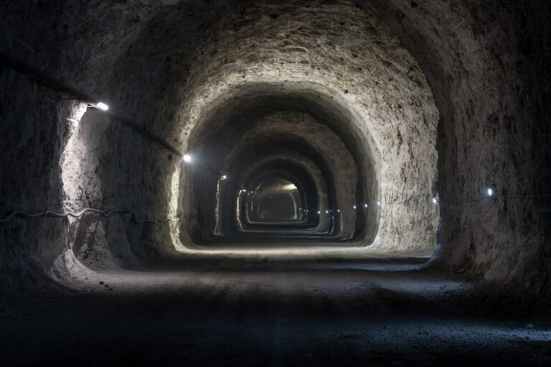
Trento Underground Data Center.
Trento, Italy-based Intacture opened an underground data center in June 2026. The facility was built inside an active mine in the Dolomite mountain range, adjacent to spaces traditionally used to store wine, cheese, and apples. The 6 MW data center sits 100 meters underground, uses no water, and runs on 100% renewable power, according to developer Trentino DataMine.
Another underground example is Sweden’s Pionen data center, located in a former Cold War nuclear bunker 30 meters below Stockholm. Carrier engineers developed a waste heat recovery system that eliminated the need for existing cooling towers. The system reuses Pionen’s energy, feeding it into Stockholm’s district heating network.
These examples demonstrate what is possible when the physical footprint of computation effectively disappears. But the strategy can be extrapolated further: subsurface co-occupation, not just subsurface location, matters. Invisible computation infrastructure pairs strategically with aboveground uses such as urban neighborhoods, industry, parkland, or agriculture.
Greenhouse agriculture in particular shows promise as a partner to computational infrastructure in cooler climates. A Swedish study simulated a 1 MW data center’s heat output and concluded that its waste heat could supply nearly all of the heating needed for a 2,000 m2 greenhouse.
A Chinese study proposes transporting data center excess heat to an ecological farm via an air source heat pump (ASHP). This complementary waste-heat utilization strategy would reduce electricity use in both facilities, with a dynamic payback period of only 3.4 years. Similar research in Korea evaluates using data center excess heat in strawberry greenhouses. These examples demonstrate that data centers need not displace farms, but can instead become agricultural infrastructure.
Data center waste heat recovery is also powering housing. In Helsinki, a recent agreement projects a supply of 500,000 MWh of heat annually, in addition to what it already supplies through its district-heating system, from its OnZero data center.
This estimated output is sufficient to heat 70,000 apartments. Helen, one of Finland’s oldest energy producers, partners with data centers to enable carbon neutrality. The company claims that a single Helsinki data center can provide heat to 20,000 local apartments.
As infrastructural reciprocities advance, data center co-occupation may take on a more distributed, integrated pattern. The experimental modular building NEST at Switzerland’s Empa features servers connected directly to the building’s thermal and electrical networks. This direct architectural integration of computational infrastructure allows researchers to evaluate the utilization of waste heat as building energy.
So-called edge data centers, which are small computing facilities located close to where their data is used, offer many benefits over the hyperscaled data centers that have drawn so much recent opposition. Edge data centers typically deliver high performance and are easy to maintain.
Meanwhile, their small size and architectural integration can mitigate public concern while enhancing opportunities for reciprocal support, such as waste heat utilization. Ideally, these facilities should contribute a higher overall net benefit to a building’s occupants and users.
After reviewing these alternative examples, we might conclude that the challenge for typical data centers isn’t so much the typology as poor design—limited thinking about the physical form, siting, systems integration, resource utilization, and community benefits of computational infrastructure.
To be sure, the rapid growth of data centers has raised broader questions about the omnipresence of computing in society. But for the individual computational facilities that have drawn so much ire, good design can solve many, if not all, of a community’s concerns.
Perhaps all that is required is asking architects a question they are well-equipped to address: What should the architecture of computation be?