Artificial intelligence (AI) promises to revolutionize modern life—from accelerating medical breakthroughs to streamlining global industries—but this digital transformation carries a heavy real-world toll.
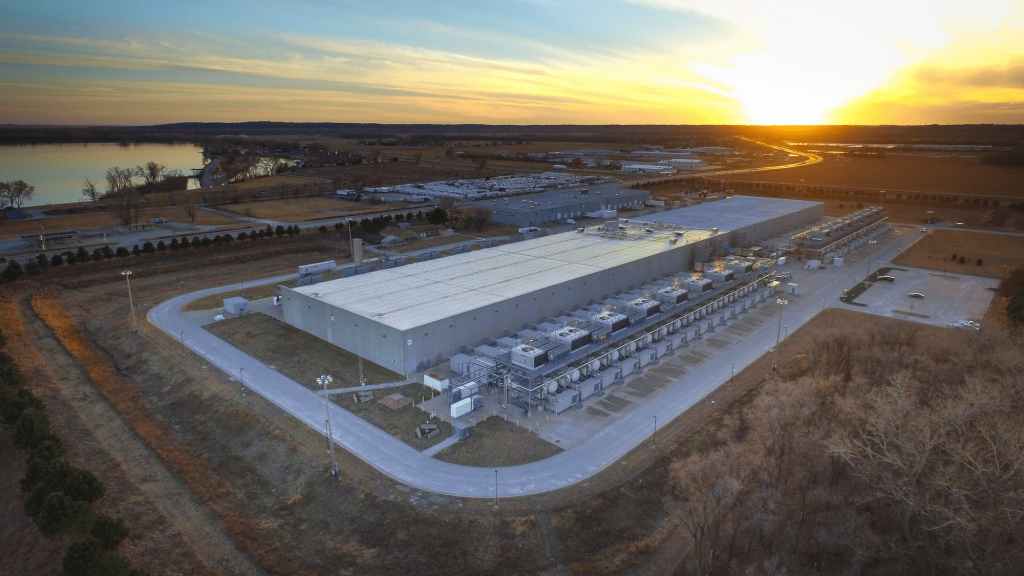
The exponential growth of AI has sparked a massive land grab for hyperscale data centers, an expansion running up against grave environmental, energy, logistical, and societal concerns.
Why is this happening? When constructed on undeveloped “greenfield” sites, these massive facilities consume virgin land and destroy native ecosystems. Their operations threaten to drain scarce local water supplies and introduce new contamination risks.
Worse, their staggering electricity demands give utilities an excuse to delay retiring aging fossil fuel plants—or even build new ones—threatening to undermine decades of environmental progress.
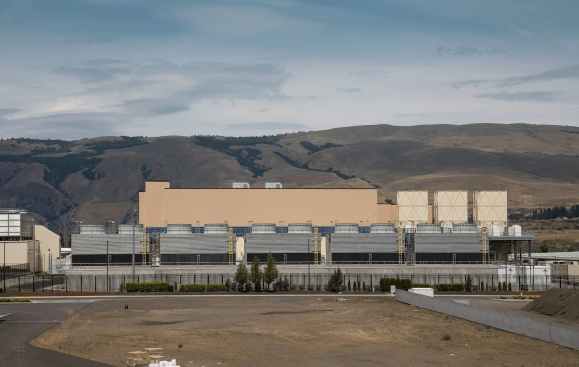
Google Datacenter in The Dalles, Oregon. Courtesy WIkipedia.
Moreover, building these AI campuses from scratch is an agonizingly slow logistical process. Securing land, water, power, and fiber connectivity requires navigating a labyrinth of municipal approvals and environmental reviews. Acquiring rights-of-way, building substations, and laying new transmission lines can add hundreds of millions of dollars to a project’s price tag, stalling construction for years and ultimately passing those costs on to consumers. Compounding these costs and delays is fierce grassroots resistance.
Local communities are aggressively pushing back, frustrated by the relentless noise of cooling fans, strained regional grids, rising utility rates, exacerbated local heat islands, depletion of potable water supplies, and a lack of long-term job creation. This backlash has swiftly translated into formidable regulatory roadblocks, with local jurisdictions enacting strict zoning limits and outright moratoriums, while state governments increasingly scrutinize data centers’ impacts on grid reliability and climate goals.
As a result, the tech industry faces a pressing dual challenge: finding alternative sites to bypass these mounting delays and costs, while also mitigating their environmental and community harms.
From Coal and Gas to Cloud
In the face of mounting opposition and years-long development schedules, a counterintuitive solution has emerged: aging, economically unviable, and decommissioned fossil fuel facilities on large parcels of land, are increasingly viewed as a strategic pathway forward. This trend is further accelerated by global energy realities. The inherent security risks and extreme cost volatility of fossil fuels have driven tech giants to prioritize the long-term price stability and grid resilience offered by renewable energy.
The U.S. coal fleet is approaching a retirement cliff, with most plants now structurally unprofitable to operate. Because building new renewables is now cheaper than operating these legacy plants, replacing them represents the most economically rational course. A similar reckoning faces the natural gas sector, where several hundred aging plants are hitting their 20-plus-year “decision window.”
The steep cost of mandatory upgrades means the economics increasingly favor immediate retirement. Retiring fossil fuel plants offers the booming AI sector a practical, ‘plug-and-play’ solution that bypasses the multi-year delays of greenfield development. By repurposing these sites, data center operators can tap directly into pre-existing high-capacity grids, long-haul fiber networks, established industrial zoning, and vital water access.
This adaptive reuse strategy saves hundreds of millions of dollars by eliminating the need for new rights-of-way, reduces community opposition by cleaning up polluted zones, and lowers the carbon footprint of construction by recycling massive industrial sites for next-generation technology.
To ensure these projects truly serve the public interest, policymakers can mandate that the substantial capital savings from site reuse be reinvested into environmental cleanup, conservation, and renewable energy. Furthermore, data centers could be required to deploy closed-loop or immersion cooling systems and utilize existing non-potable industrial water permits, guaranteeing that municipal drinking supplies remain untouched.
Beyond water conservation, policymakers can leverage these projects to address regional grid strain. The U.S. building sector consumes 74% of all electricity, yet it has already cut its usage by 10.7% between 2005 and 2024. Policymakers can accelerate this momentum by incentivizing local efficiency upgrades, rooftop solar, and battery storage to free up additional grid capacity while saving consumers money.
At the facility level, requiring data centers to integrate demand flexibility—curtailing power during peak hours—alongside on-site renewables, battery storage, and 24/7 Carbon-Free Energy agreements transforms them from grid drains into flexible assets that actively finance new regional clean energy and long-duration storage.
The Crucial Role of Architecture and Urban Planning
Realizing this upcycled vision requires the expertise of architects and urban planners to bridge the gap between heavy industrial sites and low-to-zero carbon futures. They are essential in orchestrating the complex transition of these brownfields and in facilitating community engagement to ensure these large-scale redevelopments align with broader regional plans and local economic and environmental goals.
Rather than demolishing these sites, architects are increasingly repurposing decommissioned industrial structures—such as massive turbine halls, cooling towers, and reinforced manufacturing shells—into data centers and community facilities.
This adaptive reuse strategy offers a sustainable approach to meet the surging AI-driven data demand while preserving the substantial embodied carbon locked within these existing structures. Additionally, creative site planning can mitigate localized heat islands by rewilding the landscape, replacing heat-absorbing concrete and toxic legacy coal ash ponds with native tree canopies, cooling bioswales, and green or reflective “cool roofs”.
Furthermore, inside the facility, advanced immersion cooling systems can drastically reduce the amount of hot air vented outdoors. By capturing this high-grade server heat and redirecting it to nearby district heating networks or industrial processes, this approach effectively turns a thermal pollutant into a valuable community resource.
Building the Future on the Footprint of the Past
The AI revolution need not come at the expense of our climate or communities. By building tomorrow’s infrastructure on the industrial bones of the past, tech giants can solve logistical bottlenecks, accelerate the clean energy transition, and transform environmental and economic liabilities into genuine community assets.
Driven by visionary planning and architecture, repurposing aging fossil fuel plants and landscapes is more than a shrewd business strategy—it is the blueprint for responsible innovation in the 21st century