As architecture grapples with climate collapse, failing infrastructure, and the political fragmentation of public life, one of the discipline’s oldest and most prestigious fellowships is betting on a different future: one where energy itself becomes architecture’s next civic project.
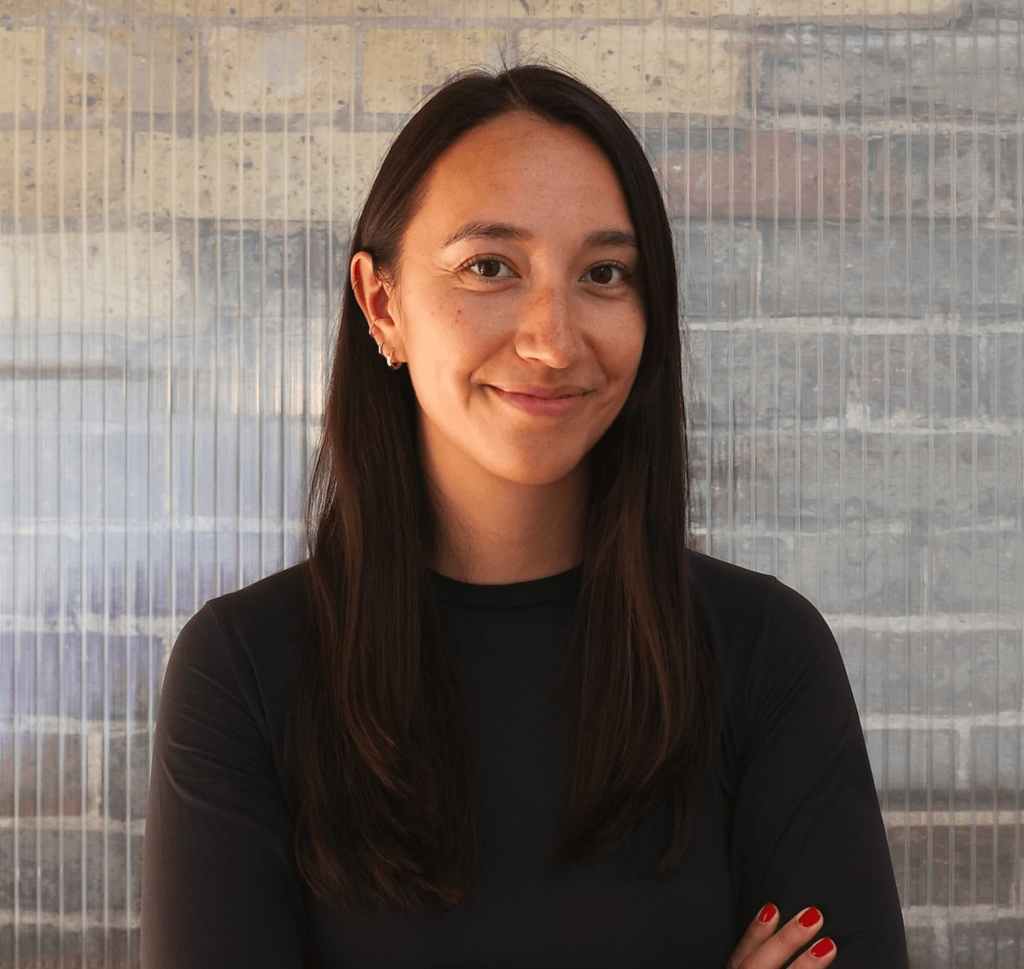
Architectural designer Catherine Chen has been named the winner of the 2026 James Harrison Steedman Memorial Fellowship in Architecture, receiving a $100,000 award to pursue international research for her proposal, Solar Communities: Architectures of the Energy Transition.
Now marking its 100th anniversary, the Steedman Fellowship—organized by the College of Architecture and Graduate School of Architecture & Urban Design at the Sam Fox School of Design & Visual Arts at Washington University in St. Louis, in partnership with AIA St. Louis—is among the oldest and largest architecture fellowships in the United States. The biennial award supports 6–12 months of international travel and research for emerging architects within eight years of receiving an accredited architecture degree.
But Chen’s win arrives at a moment when architecture culture itself is undergoing a profound recalibration. Increasingly, the discipline is being forced to confront questions that exceed aesthetics and form: Who owns infrastructure? Who benefits from decarbonization? Can architecture help reorganize collective life in an era of environmental and political instability?
For the jury, Chen’s proposal stood out because it reframed renewable energy not as a purely technological challenge, but as a fundamentally spatial and civic one.
“Catherine Chen’s proposal, ‘Solar Communities: Architectures of the Energy Transition,’ situates the energy transition not simply as a technical problem, but as a spatial and political project,” said jury chair Neeraj Bhatia. “By examining a series of energy communities, the research operates across scales — from material assemblies and building typologies to broader settlement patterns — foregrounding questions of governance, agency and collective ownership. Ultimately, it probes how emergent energy paradigms might reconfigure forms of collectivity and participation, and how architecture can act as a mediator within these shifting frameworks.”
That framing is significant. For decades, sustainability discourse within architecture often centered on performance metrics, certifications, and technological optimization. Chen’s proposal suggests something more politically charged: that the energy transition may fundamentally reshape how communities are organized, governed, and spatialized.
The fellowship’s 2026 theme, “Collective Form/Forums,” was itself designed to provoke this kind of thinking. Developed in honor of the late Japanese architect Fumihiko Maki, the theme revisits Maki’s influential 1964 manifesto Investigations in Collective Form, which explored how buildings could come together to create urban environments larger than the sum of their individual parts.
Maki’s ideas emerged during a period of rapid urbanization, expanding communication technologies, and shifting institutional structures. Today, many of those same pressures have returned in amplified form: climate migration, fractured publics, collapsing trust in institutions, and the urgent need for new models of collective organization.
“Travel operates as a critical instrument for unsettling our own biases, opening up comparative readings across cultures, urbanisms, and modes of living,” Bhatia said earlier in the competition cycle. “In this sense, the fellowship creates a rare space for emerging architects to engage contexts beyond their immediate horizons, returning with ideas that productively challenge the status quo.”
Chen’s research sits squarely within that lineage, but updates it for the age of climate infrastructure.
Her work has consistently explored the intersections between public space, infrastructure, and collective life. With academic training spanning studio art and physics, Chen approaches architecture less as an isolated object-making discipline and more as a system of relationships embedded within climatic, social, and infrastructural networks.
That systems-oriented approach increasingly reflects a broader generational shift within architecture schools and emerging practice. Younger architects are moving away from singular iconic objects toward questions of logistics, governance, maintenance, circular economies, and resource flows. Infrastructure—long treated as architecture’s technocratic cousin—is becoming central to the discipline again.
Chen’s proposal appears to tap directly into that evolution.
Rather than imagining solar infrastructure as something hidden on rooftops or isolated in remote landscapes, Solar Communities investigates how energy production itself could become spatially and socially formative. The project examines “energy communities” across multiple scales—from material assemblies to settlement patterns—to understand how new forms of collective ownership and participation might emerge through the transition to renewable systems.
The implications are expansive. If the fossil-fuel city was organized around centralized extraction and distribution, what does a distributed renewable-energy city look like? How might architecture mediate shared ownership, decentralized governance, or communal resource management? And what new spatial typologies emerge when energy becomes visible, collective, and civic?
These questions resonate far beyond academia. Around the world, architects and urbanists are increasingly being drawn into debates surrounding resilience infrastructure, microgrids, cooperative housing, energy commons, and climate adaptation. In many ways, the discipline is being asked to redesign not just buildings, but the organizational frameworks of public life itself.
Chen’s background positions her well for that terrain. She holds a Master of Architecture from the Harvard Graduate School of Design, where she received the Alpha Rho Chi medal, and a Bachelor of Arts from Colgate University. She currently serves as a visiting critic at Cornell University College of Architecture, Art, and Planning and previously taught at Harvard.
Professionally, she has worked across Zürich, Boston, Princeton, and New York with firms including Karamuk Kuo Architekten, Höweler + Yoon, JaJa Co, and Studio Sean Canty. Her experience spans housing, exhibitions, education, and civic infrastructure projects—an unusually broad range that reflects the interdisciplinary nature of her research interests.
The fellowship jury itself reflects architecture’s growing intellectual convergence around questions of urban systems, politics, and collective futures. In addition to Bhatia, the jury included Patty Heyda of WashU’s Sam Fox School; Nahyun Hwang, founding principal of NHDM; architect and Real Review editor-in-chief Jack Self; and Peter Tao of Tao + Lee Associates.
For WashU, the award also reinforces the institution’s long-standing connection to Maki, who taught at the university early in his career and later designed several campus buildings, including Steinberg Hall, Walker Hall, and the Mildred Lane Kemper Art Museum.
Yet the symbolism of Chen’s selection may ultimately extend beyond the fellowship itself.
At a moment when architecture is searching for renewed cultural relevance, Solar Communities suggests a different direction for the profession—less focused on spectacle, and more invested in systems of collective survival and participation. The project reframes energy infrastructure not as engineering background, but as a public realm issue capable of reshaping governance, ownership, and civic identity.
In other words, the future architect may look less like a stylist and more like a spatial strategist navigating the politics of climate transition.
And with the Steedman Fellowship entering its second century, the discipline appears increasingly willing to reward precisely that kind of thinking.