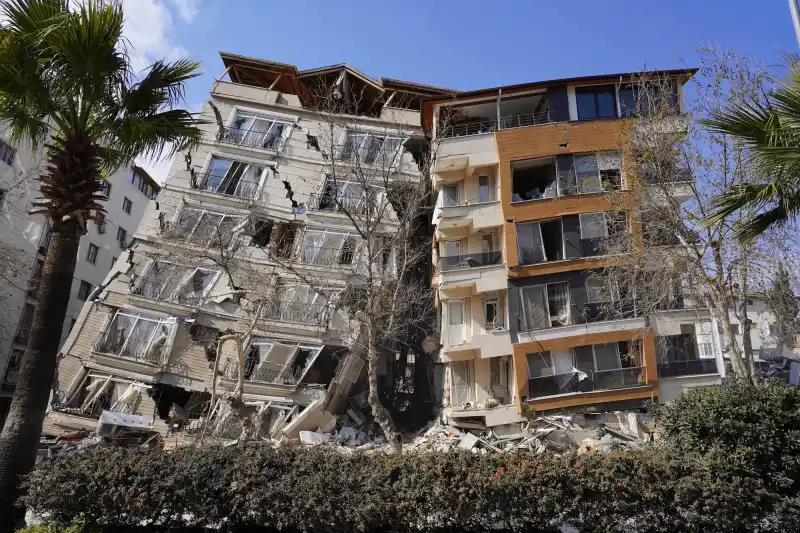
“An earthquake by itself never kills people. The collapse of buildings kills people.”
These are the sobering words of architect Shigeru Ban, shared during an interview about his firm’s post-disaster relief efforts. As we have seen recently in the grim aftermath of major earthquakes in Colombia and Venezuela, sudden building collapses are the leading cause of fatalities during such events.
And for the structures that remain standing, questions about physical integrity assume heightened urgency. Which buildings are safe to occupy? What structures conceal fundamental vulnerabilities? And what specific transformations occurred to these buildings, at the material level, during the shaking?
Concrete invites particular scrutiny, given the material’s global primacy as a structural system and its inherent inscrutability. Despite reinforced concrete’s omnipresence and familiarity, the composite material can hide signs of inner stress or weakness better than other materials, given the encapsulation of its crucial reinforcing components.
From a life safety perspective, the reinforcing steel in concrete plays a vital role in preventing or delaying immediate, catastrophic collapse of the surrounding material. However, hidden water intrusion and related chemical reactions can significantly weaken the steel as well as the bonds between the two materials, resulting in unseen vulnerabilities. We might, therefore, call concrete architecture’s “black box” material, due to the secret nature of its inner life.
Although seismic events as powerful as Colombia’s and Venezuela’s pose a threat to all structures, more susceptible buildings likely offer occupants less warning or time to escape. Furthermore, concrete’s vulnerabilities are not limited to earthquakes. As seen in the 2021 Miami tower collapse or the 2018 Genoa bridge failure, deteriorating reinforced concrete (particularly when combined with suboptimal design and construction) is a hidden threat that can result in disastrous outcomes without the need for a sudden external catalyst like a seismic event.
This leads to the obvious question: is there a way to monitor concrete structures’ health so that adequate maintenance can be prescribed, thus avoiding or delaying a calamitous outcome?
While external diagnostic evaluation is common, concrete sensors are being increasingly developed and deployed as a way to “see inside” the black box, monitoring internal changes that external diagnosis may not detect. Concrete sensing generally falls into two categories: construction phase devices that monitor concrete during the curing process, and structural monitoring systems that keep tabs on material performance after completion.
Wavelogix’s Rebel Concrete Strength Sensors fall into the former category. These devices are placed in concrete during, or immediately after, a pour. As the material cures, the sensors monitor temperature, resonance frequency, and ultrasonic wave propagation, accurately predicting the concrete’s strength.
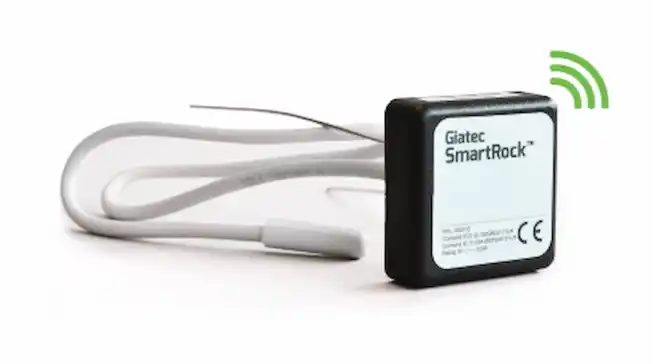
Giatek SmartRock Concrete Data Sensor.
Canada-based Giatec’s SmartRock sensors are designed to be affixed to rebar before a pour. Connecting directly to a smartphone, they report real-time strength, temperature, and maturity information during construction.
Israeli startup GreenVibe labels its technology “the ultrasound of construction,” a system that integrates five sensing approaches to monitor strength, humidity, temperature, workability, and density. The sensors are intended for long-term assessment of structural health, reporting early detection of cracks and other vulnerabilities.
ESR strain sensors like those made by Heidenhain are mounted post-construction via adhesive or mechanical fastening. These electro-optical monitoring devices are designed for large-scale industrial and infrastructural projects such as bridges, cranes, or wind turbines, monitoring dynamic vibrations and micro-strains. These sensors report both sudden stresses and long-term fatigue data, offering early warnings of structural weaknesses.
Given their benefits, it is no surprise that industry projections indicate rapid growth in the concrete sensor market. This market was valued at $1.8 billion last year, and is expected to more than double by 2034. As concrete sensors become more widespread and their advantages are increasingly conveyed to contractors, building owners, and facilities managers, different sensor types will likely be incorporated into a holistic framework of material life cycle diagnosis, reporting, and recording.
This lifetime monitoring strategy, made possible by what we might consider a digitally powered material passport, can serve as a continuous biography of a building’s components. Like the biometric devices enabling the “quantified self” movement in personal healthcare, material passports will help measure the soundness of buildings. Unlike conventional documentation, material passports will accumulate data over time and transfer information in the event of future ownership changes.
It is worth noting that more data will not automatically result in a safer built environment. Like any technology, sensors can fail. Software will change, proprietary platforms will likely disappear, and batteries will expire. Issues surrounding data ownership and cybersecurity remain unresolved. In the worst case, erroneous monitoring data could create a false sense of security for contractors and facilities managers.
Nevertheless, a technology that shines light into an often inscrutable material, providing fundamental clues about its curing, capacity, potential deterioration, and response to external stresses, is preferable to remaining in the dark. Concrete sensors can serve as an effective early warning system and, after a calamity, a kind of internal flight recorder for buildings, providing valuable information that could save future lives.