I grew up bicycling and, despite almost killing myself careening down a Virginia mountain six years ago, I still love to do it. I have argued that it is the best way to experience your environment: you get into a flow in which the scenes unfold but you can keep track of the forms and details in a way that faster modes blur.
One of my great pleasures in the last few years has been to grab my bicycle, weave briefly through city streets, then follow the Wissahickon Creek and the Schuylkill River to the Philadelphia Art Museum. Once I lock my bike and enter that monument, the art feels properly embedded in the scenery after that flow through humanmade and natural landscape, and e-assist makes the climb out of the cultural mausoleum to our Mt. Airy home easy.
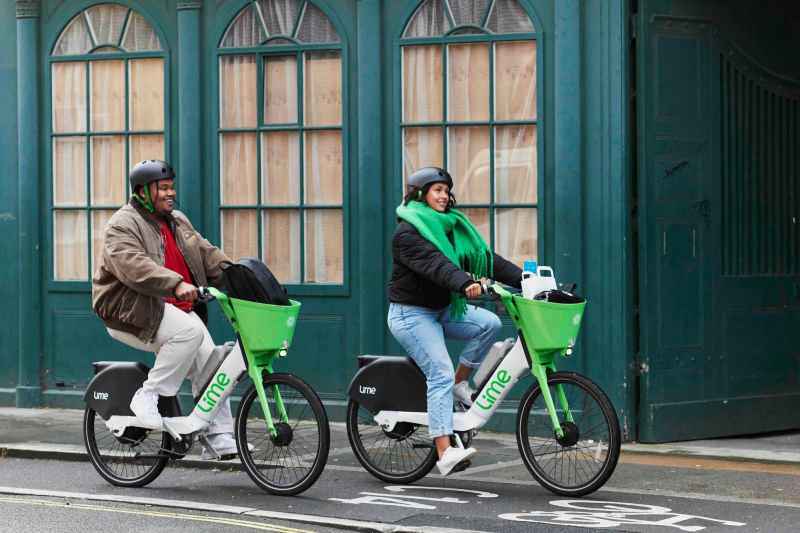
This weekend, I duplicated that experience by grabbing a Lime bike, the sturdy, if a bit clunky, e-bike that has taken over cities around the world I found waiting for me outside the apartment where I am staying for a few months in Turin, Italy.
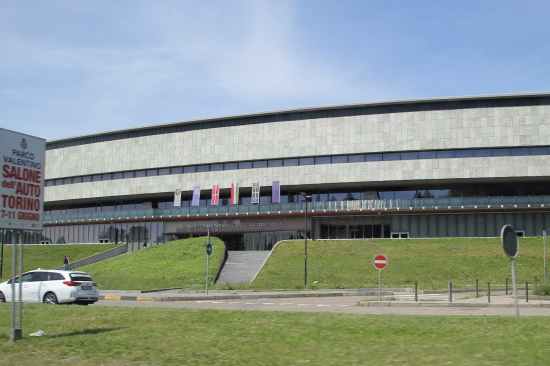
Torino Museo Nazionale dell'Automobile.
I cruised down to the Po River, and then followed that stream as I wound my way through Sunday crowds to reach the city’s automobile museum and the Agnelli Collection housed in Lingotto, the former Fiat factory. The city and its grids, views, and river unfolded in front of me.
But I also have come to rely on these cheap rentals (a couple of bucks a ride if you get a subscription) to get around town in the way I was used to as a kid in the Netherlands: to do groceries, run to appointments, and go to the train station. I no longer worry about bus schedules or calling a cab. The rental bike has opened the city in new ways, making it feel more familiar and convenient, and I am using it in the same way in other European cities I visit.
One of the great advantages of these rental services is that the bane of bicycles ownership disappears: you don’t have to worry about where to park your ride, go through the ritual of chaining it, and then still wonder whether it will still be there when you get back. There is almost always a bike (or scooter) waiting for you wherever you are, or at least there is one around the corner.
Unlike some of their competitors, Lime has made their machines easy to use, with seats that adjust with a lever and a place to clamp your phone with its map open right on the center of the handlebar. A basket lets you easily stuff your bag or purchases.
The bicycles, which the firms designs in-house and then outsources to manufacturers in (of course) China, trade in the kind of sleekness and elegance you can find if you shop around for your own vehicle (I am currently coveting Biomega’s super-light offering) for a heavy and badly proportioned thing that sports offensively ugly graphics, but that only supports their status as urban machines. Maybe someday Marc Newson will give them a glow-up.
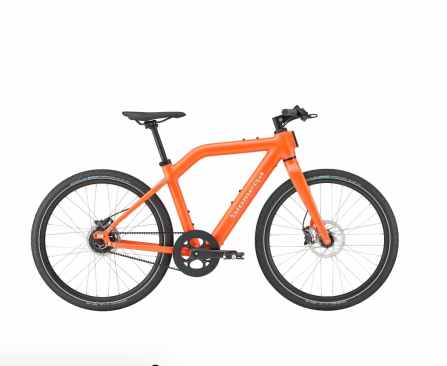
Biomega E-bike.
My temporary hometown also particularly invites Lime-ing. Turin is not only mostly flat, at least at it its core, but it is unusually legible. Its center is a mostly rational grid overlaid with the ceremonial ambitions of the House of Savoy: long axes, framed views, arcaded streets, and piazzas composed as enormous outdoor rooms. The Alps loom over the north, while the Po flows (mainly) to the east, helping to orient you.
That clarity, however, is deceptive. If you walk the city its blocks can become repetitive; drive through it and the architecture dissolves into traffic signals, one-way streets, confusing roundabouts, and the dreaded no-go zone that encompasses most Italian historic cores. On a Lime bicycle, however, Turin unfolds at just the right speed. It becomes a sequence rather than a diagram. With the electric assist gradual slopes that you barely notice on foot, and resent on a conventional bicycle, turn into almost abstract changes in the street plane. You can move from the center toward the Po without effort, cross the river, and continue upward on the hills until the city spreads below you as an orderly carpet of roofs, towers, domes, and trees.
In this combination of rhythms of blocks and screams of diagonal avenues with riverine flow cycling makes the buildings’ architecture peripheral and therefore, paradoxically, more vivid. You do not confront façades frontally, as you might in a guidebook photograph or on Instagram. They slide past and assemble themselves out of columns, shopwindows, balconies, cornices, and shadows. Turin’s porticoes run alongside you as parallel interiors.
The city becomes a stereoscopic experience: arcade to one side, traffic to the other, and ahead of you a framed patch of sky. This is not Italy’s most beautiful cities, but it is one of its most staged ones, and the bike lets you experience its theatricality in a proper way. You also have more time to enjoy that scenery than you might in Rome or even London, where the danger of getting run over or the breaks in the geometry force you to concentrate on more immediate points around you.
I realize that the very ease of use I so enjoy creates its own problems. Dockless bicycles, like cars and scooters, occupy public space without ever quite belonging to it. They block pavements and form untidy green clusters around railway stations and popular destinations. As such, they map points of interest or activity, but to do so by accumulating at what become choke points.
Turin has, like most cities, developed no-parking zones for them, which helps a bit, but at rest the ugliness of these clumps of bicycles and scooters becomes a larger issue. There are also areas where your speed is automatically limited and pedestrian zones where carabinieri have held up a definite hand barrier to me when I approached. That is logical, but it makes you feel that your personal film has come off its reels.
There also is still a cost. A Lime bicycle is cheaper than a taxi and more flexible than public transit, but it is not truly public transportation. And a whole section of the population is excluded because of their physical abilities. Once you hop on, the meter encourages speed.
Stopping to inspect a building, buy a coffee, or look across the river becomes a financial decision. The bicycle gives you the city, but charges by the minute for your attention. I wish some city would pick up on the “white bike” model with which Amsterdam experimented in the 1960s: free bicycles for everyone.
But what is fantastic is the way these services, as well as private bicycling, is replacing the car everywhere. Walk onto the street here in Turin, or in New York or London, at rush hour and it seems as if the bicyclists outnumber automobiles.
My love of the Lime is, truth be told, more aesthetic than altruistic. Riding a Lime through Turin, I found myself not just traveling between buildings but inhabiting the spaces that bind them together. That is where the architecture of the city truly resides: not in isolated monuments, but in the unfolding relationship among façades, streets, trees, arcades, rivers, hills, and bodies in motion. The bicycle does not merely make Turin easier to traverse. It makes the city appear.