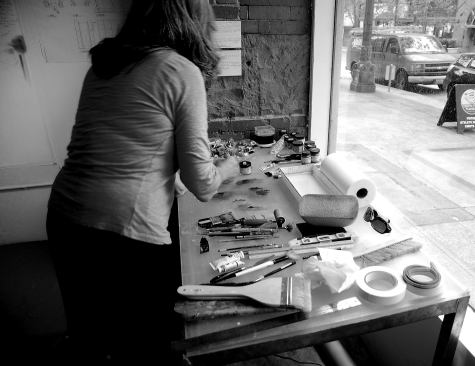
Artist Residency: Mary Ann Peters, June–September 2011 Mary A…
Artist Residency: Mary Ann Peters, June–September 2011 Mary Ann Peters used [storefront] as a working studio as to a mural for the “Jim Olson: Architecture for Art" career retrospective exhibit held at the Museum of Art at Washington State University (WSU). Mary Ann "undertook the conceptualization and creation of this room-sized piece in [storefront], working simultaneously with the WSU Summer Design Studio," Murray says. The WSU students used the space in July.
Joe Iano
Artist Residency: Mary Ann Peters, June–September 2011 "…
Artist Residency: Mary Ann Peters, June–September 2011 "As co-residents of the space, a natural dialogue started to happen between Mary Ann and the students," Murray says. "You could really see how an artist’s thought and work process and generous spirit added insight and energy into the students’ work."
Joe Iano
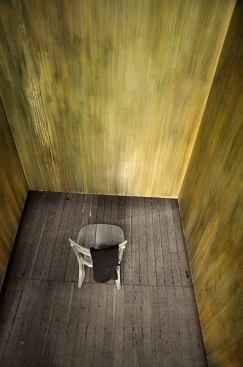
Artist Residency: Mary Ann Peters, June–September 2011 Mary A…
Artist Residency: Mary Ann Peters, June–September 2011 Mary Ann created a painting for a meditation room, as Jim Olson, FAIA, a founding principal of Olson Kundig Architects, known for his residential work—especially his residential work for art collectors.
Joe Iano
Washington State University School of Architecture, Summer Desig…
Washington State University School of Architecture, Summer Design Studio, July 2011 "Each summer, Washington State University [in Pullman, eastern Washington] offers a traveling studio experience for its students," Murray says. "Last summer, we partnered with them to create a summer studio experience in Pioneer Square [Seattle]. The students undertook study problems related to the history and built context of the area, and participated in charrettes on projects we were doing in the office, including a mixed-use project two blocks away. A number of architects from the firm assisted with the studio and acted as one-on-one mentors. The students became a part of our office culture for the summer."
Joe Iano
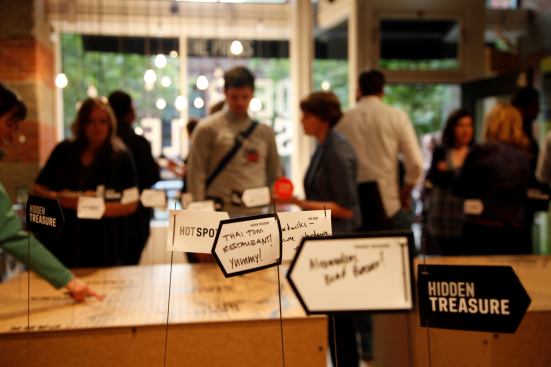
Dear Seattle, September 2011 "Dear Seattle" was a coll…
Dear Seattle, September 2011 "Dear Seattle" was a collaboration between Studio Matthews and [storefront] for the Seattle Design Festival. The pop-up design center welcomed people to drop by and share ideas about Seattle. "A number of interactive exhibits invited people from the broader community to comment on things they loved about Seattle as well as areas where they felt the city and the design community needed to keep looking for better solutions," Murray says.
Tim Bies
Dear Seattle, September 2011 When "Dear Seattle" was o…
Dear Seattle, September 2011 When "Dear Seattle" was open, "a large number of local public and private development initiatives were in the works," Murray says. "This type of dialogue was timely."
Joe Iano
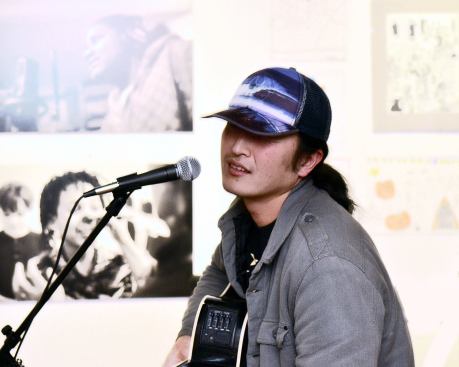
Artist Residency: Degenerate Art Ensemble, October 2011 In Octob…
Artist Residency: Degenerate Art Ensemble, October 2011 In October of last year, OKA worked with the San Francisco performance group Degenerate Art Ensemble and it's co-founder Haruko Nishimura. "Many of the [storefront] installations were created in support of people in our community whose work inspires us," Maskin says. "During this residency, [storefront] was transformed into a performance venue for an environmental work called 'Skirmish.' "
Alan Maskin
Artist Residency: Degenerate Art Ensemble, October 2011 "As…
Artist Residency: Degenerate Art Ensemble, October 2011 "As part of the residency, Olson Kundig Architects also collaborated with Degenerate Art Ensemble [DAE] on 'Underbelly,' a site-specific migratory performance in the underbelly of Seattle’s 1962 World’s Fair architecture," Maskin says. "The performance, which is now being produced with the help of a grant that was awarded to DAE and Olson Kundig Architects, is part of Seattle’s Next Fifty celebration and will be open to the public in the fall of 2012."
Joe Iano
Artist Residency: Degenerate Art Ensemble, October 2011 Maskin s…
Artist Residency: Degenerate Art Ensemble, October 2011 Maskin says that OKA worked with DAE in order "to support artist programming, and to experiment with the ways an architecture firm can participate in cultural events and multidisciplinary art and design projects." As part of the residency, OKA also created props for the DAE’s performance that was part of the anniversary production of Robert Wilson’s "Einstein on the Beach" in New York City, Maskin says.
Joe Iano
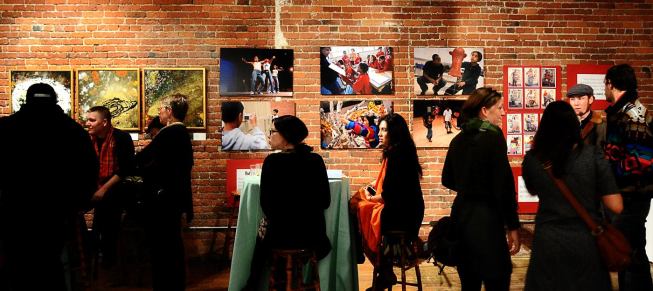
Artist Residency: Arts Corps, November 2011 [storefront] partner…
Artist Residency: Arts Corps, November 2011 [storefront] partnered with a local arts group called Arts Corps in order to support artist programming and education in its community.
Joe Iano
Artist Residency: Arts Corps, October 2011 Before the exhibit, O…
Artist Residency: Arts Corps, October 2011 Before the exhibit, Olson Kundig asked the members of the firm: “How many of you are sitting in this studio today because of an art teacher or art class that you took as a kid?” and almost every hand in the room went up. As arts programs continue to be cut or scaled back in the Seattle community, Arts Corps fights back by bringing hands-on arts classes to youth in schools, community centers, and housing sites in the Seattle area.
Joe Iano
Artist Residency: Arts Corps, November 2011 During the residency…
Artist Residency: Arts Corps, November 2011 During the residency, Arts Corps brought together young and old alike to participate in a series of public and private performances and events, including Brazilian drumming classes and shows, breakdancing lessons, and poetry slams. They also held fundraisers and exhibited artwork by the students, teachers, and professional artists that participated in their public school programs.
Joe Iano
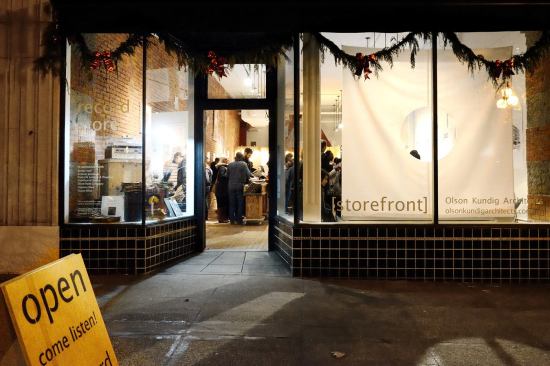
Record Store, December 2011–January 2012 Wanting to bring peop…
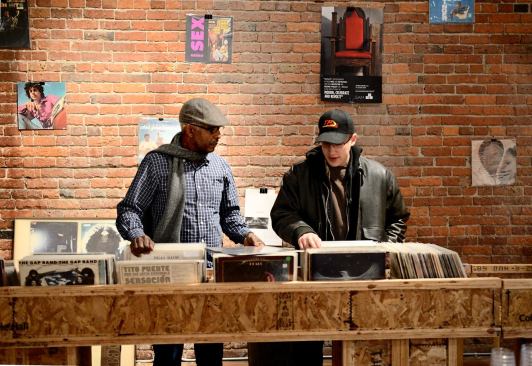
Record Store, December 2011–January 2012 Wanting to bring people together around the simple act of listening, Maskin and Murray decided to "experiment with vinyl records as a catalyst and tool that people work with in order to understand other narratives and perspectives," Maskin says. They collected over 3,000 vinyl LPs and created six listening stations in the storefront. "During the day, the public was invited in to simply listen and engage in the ritual that goes along with vinyl records," Maskin says.
Joe Iano
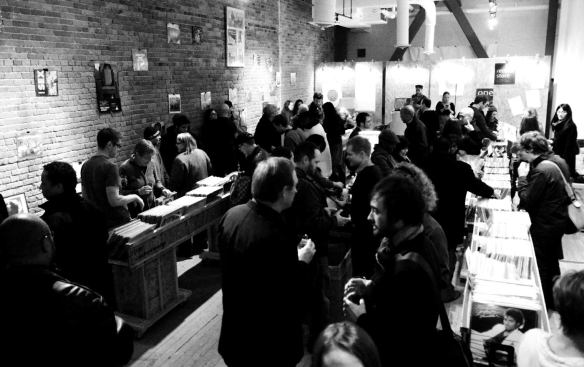
Record Store, December 2011–January 2012 "Each evening, w…
Record Store, December 2011–January 2012 "Each evening, we held listening parties and invited guest curators to select vinyls from the Record Store collection and share aspects of their own lives," Maskin says. "Some of the curators included urban planners, dancers, activists, artists, musicians, poets, club DJs, educators, and spiritual leaders."
Joe Iano
Record Store, December 2011–January 2012 Maskin says that &quo…
Record Store, December 2011–January 2012 Maskin says that "each guest tended to bring their world along with them to mix with the general public. Some nights it was a party, with hundreds dancing together and other nights it was a solitary experience—just you, an album, and a pair of headphones."
Kevin Scott
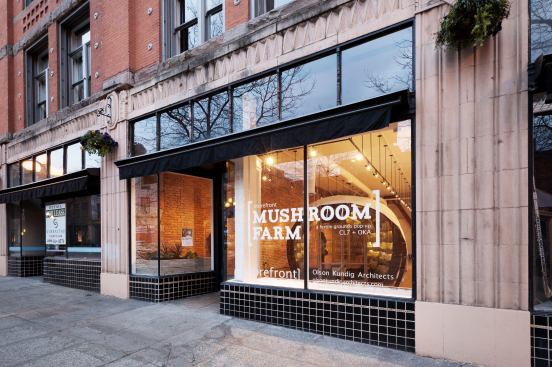
Mushroom Farm, February–March 2012 For "Mushroom Farm,&qu…
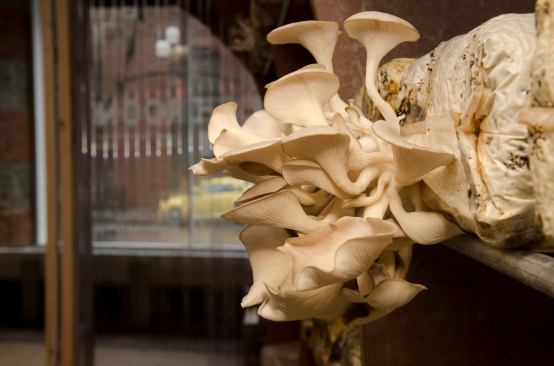
Mushroom Farm, February–March 2012 For "Mushroom Farm," Olson Kundig Architects designed an indoor greenhouse to grow over 200 pounds of gourmet mushrooms. OKA worked with local CityLab7, a group that works toward solutions for food systems, ecosystem services, and integrated urbanism. As new forms of food growth will become a global necessity in the years to come, Maskin says, "cities will need to maximize opportunities for harvesting food. This installation was an experiment—one that could have failed. We wanted to explore a new possibility for the production of food."
Kevin Scott
Mushroom Farm, February–March 2012 "As an urban farming e…
Mushroom Farm, February–March 2012 "As an urban farming experiment," Maskin says, "Mushroom Farm asked the question, 'Can we turn [storefront] into a farm and grow food on the spent, and otherwise landfill-destined, coffee grounds discarded by the three coffee shops in our neighborhood?' " Coffee grounds came from local Zeitgeist Coffee, Cafe Umbria, and the closest Starbucks.
Joe Iano
Mushroom Farm, February–March 2012 "We held harvest event…
Mushroom Farm, February–March 2012 "We held harvest events, community meetings and lectures on urban farming," Maskin says. "The public was invited to the evening events and workshops, and they were invited to simply sit in our greenhouse and watch mushrooms grow."
Chris Burnside
Hardware Store, April–May 2012 Wanting the public to look clos…
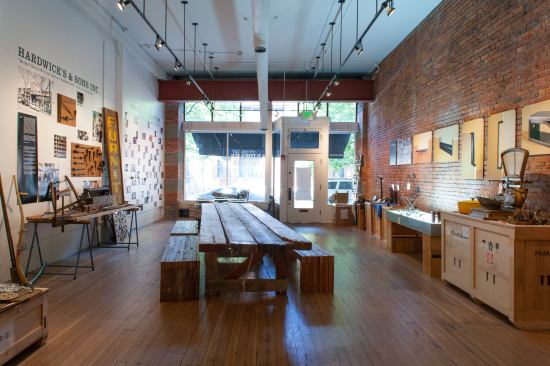
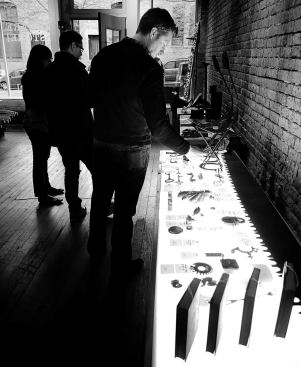
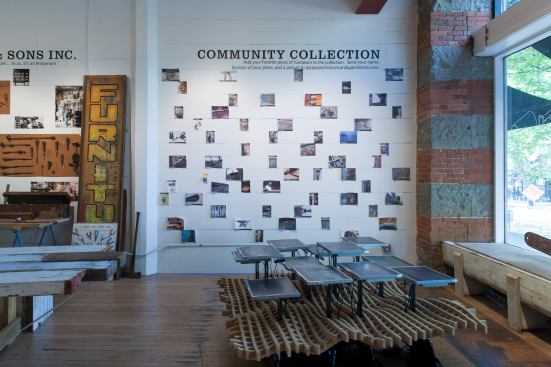
Hardware Store, April–May 2012 Wanting the public to look closer at architectural details such as knobs and handles, OKA created the Hardware Store. "We asked the public to loan us their favorite pieces of hardware and we displayed hundreds of them," Maskin says. "And we shared with other designers the lessons we learned when our partner Tom Kundig designed his first line of hardware products."
Joe Iano
Hardware Store, April–May 2012 For "Hardware Store,"…
Hardware Store, April–May 2012 For "Hardware Store," Olson Kundig also highlighted some of the hardware store luminaries in the Northwest, including the 90-year-old Hardwick’s, based in Seattle.
Chris Burnside
Hardware Store, April–May 2012 "Using social networks, we…
Hardware Store, April–May 2012 "Using social networks, we asked people to send us images of their favorite hardware pieces from around the world and we displayed the latest batch of guest generated images each week," Maskin says.
Joe Iano
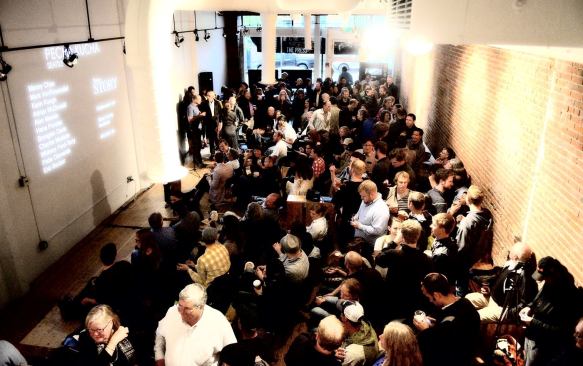
PechaKucha v. 37: STORY, June 22, 2012 For a PechaKucha night, O…
PechaKucha v. 37: STORY, June 22, 2012 For a PechaKucha night, OKA worked with the Seattle architecture journal
Arcade. "In addition to several PechaKucha–style events we have done internally, we also hosted an evening of citywide contributors working within the theme of 'story,' " Murray says. "Our space was transformed in to a video lounge that included sound and video projections on to the sidewalk and street."
Chris Burnside
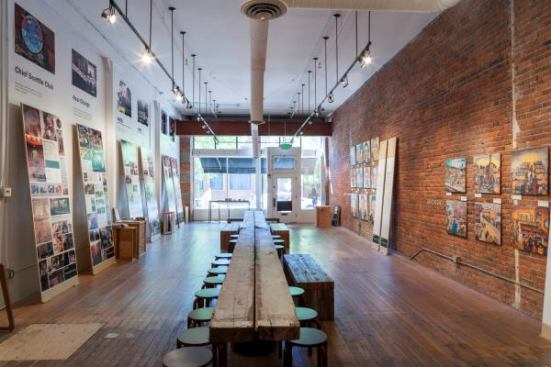
Skid Road, August–September 2012 Olson Kundig's current instal…
Skid Road, August–September 2012 Olson Kundig's current installation of [storefront] is "Skid Road," a way of bringing together artists, historians, evangelical Christians, designers, filmmakers, and the homeless in a single installation," Maskin says. "This is a group that is rarely assembled in the same room together."
Chris Burnside
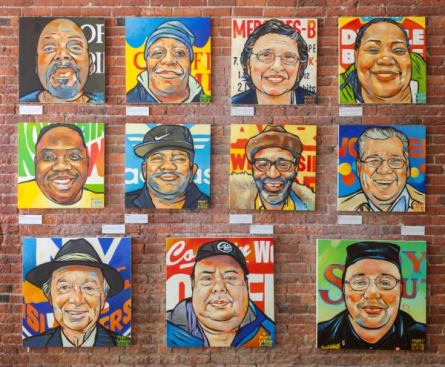
Skid Road, August–September 2012 "The installation promot…
Skid Road, August–September 2012 "The installation promotes the work of 10 individuals and organizations who are doing innovative work in an effort to either ease the lives of those living on our streets, or to eradicate homelessness altogether," Maskin says. Organizations involved were Bread of Life Mission, Seattle Club, Committee to End Homelessness in King County, Compas Housing Alliance, Downtown Emergency Service Center, Real Change, Seattle Housing and Resource Effort, Seattle/Kind County Coalition on Homelessness, and the Women's Housing Equity and Enhancement League.
Chris Burnside
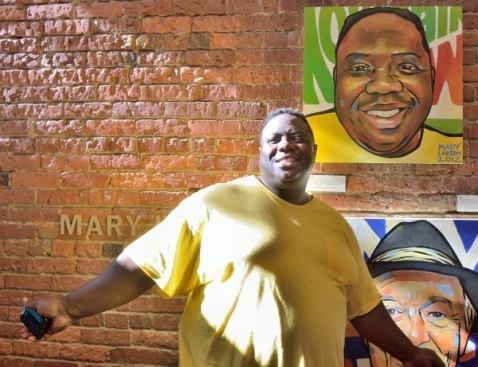
Skid Road, August–September 2012 Two artists who specialize in…
Skid Road, August–September 2012 Two artists who specialize in depicting homelessness were involved. One was Mary Larson, a nurse who paints her homeless patients.
Chris Burnside
Skid Road, August–September 2012 Larson exchanges her work for…
Skid Road, August–September 2012 Larson exchanges her work for donations that benefit her subjects.
Last March, I was walking around Seattle’s Pioneer Square neighborhood, close enough to the waterfront to hear seagulls and taste the air’s salty tang. The sun was shining through the wet, winter drizzle. But when I stepped into [storefront], Olson Kundig Architects’ pro bono experimental art space, unexpected senses confronted me: the sound of people talking at a lunch table in a dark room; the dank, earthy smell of oyster mushrooms growing on used coffee grounds; the moist heat of a greenhouse.
What use could an architecture firm possibly have for “Mushroom Farm,” as the installation was called? The co-directors of [storefront], firm principals Alan Maskin and Kirsten Murray, AIA, found four. It was a chance for the firm to experiment on a new architectural form, a greenhouse. It was a way to engage with the community, as passersby were invited to sit and have lunch next to the mushrooms. And it was a way to give back to the community, as it highlighted the sustainable practices of local farm Cascadia Mushrooms. All three of those combined to make the fourth: “Mushroom Farm” helped raise awareness about waste streams, climate change, and food, and Olson Kundig and its partner on the project, CityLab7, donated some of the mushrooms to local families in need.
This kind of quadruple-whammy is exactly what Maskin and Murray were going for when they proposed the storefront idea to the firm in 2011. At the time, Pioneer Square was a kit of disparate parts. On the one hand, it’s the most historic part of the city, where Illinois settlers laid down roots in 1852, and where architects rebuilt a beautiful swath of red Richardsonian Romanesque buildings after the Great Fire in 1889. But on the other, it’s home to the city’s homeless services, and where the Great Recession hit the hardest. At that time, The Seattle Times counted 21 boarded-up shops in a 12-block area, and nicknamed the neighborhood “Seattle’s poster child for the recession.”
Olson Kundig was looking for ways to engage the community when its neighbors started closing up shop. So they decided to lease one of those storefronts and use it as a public space for architectural experimentation—aiding the immediate problem of vacancy, as well as solving that first problem of community engagement.
Lindsey M. Roberts is a freelance writer outside of Seattle, specializing in interiors and design, and a former assistant managing editor at ARCHITECT. Her work has appeared in National Geographic, Gray, Preservation, and The Washington Post, for which she writes a monthly column about products for the home.

![Artist Residency: Mary Ann Peters, June–September 2011 Mary Ann Peters used [storefront] as a working studio as to a mural for the “Jim Olson: Architecture for Art" career retrospective exhibit held at the Museum of Art at Washington State University (WSU). Mary Ann "undertook the conceptualization and creation of this room-sized piece in [storefront], working simultaneously with the WSU Summer Design Studio," Murray says. The WSU students used the space in July.](https://www.architectmagazine.com/wp-content/uploads/sites/5/2025/06/1556288366-olson-20kundig-20architects-27-20storefront-01-tcm20-1513997.jpg?w=482)
![Washington State University School of Architecture, Summer Design Studio, July 2011 "Each summer, Washington State University [in Pullman, eastern Washington] offers a traveling studio experience for its students," Murray says. "Last summer, we partnered with them to create a summer studio experience in Pioneer Square [Seattle]. The students undertook study problems related to the history and built context of the area, and participated in charrettes on projects we were doing in the office, including a mixed-use project two blocks away. A number of architects from the firm assisted with the studio and acted as one-on-one mentors. The students became a part of our office culture for the summer."](https://www.architectmagazine.com/wp-content/uploads/sites/5/2025/06/312497782-olson-20kundig-20architects-27-20storefront-04-tcm20-1514000.jpg?w=526)
![Dear Seattle, September 2011 "Dear Seattle" was a collaboration between Studio Matthews and [storefront] for the Seattle Design Festival. The pop-up design center welcomed people to drop by and share ideas about Seattle. "A number of interactive exhibits invited people from the broader community to comment on things they loved about Seattle as well as areas where they felt the city and the design community needed to keep looking for better solutions," Murray says.](https://www.architectmagazine.com/wp-content/uploads/sites/5/2025/06/176761377-olson-20kundig-20architects-27-20storefront-05-tcm20-1514001.jpg?w=555)
![Artist Residency: Degenerate Art Ensemble, October 2011 In October of last year, OKA worked with the San Francisco performance group Degenerate Art Ensemble and it's co-founder Haruko Nishimura. "Many of the [storefront] installations were created in support of people in our community whose work inspires us," Maskin says. "During this residency, [storefront] was transformed into a performance venue for an environmental work called 'Skirmish.' "](https://www.architectmagazine.com/wp-content/uploads/sites/5/2025/06/429582233-olson-20kundig-20architects-27-20storefront-07-tcm20-1514003.jpg?w=491)
![Artist Residency: Degenerate Art Ensemble, October 2011 "As part of the residency, Olson Kundig Architects also collaborated with Degenerate Art Ensemble [DAE] on 'Underbelly,' a site-specific migratory performance in the underbelly of Seattle’s 1962 World’s Fair architecture," Maskin says. "The performance, which is now being produced with the help of a grant that was awarded to DAE and Olson Kundig Architects, is part of Seattle’s Next Fifty celebration and will be open to the public in the fall of 2012."](https://www.architectmagazine.com/wp-content/uploads/sites/5/2025/06/1513792343-olson-20kundig-20architects-27-20storefront-08-tcm20-1514004.jpg?w=245)

![Artist Residency: Arts Corps, November 2011 [storefront] partnered with a local arts group called Arts Corps in order to support artist programming and education in its community.](https://www.architectmagazine.com/wp-content/uploads/sites/5/2025/06/1347289049-olson-20kundig-20architects-27-20storefront-10-tcm20-1514006.jpg?w=554)
![Mushroom Farm, February–March 2012 "As an urban farming experiment," Maskin says, "Mushroom Farm asked the question, 'Can we turn [storefront] into a farm and grow food on the spent, and otherwise landfill-destined, coffee grounds discarded by the three coffee shops in our neighborhood?' " Coffee grounds came from local Zeitgeist Coffee, Cafe Umbria, and the closest Starbucks.](https://www.architectmagazine.com/wp-content/uploads/sites/5/2025/06/122199994-olson-20kundig-20architects-27-20storefront-17-tcm20-1514013.jpg?w=247)
![Skid Road, August–September 2012 Olson Kundig's current installation of [storefront] is "Skid Road," a way of bringing together artists, historians, evangelical Christians, designers, filmmakers, and the homeless in a single installation," Maskin says. "This is a group that is rarely assembled in the same room together."](https://www.architectmagazine.com/wp-content/uploads/sites/5/2025/06/182606556-olson-20kundig-20architects-27-20storefront-23-tcm20-1514019.jpg?w=600)