For nearly eight decades, the Naples Beach Club occupied a rare place in Florida’s increasingly privatized coastline: a beachfront social hub where locals and visitors gathered as naturally for sunset cocktails as for weddings, milestone dinners, and family rituals. Before the rise of branded luxury enclaves and hyper-exclusive residential towers, it represented an older version of Gulf Coast hospitality—casual, civic, and deeply tied to place.
Now, that legacy is being radically reimagined.
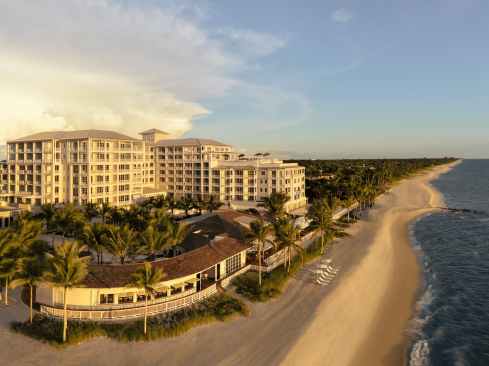
The historic 125-acre property has reopened as Naples Beach Club, a Four Seasons Resort, a sprawling redevelopment led by interdisciplinary design firm Hart Howerton that attempts something increasingly rare in luxury development: preserving the emotional memory of a place while simultaneously converting it into a high-end global hospitality and residential destination.
The redevelopment, stewarded by The Athens Group and BDT & MSD Partners, transforms the former resort into a carefully orchestrated ecosystem of hotel buildings, private residences, golf landscapes, wellness amenities, restaurants, conservation zones, and beachfront gathering spaces. Rather than erasing the site’s past, the project attempts to weaponize nostalgia as an architectural strategy.
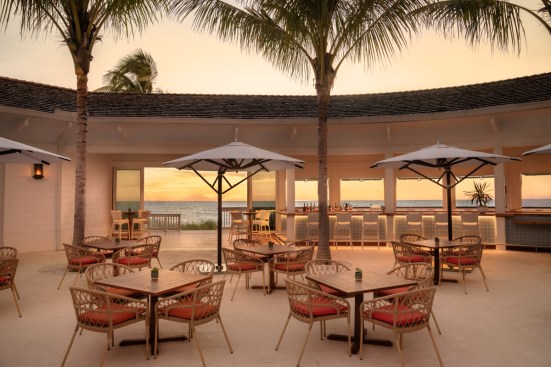
Originally established in 1946 by the Watkins family, the Beach Club became one of Naples’ defining social institutions. Generations remember “striped awnings flapping in the Gulf breeze, evenings at HB’s on the Gulf and Sunset Bar, and milestone events celebrated under its roofs,” according to the project team.
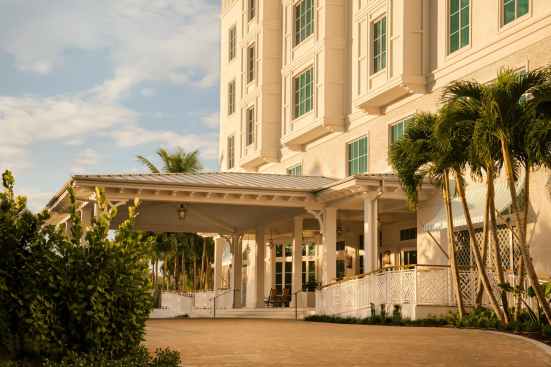
Instead of replacing that history with a singular mega-resort object, Hart Howerton conceived the new development as a layered collection of buildings designed to feel as though they evolved over time. The strategy deliberately rejects the monolithic tower typology that dominates much of Florida’s coastline.
That decision is central to the project’s architectural identity—and its marketing logic.
“Naples itself has long been defined by its cottages, porches, and elegant Gulf lifestyle,” the designers explain, referencing the region’s early development around the Naples Pier in the late 19th and early 20th centuries. Those original structures featured “clapboard and board-and-batten siding, broad screened porches, and deep roof overhangs suited to the coastal climate.”
The new resort borrows heavily from those vernacular cues while embedding them within hardened contemporary infrastructure engineered for climate resilience and luxury hospitality operations.
The hotel’s structural core is constructed from cast-in-place concrete designed to withstand coastal conditions, while stucco is detailed to mimic traditional clapboard siding. Larger buildings are topped with standing seam metal roofs, while beachfront structures feature cedar shake roofing intended to soften the visual impact of the development against the Gulf horizon.
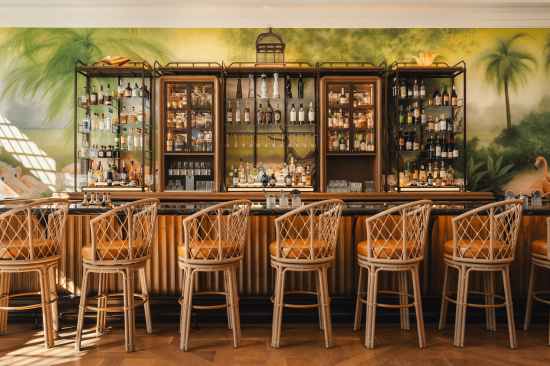
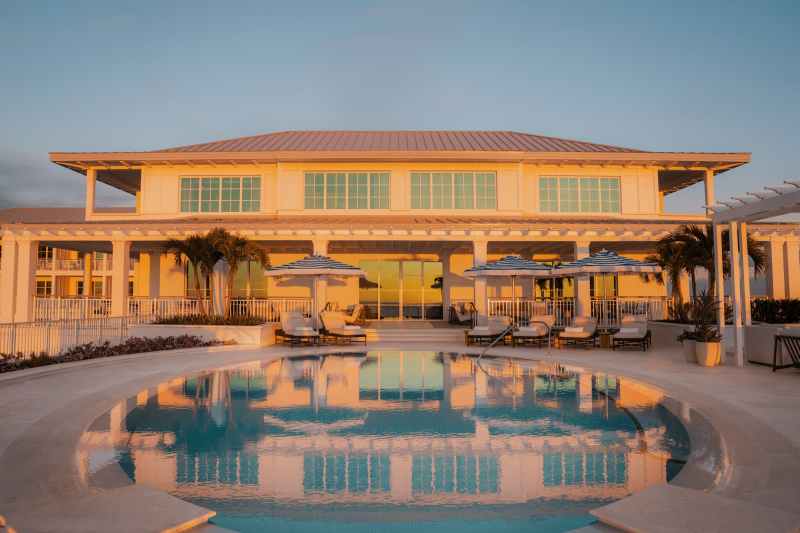
Perhaps the project’s most symbolic gesture is the return of the Beach Club’s iconic striped awnings—color-matched to the originals and deployed across the property as a form of architectural memory.
The landscape strategy is equally ambitious. A thousand feet of beachfront has been reframed as a sequence of pools, gardens, lawns, and gathering areas oriented toward the Gulf. Restorative dune plantings—including sea oats, sea grasses, and sea grapes—were introduced to stabilize the shoreline and reinforce ecological resilience.
At the center of the master plan is what Hart Howerton calls the “coconut connector,” a pedestrian spine linking the beachfront to the golf course and Market Square across Gulf Shore Boulevard North. More than circulation infrastructure, the pathway acts as the project’s social armature, stitching together hospitality, recreation, retail, wellness, and residential programming into a single lifestyle narrative.
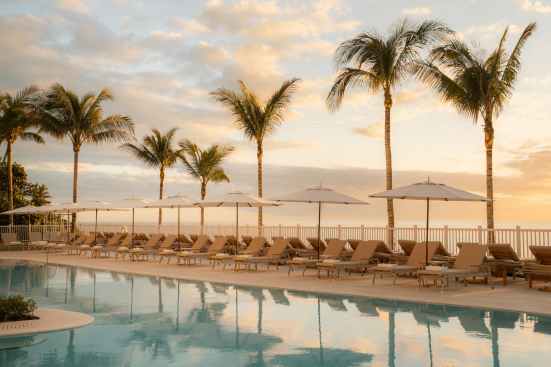
On the inland side of the property, more than 100 acres of open space have been permanently preserved through a conservation easement, ensuring the golf course remains an uninterrupted green landscape in perpetuity—a striking move at a moment when Florida’s development pressures continue to intensify.
Market Square anchors the east side of the development with restaurants, event venues, wellness facilities, and retail programming intended to extend the Beach Club’s historic role as a communal destination. The area includes The Wager restaurant, a multilevel spa and fitness center, plunge pools, co-ed aqua therapy facilities, and flexible event spaces for weddings and celebrations.
The programming also reflects the increasingly hybrid nature of luxury hospitality, where resorts are expected to function simultaneously as social club, wellness retreat, residential campus, and curated lifestyle environment.
But perhaps the clearest expression of that shift lies in the project’s 141 Four Seasons Hotels and Resorts Private Residences, which the development describes as “homes in the sky.”
The Gulf-facing residences average more than 5,600 square feet, while residences overlooking the golf course average roughly 4,330 square feet. Expansive terraces—measuring between 13 and 15 feet deep—blur the boundary between indoor and outdoor living, while layouts are designed specifically for multi-generational occupancy.
Two residential typologies define the offering: penthouses with private pools and landscaped terraces overlooking the Gulf, and elevated beachfront “beach houses” connected directly to the sand via private staircases.
Residents receive full access to hotel amenities while also maintaining dedicated pools, fitness areas, dining spaces, and wellness facilities reserved for owners—an increasingly common formula in ultra-luxury branded residential developments where exclusivity and hospitality operate simultaneously.
What emerges from Naples Beach Club is less a traditional resort than a fully choreographed coastal lifestyle infrastructure: part nostalgic reconstruction, part climate-conscious master plan, part luxury residential compound.
The larger question is whether projects like this represent the future of American coastal development—or the final evolution of the privatized resort city.
Either way, Naples Beach Club is betting that the most valuable luxury amenity today is not simply beachfront property, but the illusion of belonging to a place with history.
Project Collaborators
Owner: BDT & MSD Partners
Developer: The Athens Group
Operator: Four Seasons Hotels & Resorts
Master Planner: Hart Howerton
Design Architect: Hart Howerton
Architect of Record: ODP
Interior Design: Champalimaud
Design Landscape Architect: Hart Howerton
Landscape Architect of Record: Outside Productions, aka OPi
Hotel Contractor: Suolk Construction
Residential Contractor: Coastal Construction