
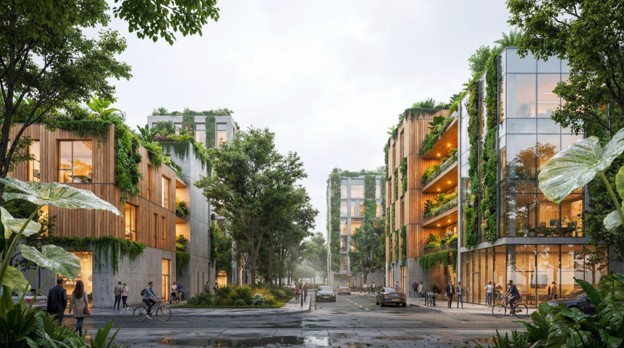
For years, architectural visualization has relied on a linear workflow optimized for high-quality outputs. Architects and designers would first develop a 3D model in a CAD or BIM application, which visualization artists then imported into a rendering environment. From there, materials, lighting, assets, and cameras were set up and the project was rendered into final images or animations.
As architectural projects become more complex, the limitations of traditional archviz workflows have surfaced. Visualization artists often need to wait for finalized models, while even minor changes can lead to extensive manual work, and late-stage client feedback can require revisiting the entire process.
Today, driven by rapid technological advancements, the archviz industry is undergoing a major shift, moving away from the traditional linear pipeline.
Key drivers of change in the archviz industry archviz industry
The archviz workflow is being transformed in response to several factors, including the rise of AI-assisted tools, the adoption of real-time rendering technologies, and the evolution of client expectations.
One of the most visible changes is how projects begin. Clients increasingly arrive with AI-generated visuals, prompting architects and designers to start from already pre-formed concepts. This shift demands a more flexible workflow that can quickly translate a client’s expectation into a professional design.
Another important factor is that advances in rendering technology have removed traditional waiting times. With real-time rendering, professionals can explore complex scenes instantly while maintaining photorealistic quality.
A further development is the growing role of AI as a design partner. AI-assisted tools streamline the creative process by automating time-consuming tasks such as upscaling and visual refinement. By improving efficiency throughout the design process, they allow architects and designers to focus on creating higher-value design decisions and iteration.
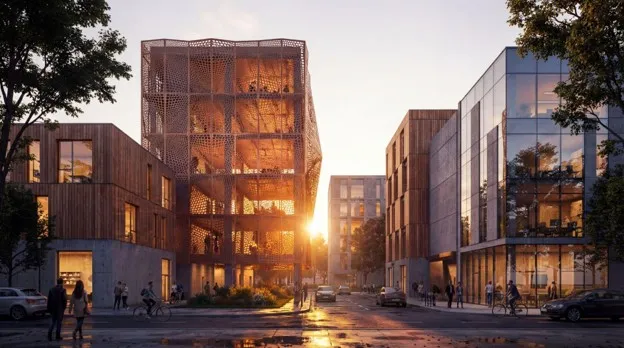
AI-assisted tools help architects and designers work faster, test ideas earlier, and iterate with greater confidence.
According to a recent report on the state of AI in architectural design and visualization, 86% of current AI users report that AI has saved them time and significantly sped up their workflows.
Using AI in the archviz workflow
Architects and designers can integrate AI into both early conceptual development and post-production, helping bridge the gap between initial ideas and final deliverables.
AI is increasingly serving as a creative partner in the early stages of design, enabling rapid ideation without the need for time-intensive rendering. AI tools allow professionals to quickly explore and test multiple design prototypes, generating ideas before committing to a direction.
AI is also reshaping post-production, where much of the work traditionally involves repetitive tasks such as refining textures, adjusting lighting noise, improving image clarity, and preparing final outputs. Increasingly, AI-powered tools are automating these processes, streamlining the path to final delivery.
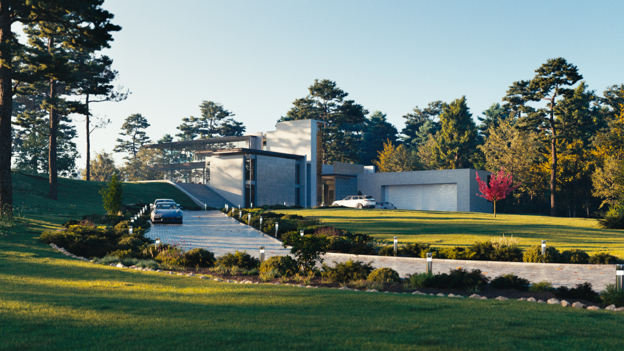
Making improvements in post-production
A shift in mindset: from rendering to storytelling
The archviz industry is embracing AI tools, hybrid workflows, and automation, enabling teams to communicate more effectively, reduce hours of manual rework, and present ideas with greater clarity and confidence.
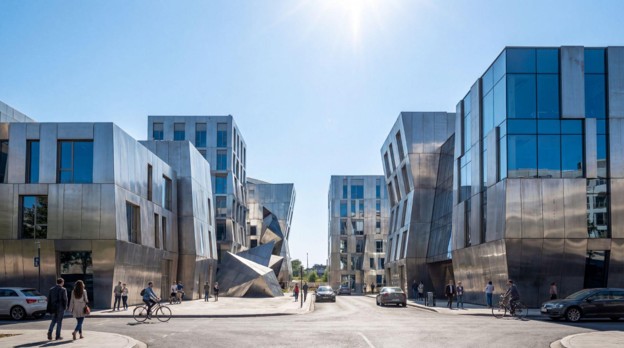
Visualization as a communication tool rather than a final, standalone visual output.
More importantly, this represents a shift in how visualization is used: not as a final output, but as a communication and exploration tool throughout the design process.
The archviz pipeline is no longer about producing a single static image, but about crafting an immersive, narrative-driven design experience.
Discover how to enhance realism, deepen storytelling, and improve workflow efficiency in your projects at Chaos.com.