Fog, wind, and chill are a regular part of life in San Francisco—conditions that can make outdoor spaces difficult to use if they’re not designed with them in mind. In the Marina District, those forces once kept a backyard largely unused. The challenge was to turn it into a place of warmth and retreat, where time outdoors felt inviting rather than exposed. For architect Jill Lewis of San Francisco and Palm Springs, Calif.-based Jill Lewis Architecture + Design, that meant rethinking how the space could be used—and how it could feel. “The space was there, but it was really working against [the client],” Lewis says. “So my job was just flip that equation.”
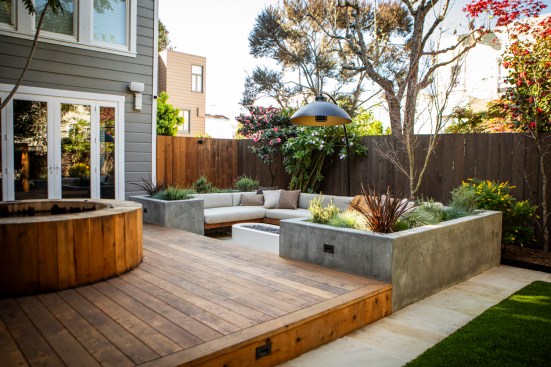
Francisco Street Garden in San Francisco’s Marina District, by Jill Lewis Architecture + Design. Photo by Dan Quiñones.
Her client’s request was direct: a place to spend time outdoors, to meditate, to use a hot tub—essentially, to feel comfortable in a climate that at times does not cooperate. Lewis’s response was to build warmth into the space, using materials, layout, and a few simple moves to soften the site’s exposure. “The client’s number one request was, ‘I want to feel warm when I’m outside,’” Lewis says. “The fire pit, the hot tub, and that redwood were all key pieces to making sure that, even on the most inhospitable day, it feels warm.”
Redwood, sourced locally and long adapted to the coastal environment, became both a practical and experiential anchor. “It has such a warmth in that wood grain visually and tactilely,” Lewis says. “And to me, that warmth just signals comfort and shelter.”
Material as Experience
For Lewis, material is never secondary to form—it’s how a space is first understood. “Materials, they’re the first thing your body reads before your brain catches up,” she says. In this backyard, that thinking translates into a cohesive environment, where redwood wraps the deck, encloses a swing structure, and complements a cedar hot tub assembled on site.
“That material coherence creates a sense of intention that I think clients feel even if they can’t articulate why,” Lewis says.
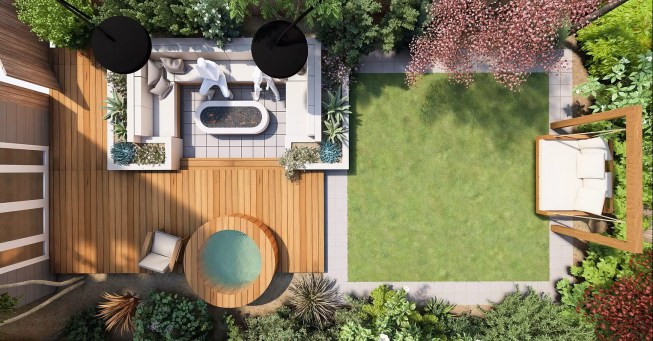
Francisco Street Garden in San Francisco’s Marina District, by Jill Lewis Architecture + Design.
That coherence extends indoors, where the ground-floor renovation of the Marina District home opens directly to the garden. Woods selected for the interior—acacia and walnut—echo the tones of the redwood, while creamy, rust-colored stone reinforces the palette. “We’re trying to draw from that redwood color that’s immediately outdoors,” Lewis says.
An emphasis on material as a driver of experience is increasingly reflected in broader industry data. According to the National Kitchen & Bath Association’s April 2025 Kitchen and Bath Trends Reports, one of the clearest expressions of wellness is emerging through finishes, particularly in the growing preference for natural materials and calming palettes. Some 65% of respondents expect organic and natural styles to remain dominant, while 42% anticipate a return to earthy tones and natural wood grains popular in the 1970s. In kitchens and baths—spaces now understood as central to well-being—designers are prioritizing biophilic connections as a key driver of both performance and experience.
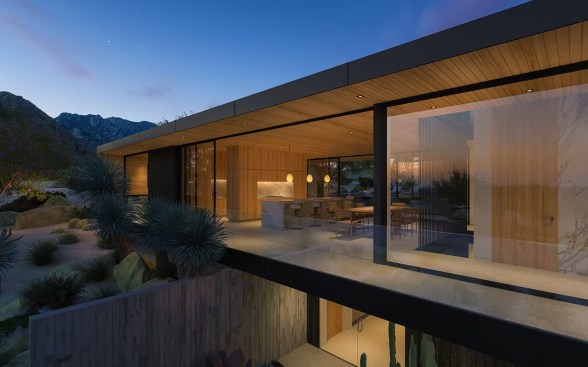
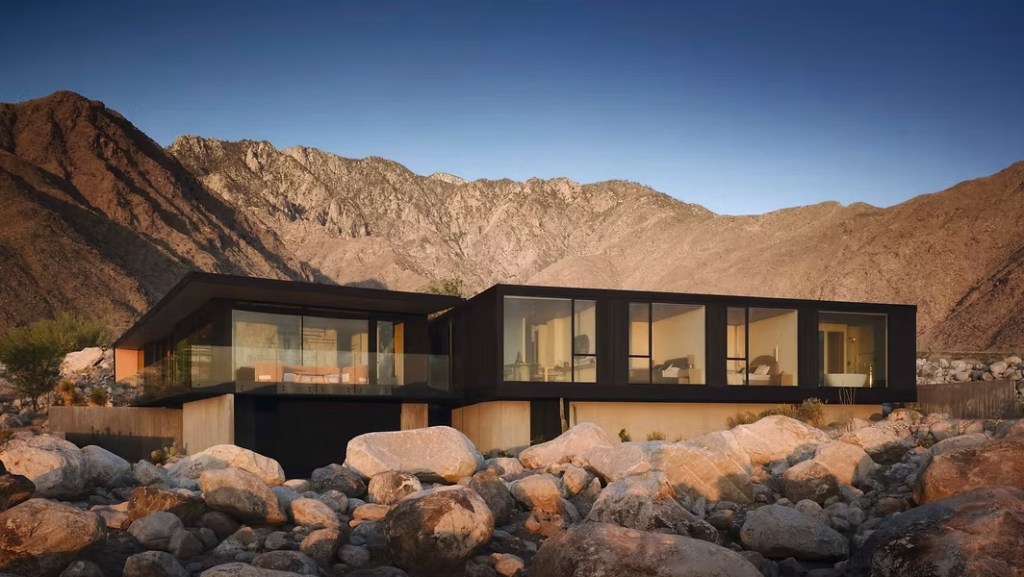
Wabi Sabi House in Palm Springs, Calif., by Jill Lewis Architecture + Design and Hoerr Schaudt Landscape Architecture. Photo by Douglas Friedman.
Designing With Climate
Connecting with setting also reflects a deeply consistent philosophy for Lewis. “I am a contextualist, and to me, designing great spaces is definitely about the client and most certainly about the site,” she says.
Each project begins with a careful reading of climate, light, wind, and available materials, as well as the cultural and physical conditions that define a place. “We’re always striving to create this true sense of place that is so intrinsically tied to a specific site that you feel it,” she says.
The aim is not just visual alignment, but a physiological response. “I want people to walk in and have their blood pressure go down and their breathing relax,” Lewis says.
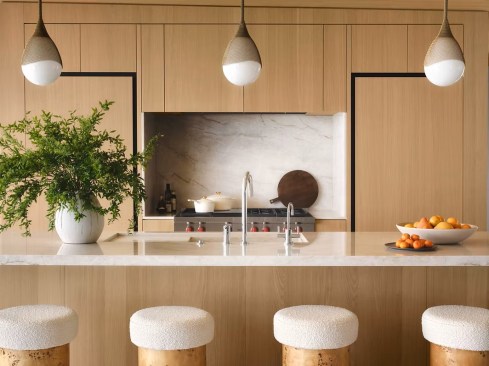
Wabi Sabi House in Palm Springs, Calif., by Jill Lewis Architecture + Design. Photo by Douglas Friedman.
That emphasis on responsiveness becomes even more pronounced in a very different context: Palm Desert, California. There, Lewis treats the landscape not as a backdrop, but almost as a key player. “The desert is a tough but beautiful collaborator. You cannot force your will on it.”
Orientation, shade, and protection are essential considerations, shaping an architecture defined by clean lines and deep overhangs. “Those aren’t just stylistic moves,” Lewis says. “They’re really responses to that environment.”
Her desert modernist approach reinforces a direct connection between the environment and comfort. “When you’re responsive to that environment,” she says, “you make spaces that are just comfortable. People feel good. It’s good for their health.”
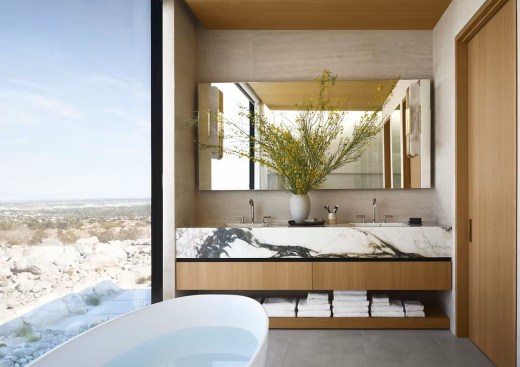
Wabi Sabi House in Palm Springs, Calif., by Jill Lewis Architecture + Design. Photo by Douglas Friedman.
To that end, whether in the desert or on the coast, Lewis returns to the same set of strategies: framing views, maximizing natural light, and extending architecture into the landscape. “We push our architecture out in the landscape with dissolving walls and outdoor rooms that really blur that line between built and natural,” she says. “It’s all one experience.”
The Home as Refuge
Underlying these moves is a broader understanding of the home as a place of restoration—one Lewis developed not only as an architect, but as a mother whose family spent more than a decade living abroad, from Beijing to Buenos Aires. “I really, really understand how important it is to have a home that you can return to … and it is restorative,” Lewis says.
Whether through quiet bedrooms, spaces for gathering, or even aspirational moments—a small balcony, a place to sit—the goal is to create environments that support mental and emotional well-being. “The home has to be your safe space,” she says. “You need that place to re-energize and to relax.”
Material honesty reinforces that objective. “Raw wood is not manufactured—it’s just cut. It’s shaped. It’s capturing carbon,” Lewis says. These choices tie environmental responsibility to human health, grounding the idea of wellness in both physical and psychological terms.
For Lewis, it comes back to a different idea of luxury. “We call it quiet luxury,” she says. “And the greatest luxury is our health.”